
Lieferung heute & morgen

Qualitätsgarantie

Willkommens-Angebote freischalten: KOSTENLOSE Lieferung | Bis zu 80 % RABATT | Kostenlose 30-Tage-JoyPlus-Testphase
App herunterladen
An upper-arm blood pressure monitor is part of regular health checks in many households. But not every digital blood pressure monitor is right for every arm, lifestyle or preference. Failed purchases are often caused not by the monitor’s features, but by an ill-fitting cuff, complicated controls or overlooked ongoing costs.
The cuff must fit your upper arm circumference. If it is too small, the reading may be inaccurate; if it is too large, it may not stay securely in place. Models with cuffs for 22 to 42 cm or 22 to 45 cm suit many adults, but you should still check that the cuff fits your individual arm.
Bluetooth, an app, voice prompts and trend charts can be useful if you want to save or share readings regularly. If you only plan to take readings in the morning and evening, you may not need a connected system. On the other hand, a small memory may be impractical for families.
An automatic blood pressure monitor can run on AA or AAA batteries, a mains adapter, a USB cable or a rechargeable battery. Before buying, check whether batteries and a mains adapter are included. A storage case is also useful for a blood pressure monitor used at home if you move it between rooms.
Measure the circumference of your upper arm roughly halfway between your shoulder and elbow. Compare the measurement with the stated cuff size. If you have a larger upper arm, a blood pressure monitor with a large cuff for upper arms measuring around 22 to 45 cm is often more practical than a model with a narrow standard cuff.
The cuff should be placed directly on your skin or over thin clothing. Position the tube or marker according to the instructions. Keep your back and arm supported while taking a reading, your legs uncrossed and your body still.
A blood pressure monitor with memory makes it easier to keep a record over several days. Two separate user profiles help prevent readings from different people being mixed up. Automatically averaging three readings can make it easier to track changes over time, but it is no substitute for medical advice.
Also check that the monitor records the time and date. This can be helpful if you want to share your readings with a healthcare professional at an appointment.
A blood pressure monitor with arrhythmia detection can display a warning about an irregular heartbeat while you take a reading. This is a prompt from the device, not a diagnosis. If the warning appears repeatedly, seek medical advice.
A Bluetooth blood pressure monitor transfers data to a smartphone. Before buying, check whether the app is compatible with your iOS or Android device, what data it stores and whether you can export your readings. A model with an app is especially useful if you want to track long-term trends or share readings digitally.
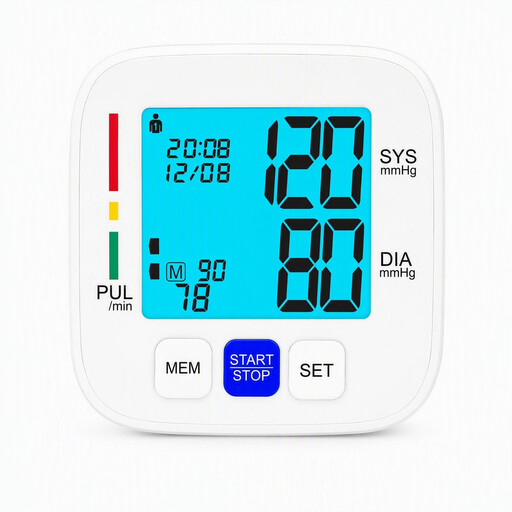
Why it suits this user: This compact model is designed for daily readings at home and stores readings for two users.
The 22–42 cm cuff and automatic averaging help address common issues with choosing a cuff and keeping a record of readings.
Two memory banks, each holding 90 readings, time stamps and automatic shut-off.
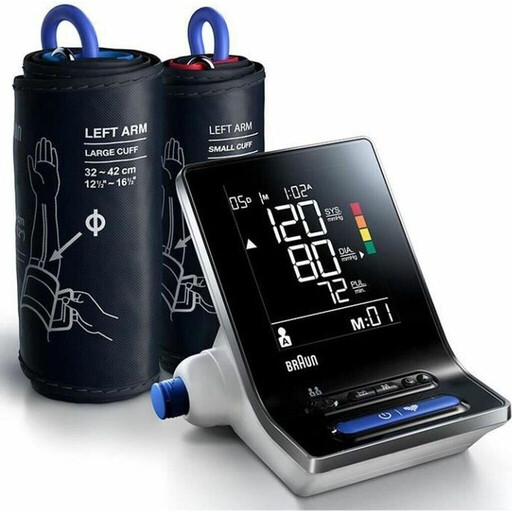
Why it suits this user: Two cuffs and a large backlit display make this a good choice for anyone who values adjustability and easy-to-read results.
The size S cuff fits arms up to 21 cm, while size L fits 33–43 cm, making it easier to choose the right cuff. The display also alerts you to irregular heartbeats.
40 memory slots for two people, an average of three readings and battery operation using four AA batteries.
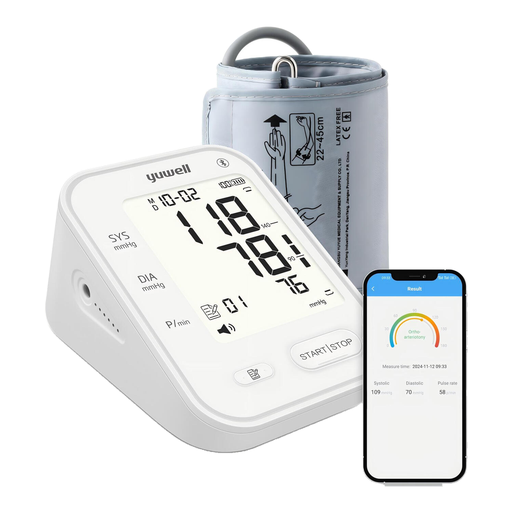
Why it suits this user: With a rechargeable battery, Bluetooth and a large cuff, this model is well suited to frequent readings, travel or sharing data digitally.
The 22–45 cm cuff accommodates a range of upper arm sizes, while the app means you don’t have to transfer readings manually.
Bluetooth connection to the yuwell app, PDF and CSV export according to the product description, a backlit display and a rechargeable battery.

Why it suits this user: Two-button operation, voice prompts and a large cuff are designed to make this monitor easy to use.
The monitor has just two buttons. Alerts about movement and cuff fit can also help you spot mistakes when taking a reading.
90 memory slots, an average of the last three readings, a 22–45 cm cuff and an arrhythmia alert according to the product description.
We’ve put together a complete, regularly updated list of products that meet these strict selection criteria and fully comply with the safety regulations in force in the EU.
Before taking a reading, it’s a good idea to sit quietly for a few minutes. Coffee, nicotine, physical exertion or a conversation just beforehand can affect your results. Try to take readings at similar times of day and make a note of any unusual changes.
For battery-powered models, ongoing costs depend on how often you take readings and the type of battery. A rechargeable model cuts down on regular battery changes, but you’ll need access to a charging point. Also check whether replacement cuffs are available, as the cuff is subject to more wear and tear than the main unit.
How long it lasts depends on its build quality, storage, batteries and cuff. Keep the monitor somewhere dry, away from direct sunlight, and make sure the tube isn’t kinked. If readings are unclear or consistently very different from expected, have the device checked and seek medical advice.
A blood pressure monitor for older people should have an easy-to-read display, just a few buttons and clear instructions. Voice prompts, a backlit display and automatic storage can make it easier to use independently. A correctly fitted cuff and a relaxed, still position are still essential.
The main running costs for battery-powered monitors are AA or AAA batteries. Rechargeable models need to be charged regularly instead. You may also need to pay extra for a replacement cuff or mains adapter if these are sold separately. Check what’s included and whether accessories will remain available over time before buying.