
Lieferung heute & morgen

Qualitätsgarantie

Willkommens-Angebote freischalten: KOSTENLOSE Lieferung | Bis zu 80 % RABATT | Kostenlose 30-Tage-JoyPlus-Testphase
App herunterladen
An upper-arm blood pressure monitor should be suitable for regular use, easy to read and simple to operate. In practice, however, poor purchases are often not caused by the measuring process itself, but by an unsuitable cuff, difficult-to-understand displays or features that are rarely used in everyday life. This buying guide explains which details really matter and which automatic blood pressure monitor may suit different requirements.
A large display is helpful, but it is not always enough. Buyers should also look for clearly visible digits, easy-to-understand symbols and a simple start function. Voice prompts may be useful if the display is difficult to read. It is also important that operation is not made more complicated by numerous menus or unclear buttons.
The cuff must fit the circumference of the upper arm. If it is too loose or too tight, it can affect the measurement result. Specifications such as 22–42 cm or 22–45 cm refer to the circumference of the upper arm, not the length of the cuff. Before buying, measure the arm with a tape measure at the intended measuring point.
An arrhythmia detection feature indicates irregular heartbeats detected during the measurement. Depending on the model, an atrial fibrillation detection feature may provide an additional indication. Neither feature replaces a medical examination or provides a diagnosis. An app cannot turn individual readings into a medical assessment either. Its main practical benefit is storing measurements and organising them chronologically.
For many households, a cuff measuring 22–42 cm is sufficient. For larger upper arms, a large 22–45 cm cuff offers more flexibility. The cuff should be placed on the bare upper arm, with the arm resting at heart level. Refer to the relevant instruction manual for the exact position and application method.
A digital blood pressure monitor with a cuff-fit check or movement indicator can alert you to incorrect use. However, these features cannot prevent every inaccurate reading. Before measuring, users should sit quietly for a few minutes, avoid talking and keep their arm still.
Anyone who measures their blood pressure in the morning and evening can benefit from a blood pressure monitor with memory. Check the number of memory spaces and whether two people can create separate profiles. An average of the last three readings can make it easier to monitor personal trends, but it does not replace a medical assessment.
Separate memory areas are practical for families. If the device can connect to an app, readings can also be recorded on a smartphone. Check whether the device is compatible with your operating system and whether synchronisation actually takes place automatically.
Battery operation is suitable for a permanent place at home and for travelling. USB or rechargeable-battery operation can make handling easier, but requires regular charging. With a blood pressure monitor for older people, high-contrast, large digits and as few controls as possible are often more important than an extensive list of features.
Bluetooth is useful if readings are to be collected digitally on a regular basis. With a Bluetooth blood pressure monitor, you should also check the compatible app, supported platforms and data export options. Manufacturer claims regarding measurement accuracy should not be confused with individual medical suitability.
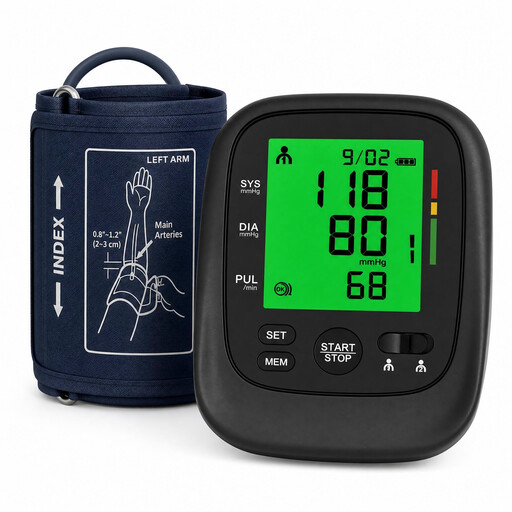
Why this product suits the profile: This model combines automatic measurement, large LCD digits and two separate memory areas for everyday use at home.
According to the product description, the cuff covers 22–42 cm. The movement indicator and cuff-fit check draw attention to common operating errors.
2 × 120 memory spaces, average of the last three readings, USB-C or battery operation, plus optional voice and Bluetooth modes according to the product description.
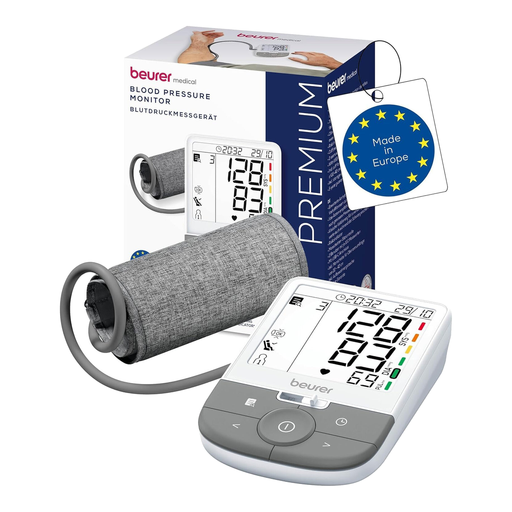
Why this product suits the profile: Suitable for users who value a large display, additional measurement steps and documented trend-monitoring functions.
The cuff is designed for 22–42 cm. The resting indicator and cuff-fit check support consistent preparation.
XL display with backlighting, triple measurement, 2 × 100 memory spaces and synchronisation with the beurer HealthManager Pro app according to the product description.
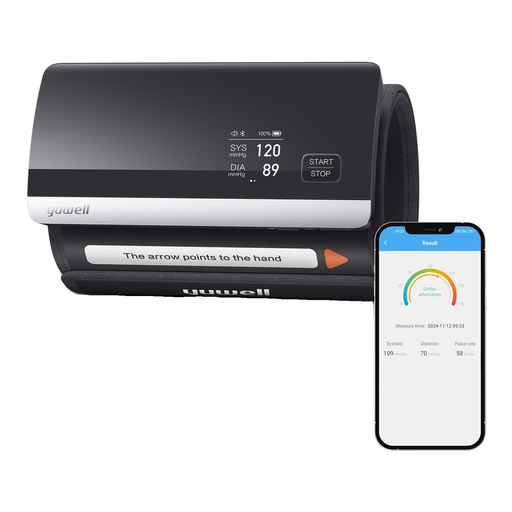
Why this product suits the profile: This model is designed for users looking for Bluetooth, voice prompts and an additional atrial fibrillation indication in one device.
According to the product description, the 360° cuff covers 22–45 cm. Voice prompts and app connectivity can make daily record-keeping easier.
Bluetooth synchronisation, voice prompts, a rechargeable battery and, according to the product description, a feature indicating possible atrial fibrillation events.
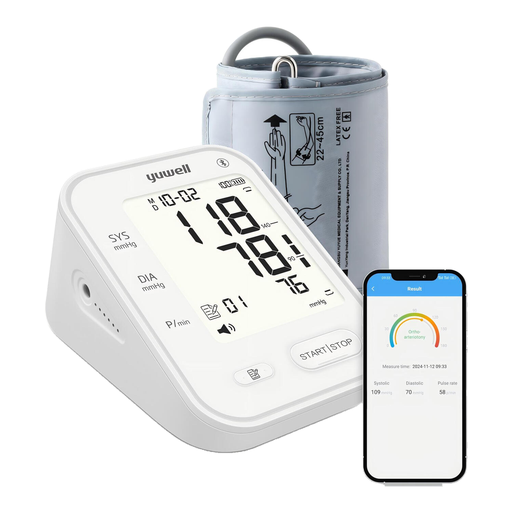
Why this product suits the profile: Practical for users who need to store numerous readings, track trends in an app and require a cuff that fits up to 45 cm.
The 22–45 cm cuff reduces the risk of choosing an unsuitable size. The backlit display makes readings easier to see in different lighting conditions.
Bluetooth app with, according to the product description, virtually unlimited storage, PDF and CSV export, plus a rechargeable battery.
We have put together a complete, regularly updated list of products that fully meet these strict selection criteria and the safety regulations applicable in the EU.
These devices are intended to provide health information, not for self-diagnosis or self-treatment. If you have an existing medical condition, are pregnant, have implants or are unsure how to use the device, consult a healthcare professional before using it.
Its service life depends on the build quality, cuff, batteries or rechargeable battery, and whether the instructions for use are followed. The cuff should not be folded or stored unnecessarily in damp conditions. If there is visible damage, unclear display information or significantly inconsistent readings, having the device checked or replacing it is advisable.
Battery-powered models incur ongoing costs for replacement batteries. USB or rechargeable devices instead require regular charging. When buying, check whether batteries, a power adapter or charging cable are included. Product specifications may vary depending on the version.
No. For occasional measurements, a device with an easy-to-read display and suitable memory is sufficient. A blood pressure monitor with an app is particularly useful if you want to collect numerous readings, keep them separate by user or export them clearly for discussions with a GP practice. The app stores data, but does not automatically assess your individual health situation.