
Lieferung heute & morgen

Qualitätsgarantie

Willkommens-Angebote freischalten: KOSTENLOSE Lieferung | Bis zu 80 % RABATT | Kostenlose 30-Tage-JoyPlus-Testphase
App herunterladen
An upper-arm blood pressure monitor should record readings regularly without complicated operation or difficult-to-read displays. For adults, older people and family members, price is therefore not the only consideration. The right cuff, clear measurement guidance and sensible storage of results are all important.
Many products promote large displays, app connectivity or arrhythmia detection. These features can be useful in everyday life, but they do not replace checking the technical specifications or seeking medical advice. The following buying criteria help you distinguish marketing claims from features that are genuinely relevant.
The cuff size must match your upper-arm circumference. A cuff that is too tight or too loose can affect the measurement and produce unusable readings for comparison. For many devices intended for home use, the range is 22–42 cm. If your measurement falls outside this range, look specifically for a different cuff.
A blood pressure monitor with arrhythmia detection can flag irregular pulse signals during a measurement. Such a notification is simply a reason to have the situation medically assessed. It is not a diagnosis and should neither be ignored nor interpreted independently.
A Bluetooth blood pressure monitor can transfer readings to an app. This is useful if you want to keep a digital record of measurements or discuss them with a medical practice. However, if you only measure in the morning and evening, you may be better served by an internal memory and simple operation. You should also check smartphone compatibility, the app language and account settings.
When measuring blood pressure on the upper arm, the cuff should sit directly on the skin or over thin clothing. Your arm should be relaxed and supported at heart level while you sit quietly and do not speak. A short rest period before measuring is recommended.
Look out for:
A wider cuff is not automatically more comfortable. Its size must match your arm circumference, and it must not slip during the measurement.
A blood pressure monitor with a large display is often easier for older people to read. Large digits, clearly separated systolic and diastolic blood pressure readings, and an easily recognisable pulse display help reduce operating errors.
An automatic blood pressure monitor with one-button operation is suitable for people who do not want to use an app. Power options may include batteries, USB-C or a mains adapter. Check whether batteries are included and which type is required.
A blood pressure monitor with memory can store readings by date and user profile. Two separate memory areas are useful if several people share the same device. Depending on the model, there may be, for example, 2 × 90, 2 × 100 or 2 × 120 memory slots.
Average readings from three measurements can make daily record-keeping easier. However, they should always be calculated according to the instruction manual. A colour-coded classification on the display is intended as a guide and should not be confused with a medical assessment.
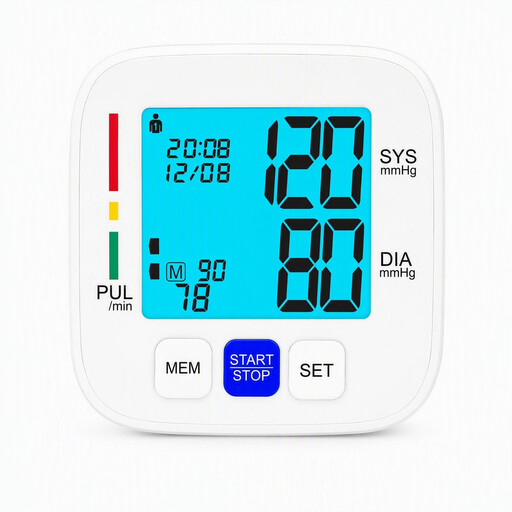
Why this product suits this profile: This compact automatic blood pressure monitor focuses on daily measurements without requiring an app. Its operation and data storage are designed for home use.
The 22–42 cm cuff range is clearly stated. In addition, three readings are averaged automatically instead of storing just one individual result.
Two user profiles with 90 memory slots each, date and time display, and compact dimensions.
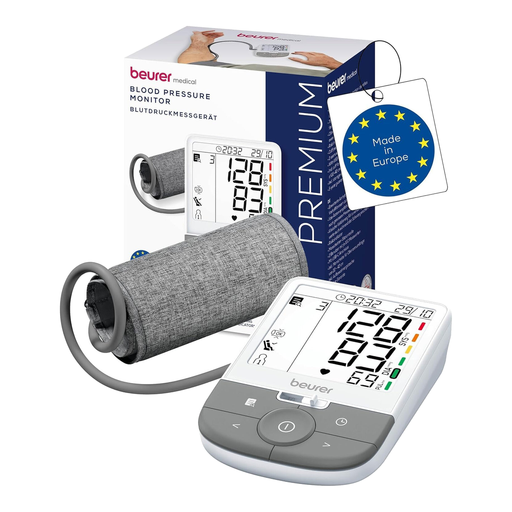
Why this product suits this profile: This digital blood pressure monitor combines a large, illuminated display with several monitoring functions and digital record-keeping through compatible health apps.
The cuff fit and resting period are supported. The AFib or arrhythmia indicator is described as an alert function, not a diagnosis.
2 × 100 memory slots, seven-day average, triple measurement and a cuff for 22–42 cm, according to the product information.
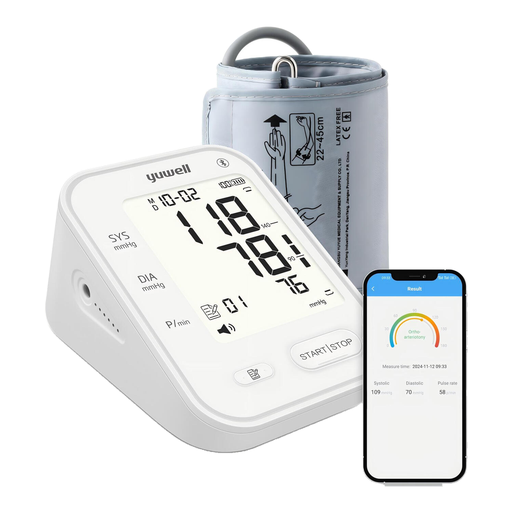
Why this product suits this profile: For people with many readings and a desire to keep a digital record of their progress, this model offers Bluetooth, app connectivity and a rechargeable battery.
The 22–45 cm cuff range is clearly specified. Nevertheless, check app compatibility and the smartphone platform you need before buying.
Bluetooth transfer to the yuwell Healthcare+ app, backlit display, voice guidance and a 22–45 cm cuff.
For comparable readings, try to measure under similar conditions wherever possible: sit for a few minutes, place your feet flat on the floor, support your arm in a relaxed position and do not speak while the cuff is inflating. If readings are repeatedly unusual or the device indicates an irregular heartbeat, it is advisable to seek medical advice.
Ongoing costs mainly include batteries. Models using four AA or AAA batteries vary in consumption depending on how often they are used. USB or rechargeable versions can reduce the need to replace batteries, but require a compatible cable or regular charging. For app-enabled devices, you should also consider software compatibility and data protection information.
We have put together a complete, regularly updated list of products that fully meet these strict selection criteria and the safety regulations applicable in the EU.
Place the cuff around your bare upper arm, with the lower edge slightly above the bend of your elbow. Position the tube downwards or towards the inside, as described in the instructions. Rest your arm at heart level. The exact procedure may vary depending on the model, so follow the instruction manual.
Its service life depends on the build quality, storage conditions, cuff, batteries and frequency of use. Electronic components should be kept dry and protected from significant changes in temperature. A damaged cuff or unusual device behaviour indicates that the monitor should be checked or replaced. Manufacturer figures such as a specified number of measurements are estimates and do not guarantee performance in every usage situation.
A large display with high-contrast, clearly separated readings can make the monitor easier to read. One-button operation, clear symbols and a cuff that is easy to fit are also important. A voice function can provide additional support, but should only be chosen if it is genuinely needed in everyday use.