
Lieferung heute & morgen

Qualitätsgarantie

Willkommens-Angebote freischalten: KOSTENLOSE Lieferung | Bis zu 80 % RABATT | Kostenlose 30-Tage-JoyPlus-Testphase
App herunterladen
An upper arm blood pressure monitor should make regular home measurements straightforward. In practice, however, everyday usability often fails not because of the digital technology, but due to an ill-fitting cuff, hard-to-read displays or a lack of memory functions. Additional terms such as “intelligent”, “precise” or “clinically tested” alone tell you little about whether a device is suitable for your own household.
This buying guide shows which features are genuinely relevant in a digital blood pressure monitor and which models suit different user profiles.
A cuff that is too small can affect readings, while one that is too large may not sit securely. What matters, therefore, is not the label “universal size”, but the stated arm circumference in centimetres.
For many adults, a range of 22 to 42 cm is suitable. If you have larger upper arms, you should specifically look for a blood pressure monitor for a 22–45 cm arm circumference. Before buying, it is best to measure your upper arm with a tape measure at the midpoint of the upper arm.
An automatic blood pressure monitor can simplify the measuring process. However, it cannot compensate if you talk, move your arm or wear the cuff over clothing during a measurement. Indicators for body movement or cuff fit are therefore practical aids, but they are no guarantee of error-free results.
A blood pressure monitor with Bluetooth can transfer readings to an app. This is useful if you want to store long-term measurement series or share them digitally. If you only need to read a value in the morning and evening, you may not need this feature. You should also check smartphone compatibility, app language and data protection information.
The cuff must sit on the bare upper arm at heart level. The tube or marking should be aligned according to the instruction manual. Models with a range of 22–42 cm cover many households; 22–45 cm offers more flexibility for different arm circumferences.
A wrist device such as the medisana BW 360 connect, on the other hand, is used on the wrist and is not the same as an upper arm model. So when choosing, you should first decide whether you want a blood pressure monitor for home use on the upper arm or on the wrist.
A blood pressure monitor with a large display is particularly practical for elderly people and those with impaired vision. Large digits, clear symbols and one-button operation reduce the number of steps needed. A backlight can make reading easier in low light.
Voice announcements can be added if desired. Before buying, you should check this feature for volume, available language and the option to switch it off.
For couples or families, a blood pressure monitor with memory and separate user profiles makes sense. Depending on the model, you can store, for example, 90, 99 or 120 readings per user. Average values from the last three measurements support trend documentation, but do not replace a medical assessment.
A blood pressure monitor with arrhythmia detection can indicate irregular heartbeats during a measurement. Such alerts should be understood as technical warnings. They do not constitute a diagnosis. If readings are repeatedly abnormal or you have symptoms, you should seek medical advice.
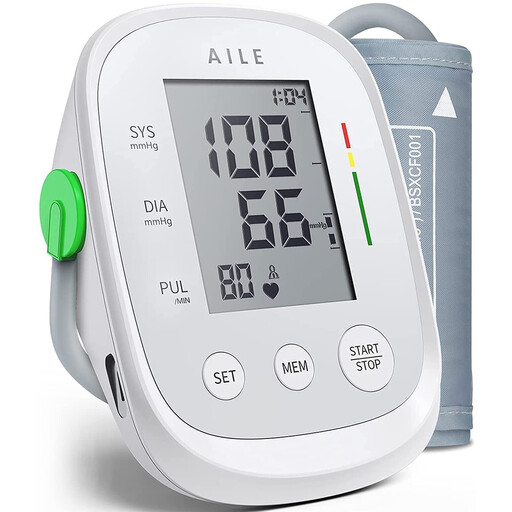
Why this product fits the profile: This automatic upper arm blood pressure monitor focuses on the basic functions and is suitable for simple measurements without the need for an app.
The 22–42 cm cuff is clearly stated. Two user profiles with 99 memory slots each prevent family readings from being immediately overwritten.
Large LCD display, USB power supply and average display of the last three measurements according to product specifications.
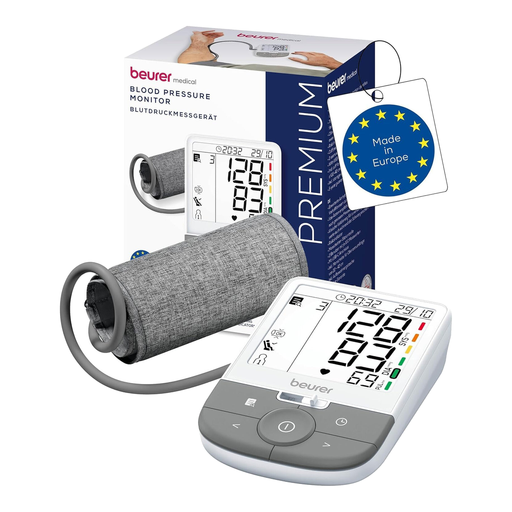
Why this product fits the profile: This model combines upper arm measurement, a backlit XL display and several control functions for structured use at home.
The cuff covers 22–42 cm. Cuff fit control and a rest indicator help you spot typical application errors early on.
Two memory areas with 100 slots each, triple measurement and 7-day average according to the product description.
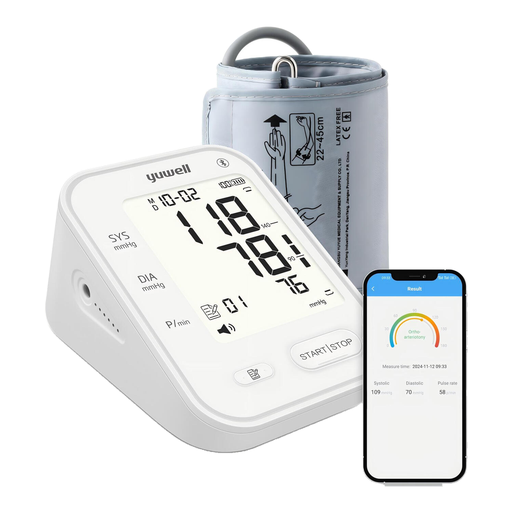
Why this product fits the profile: For regular measurements with digital documentation, this model offers app connectivity and a rechargeable power supply.
The cuff is specified for 22–45 cm. This means you can check your arm circumference against the product specification before buying.
Bluetooth synchronisation with the yuwell HealthCare+ app, voice output and illuminated display according to product specifications.
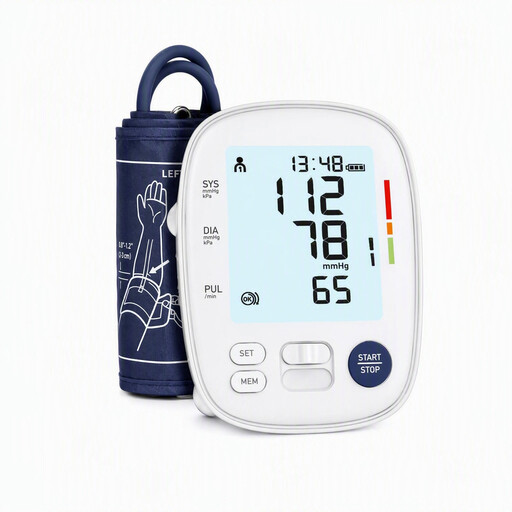
Why this product fits the profile: The combination of two separate memory areas, a large LCD display and an optional app function suits households with several regular users.
The cuff covers 22–42 cm. Indicators for cuff fit and body movement alert you to possible measurement errors.
Two memories with 120 slots each, arrhythmia alert, triple average, plus battery and USB-C operation according to the product description.
We have put together a complete, regularly updated list of products that fully meet these strict selection criteria and the safety regulations in force in the EU.
Measurements can be affected by movement, caffeine, physical exertion or a full bladder. Individual deviations should therefore not be assessed on their own. If readings are persistently high or unusual, it is advisable to seek medical clarification.
The lifespan depends on the batteries, the cuff, storage and frequency of use. The main unit should be stored in a dry place and protected from knocks. The cuff must not be kinked or damaged. For specific information on service life, warranty and accessories, please refer to the manufacturer’s information for the particular model.
With battery operation, there are ongoing costs for replacing the batteries. Models with a USB port or a rechargeable battery can reduce these expenses, but they need a suitable power source. Before buying, you should check the battery type, what is included in the box and the charging accessories.
No. An app is mainly useful if you want to store many readings, display them graphically or export them for a doctor’s appointment. For simple monitoring, a clear display, a suitable cuff and separate memory slots are often sufficient. App and Bluetooth functions are therefore comfort features, not essential equipment.