
Lieferung heute & morgen

Qualitätsgarantie

Willkommens-Angebote freischalten: KOSTENLOSE Lieferung | Bis zu 80 % RABATT | Kostenlose 30-Tage-JoyPlus-Testphase
App herunterladen
Regularly monitoring your blood pressure at home is a key component of health management. However, the market for digital blood pressure monitors is crowded, and many buyers invest in a device that quickly gathers dust because it provides inaccurate readings or is too complicated to use. Before you make a decision, you should be aware of three common pitfalls that can lead to a poor purchase.
To ensure you select a suitable and reliable upper arm blood pressure monitor, you should pay attention to a few fundamental parameters. These will help you distinguish marketing hype from genuinely useful features.
The most important factor for measuring blood pressure accurately is a correctly fitting cuff. If it's too loose or too tight, the pressure on the artery is applied incorrectly, leading to distorted readings.
A good digital blood pressure monitor doesn't need to do everything, but it must have the right features.
Especially for daily use or for older users, straightforward handling is crucial. Look for a large, high-contrast display with easily readable digits. Simple one-button operation reduces the risk of user errors. Many devices also offer a colour-coded scale (traffic light system) that classifies the measured value according to WHO guidelines, allowing for a quick assessment.
Based on the criteria mentioned, we have identified a few models that are suitable for different needs and user groups.
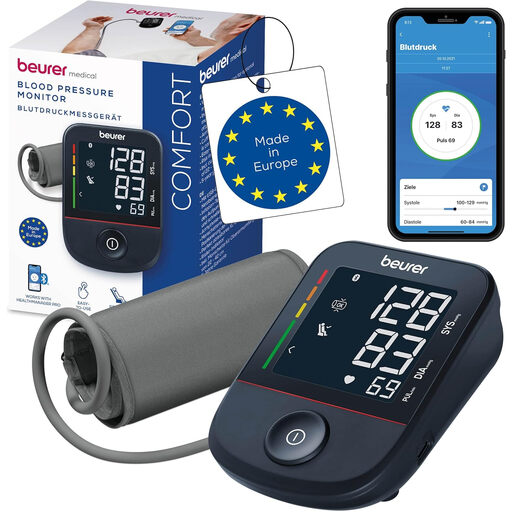
Why This Fits Their Persona: Ideal for users who want to keep a complete digital record of their health data. The automatic transfer to the 'beurer HealthManager Pro' app allows for easy long-term analysis and sharing of readings with a doctor.
It bypasses the "feature jungle" by offloading smart features to a streamlined app. The device itself remains easy to use thanks to its one-button operation.
Seamless Bluetooth data transfer and compatibility with platforms like Apple Health. Includes arrhythmia detection and a rest indicator for reliable measurements.
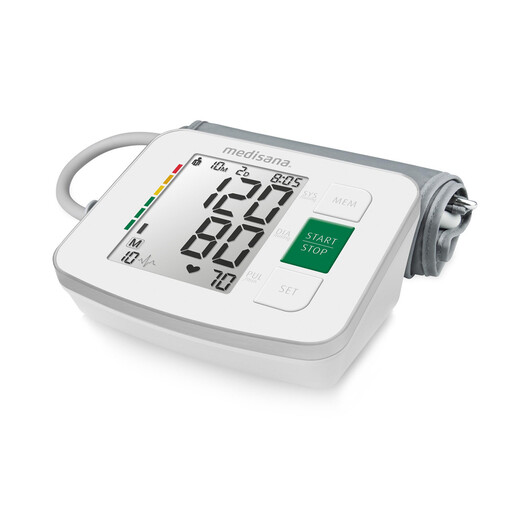
Why This Fits Their Persona: Perfect for users looking for a straightforward and reliable device without extra digital features. Especially suitable for older family members who value a clear display and simple operation.
This model focuses on core functions. It deliberately omits app connectivity and complex menus, which makes operation as simple as possible and minimises sources of error.
Extra-large digits (up to 22 mm) for excellent readability. Offers memory for two users and a colour-coded traffic light scale for quick classification of readings.
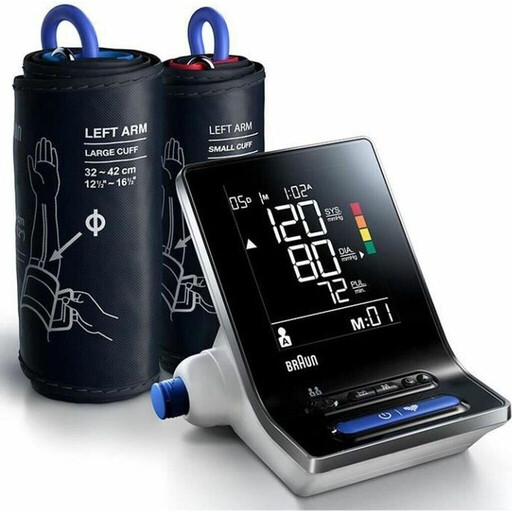
Why This Fits Their Persona: Ideal for households with multiple users of different builds or for individuals who struggle to find a standard cuff that fits. The two included cuff sizes offer flexibility.
It directly solves the most common pitfall—incorrect cuff size—by including two cuffs (size S and size L) in the box. This ensures an accurate fit.
Two cuff sizes provide broad coverage. The function that averages the last three readings increases the reliability of the results. Supports two users with 40 memory slots each.
We have compiled a complete, up-to-date list of products that fully meet these strict selection criteria and local safety regulations.
The frequency of measurement should ideally be coordinated with a doctor. For routine monitoring, it is often recommended to measure at the same time each day, for example, in the morning before taking medication and again in the evening. It is important to observe a rest period of about five minutes before each measurement.
Arrhythmia detection is a feature that alerts you to an irregular heart rhythm during a blood pressure measurement. The device typically displays a special symbol when it detects such deviations. This is not a medical diagnosis, but an important indicator that should prompt a consultation with your doctor.
Cuff size is critically important. A cuff that is too small can lead to falsely high readings, while a cuff that is too large can cause falsely low readings. To measure blood pressure accurately, it is essential to determine your upper arm circumference before purchasing and choose a cuff that fits properly.