
Lieferung heute & morgen

Qualitätsgarantie

Willkommens-Angebote freischalten: KOSTENLOSE Lieferung | Bis zu 80 % RABATT | Kostenlose 30-Tage-JoyPlus-Testphase
App herunterladen
An upper arm blood pressure monitor should deliver reliable readings every time, while also being simple to use. For adults, seniors and their families, it’s not just about screen size or extra features. The fit of the cuff, the ease of operation, the memory function and correct usage all determine whether the device will actually be used day to day.
A cuff that is too tight or too loose can affect your reading. Simply seeing “for adults” on the box isn’t enough. Before you buy, check your upper arm circumference in centimetres. Many models cover 22–42 cm, while some blood pressure monitors for 22–45 cm arm circumference offer a bit more flexibility.
An automatic blood pressure monitor with Bluetooth, an app, voice guidance and multiple memory profiles can be useful. But if the connection is fiddly or the buttons are hard to see, those features may never get used. For seniors, a blood pressure monitor with a large display, a clear start button and easy-to-understand symbols is often more practical than one packed with features.
A colour-coded scale or an arrhythmia detection symbol is there for guidance only. It is not a diagnosis in itself. If you repeatedly get unusual readings or warnings about an irregular heartbeat, you should have this checked by a doctor. Never change your medication based on a single reading.
Measure your upper arm circumference roughly halfway between your shoulder and elbow. The cuff should be placed on your bare upper arm, with the marker or tube aligned towards the artery as shown in the instruction manual. While measuring, sit down, rest your arm at heart level, do not speak and do not move.
An upper arm device is a sensible choice for most households because the cuff is positioned on the upper arm. Wrist monitors, such as the medisana BW 360 connect, require particularly careful positioning at heart level. They are compact, but not automatically the more practical option for everyone.
Look for clearly readable numbers for systolic and diastolic blood pressure, as well as your pulse. For a blood pressure monitor for seniors, a large LCD screen, backlighting or voice output can make using it much easier. Also check whether batteries are included, whether you can use a USB cable, or whether a rechargeable battery is built in.
A memory function is helpful if you want to record readings over several days. Two user profiles prevent different people’s results from getting mixed up. Automatic calculation of the average from three readings can make your daily record-keeping much clearer.
A blood pressure monitor with Bluetooth or app connectivity is ideal for users who want to store readings digitally and track trends. Before you buy, check whether the app is compatible with your smartphone, what data is stored, and whether manual syncing is required.
Manufacturers often list measuring ranges and tolerances, for example a pressure accuracy of ±3 mmHg and a pulse accuracy of ±5 % of the reading. These figures describe technical specifications, but they do not replace a medical assessment. Also look for a clear instruction manual, manufacturer details and a contact point based in the EU. A CE mark is an important legal indicator, but it is not a reason to ignore other selection criteria.
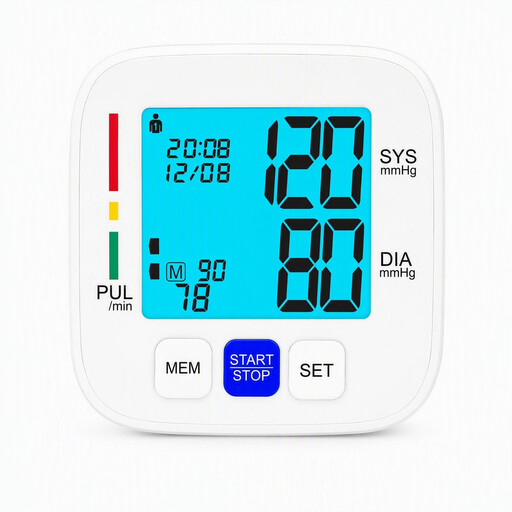
Why this product fits the profile: This compact digital blood pressure monitor is designed for automatic home measurement and comes with a cuff for 22–42 cm arm circumference.
The correctly sized upper arm cuff, automatic shut-off and simple one-button start reduce unnecessary complexity.
Two memory profiles with 90 slots each and automatic average calculation from three readings.
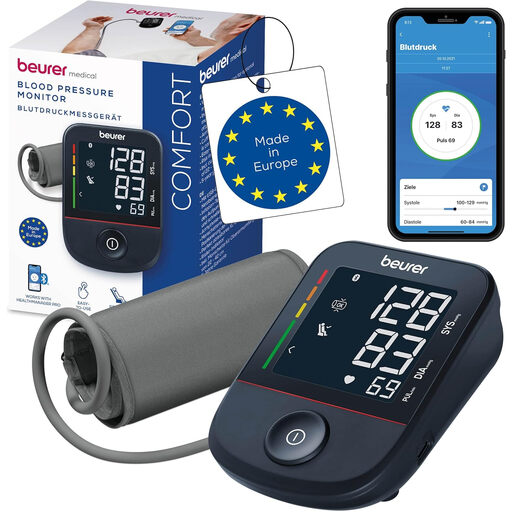
Why this product fits the profile: A large display, one-button operation and Bluetooth transfer combine simple use with digital record-keeping.
The cuff fit check and rest indicator provide extra guidance before you take a reading.
Arrhythmia detection, 22–42 cm cuff and transfer to the HealthManager Pro app as well as selected health platforms.
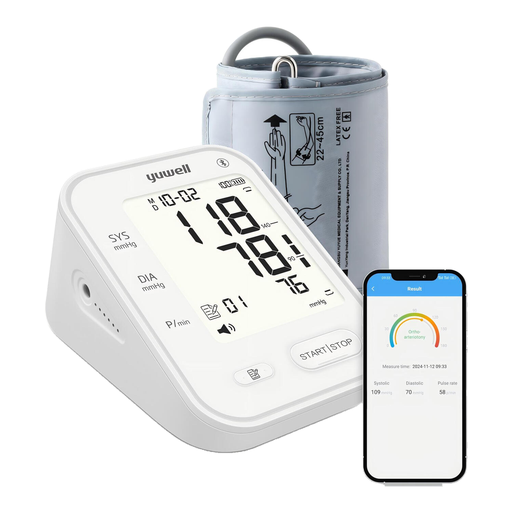
Why this product fits the profile: This model is aimed at users who measure regularly and want to manage their readings via Bluetooth in an app.
The extra-large cuff for 22–45 cm reduces the risk of a standard size not fitting; voice output can also assist with operation.
Rechargeable battery, backlit display and app transfer with export options as described in the product details.
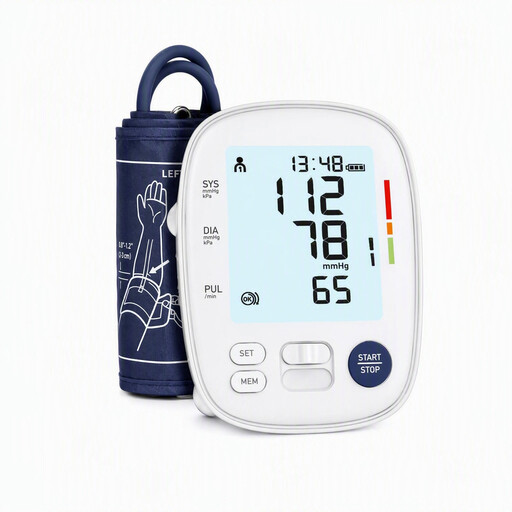
Why this product fits the profile: The large LCD with big digits, two user profiles and the 22–42 cm cuff are designed for shared household use.
Guidance on cuff position and body movement helps ensure correct preparation.
Two memories with 120 reading slots each, average from three readings and power via batteries or USB-C according to the product specifications.
Before each measurement, it is advisable to rest for about five minutes. Coffee, nicotine, physical exertion or a conversation just beforehand can all affect your readings. Try to measure at similar times of day and make a note of any unusual circumstances.
When it comes to ongoing costs, consider the battery type, battery consumption and, if needed, a mains adapter. Models with a rechargeable battery reduce the need for battery changes, while devices using AAA or AA batteries are easy to replace. For app-enabled devices, smartphone compatibility and any necessary accounts may also be a factor.
We have put together a full, regularly updated list of products that meet these strict selection criteria and comply with all EU safety regulations.
The lifespan depends on how often you use it, how you store it, the batteries and the condition of the cuff. Keep the device dry, out of direct sunlight and store it without kinks in the tube. If you notice visible damage or unclear readings, stop using the cuff.
That depends on how you use it. An app can be helpful for long-term record-keeping, multiple readings and exporting data. If you only measure occasionally, a clear display and built-in memory may be all you need.
First, check the cuff position, your posture and whether you have rested properly, then repeat the measurement after a few minutes following the instructions. If readings remain unusual or you experience symptoms, consult a doctor. The readings from a blood pressure monitor are for guidance only and do not replace a medical diagnosis.