
Lieferung heute & morgen

Qualitätsgarantie

Willkommens-Angebote freischalten: KOSTENLOSE Lieferung | Bis zu 80 % RABATT | Kostenlose 30-Tage-JoyPlus-Testphase
App herunterladen
Pilates ankle and wrist weights can make controlled movements more challenging and help you target your arms, legs, glutes, hips and core. But the stated weight isn’t the only thing that matters. The material, fastening, weight distribution and intended use all affect how practical the weights are in everyday use.
A weight listed as ‘2 kg’ could mean that the pair weighs 2 kg altogether, or that each cuff weighs 2 kg. This makes a considerable difference for Pilates. With a pair of 1 kg cuffs, the load is 1 kg on each wrist or ankle. Before buying, check:
For 1 kg ankle and wrist weights and 2 kg ankle and wrist weights, the product description should make this clear.
Cuffs that are too loose can slip during leg raises, side-to-side movements or walking. A fastening that’s too tight, on the other hand, can dig in and feel uncomfortable. Adjustable hook-and-loop or hook fastenings, along with elastic straps, can be adjusted to fit different wrist and ankle sizes.
When choosing ankle and wrist weights, also check whether the manufacturer specifically lists both uses. A cuff designed only for the ankle may not fit comfortably around the wrist.
Silicone is easy to clean and can feel comfortable during longer workouts. Even so, it’s worth checking the specific design. Look for:
For models with removable iron weights, the fastening should hold them securely in place. This lets you adjust the load to suit your training level, without having to buy several different sets.
A lighter weight may be a good choice for beginners or controlled Pilates sequences. Lightweight wrist weights and ankle weights let you increase the load gradually. Heavier weights are generally better suited to people who already train with added resistance and can control their movements safely.
Even a small additional load can make a big difference to exercises with long levers, such as side leg raises. So choose the weight based not only on the body area, but also on the exercise.
Silicone ankle and wrist weights are a good option if you prefer a wipe-clean, water-resistant surface. But the material can’t make up for a poor fit. Before buying, check the strap length or look for a size description such as ‘fits most wrist and ankle sizes’.
For hygienic use, choose a washable surface and store the cuffs somewhere dry after your workout. Direct sunlight and high temperatures can put stress on materials over time, so always follow the manufacturer’s care instructions.
A hook-and-loop fastening is usually quick to adjust during a workout. Removable weights let you fine-tune the load. The cuff should still sit flat and securely against your body after adjustment.
Avoid uncontrolled movements when using weights for Pilates, yoga and mobility exercises. Don’t wear the cuffs around your neck or head. Before each use, check that the material, fastening and weights are undamaged.
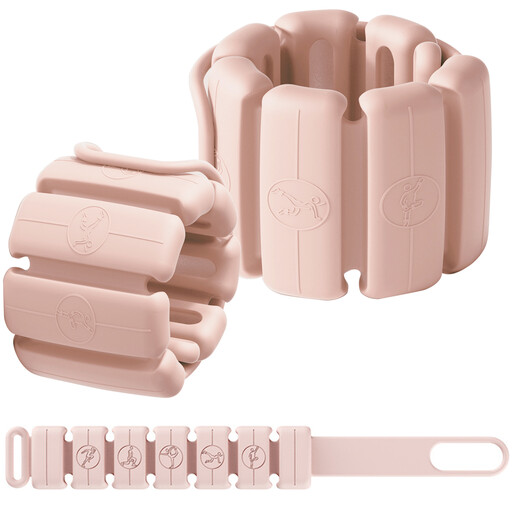
Why this product suits this profile: The set weighs 0.5 kg in total, with each cuff contributing 0.25 kg. Removable iron weights let you adjust the load for your first Pilates, yoga or walking sessions.
The product details list the total weight and the weight of each cuff separately. The adjustable design means beginners aren’t restricted to a fixed load.
Soft silicone surface, elastic strap, removable iron weights and a mesh storage bag.
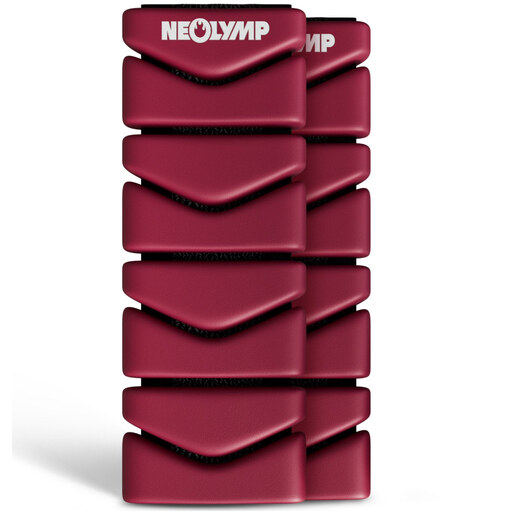
Why this product suits this profile: The set contains two cuffs weighing 1 kg each. It’s designed for users looking for a clearly defined, heavier load for controlled Pilates sequences.
The weight of each cuff is clearly stated. The hook-and-loop fastening adjusts to fit wrists or ankles, reducing the risk of a loose fit.
Silicone material, sweat and water resistance, and two cuffs weighing 1 kg each.
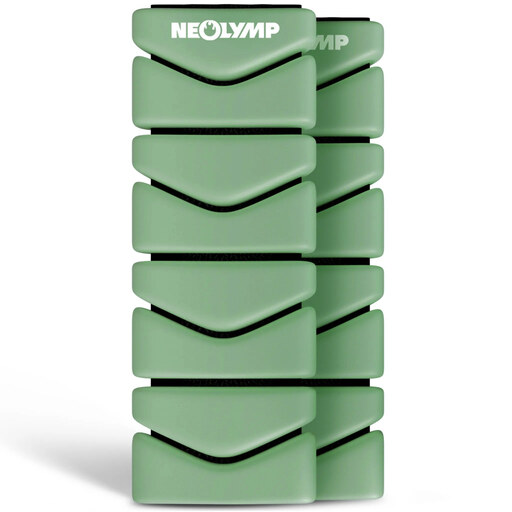
Why this product suits this profile: The pair weighs 1 kg in total, or 0.5 kg per cuff. Its compact design is well suited to regular workouts at home or on the go.
The product description states the weight of the set and specifies that the cuffs are designed for use on wrists or ankles. This makes it easier to factor the load into your training plan.
Silicone, hook-and-loop fastening, sweat and water resistance, and a compact design that’s easy to take with you.
We’ve put together a complete, regularly updated list of products that meet these strict selection criteria and fully comply with the safety regulations in force in the EU.
Before exercising, fasten the cuffs securely so they won’t slip, while still allowing you to move freely. Start using new weights with slow, controlled exercises. Stop using them if you experience pain, numbness or pressure marks.
After your workout, wipe-clean silicone models can be cleaned according to the manufacturer’s instructions. Let the cuffs dry completely before storing them in a bag or cupboard. Damaged fastenings, tears or loose weights are all reasons to stop using the product.
It depends on the exercise, your training level and the body area. Lightweight models, such as cuffs weighing 0.25 kg each, are suitable for a gentle introduction. Cuffs weighing 0.5 kg or 1 kg each provide a significantly greater load. Controlled movements and a stable posture remain key.
Yes, as long as the manufacturer specifies both uses and you can adjust the fastening to fit. The cuff should sit flat and shouldn’t restrict joint movement or slip during exercise.
There’s no single answer. It depends on how often you train, how you care for and store the cuffs, and how much strain the fastening is under. Regularly checking for tears, loose stitching and damaged weights can help you spot wear early.