
Lieferung heute & morgen

Qualitätsgarantie

Willkommens-Angebote freischalten: KOSTENLOSE Lieferung | Bis zu 80 % RABATT | Kostenlose 30-Tage-JoyPlus-Testphase
App herunterladen
An upper arm blood pressure monitor is suitable for many adults and seniors who want to keep track of their readings in daily life. However, before you buy, it’s worth taking a closer look at the cuff, operation and data management. A long list of features doesn’t automatically mean a device is right for you.
The cuff is a central part of any upper arm blood pressure monitor. If it’s too tight or too loose, putting it on can be difficult and the measurement may be affected. A “universal size” is often advertised, even though the actual range is limited. So measure your upper arm circumference and compare it with the stated range.
For many adults, a blood pressure cuff 22–45 cm is practical. However, if you have slimmer or larger upper arms, a smaller or larger version may be needed.
Bluetooth, an app, voice output and multiple memory profiles can be useful. But if the setup is complicated or the app isn’t used regularly, these features go to waste. For seniors, a blood pressure monitor with a large display, few buttons and clear instructions is often more sensible than a technically advanced model with a hard-to-read screen.
A digital blood pressure monitor provides readings for guidance and documentation. Features such as arrhythmia detection or colour-coded classifications are no substitute for a medical diagnosis. Occasional unusual readings can have various causes. If measurements are repeatedly abnormal or you have symptoms, seek medical advice. Do not change your medication on the basis of a device reading alone.
The cuff should be placed on the bare upper arm at heart level. Position the tubing according to the instructions for use. Before measuring, it’s a good idea to sit quietly for a few minutes. During the process, avoid talking and keep your arm still.
Look out for:
A blood pressure monitor for seniors should clearly show the systolic and diastolic values as well as the pulse. Large digits, high-contrast displays and a backlight can improve readability. A blood pressure monitor with voice output can also be helpful if reading the screen is difficult. Check whether the desired language is available.
A blood pressure monitor with memory can display previous readings by date and user profile. Two memory profiles are practical if more than one person uses the same device. A blood pressure monitor with an app transfers readings via Bluetooth to a smartphone and can show trends more clearly. Before buying, check whether the app is compatible with your iPhone or Android device and whether registration is required.
For power, you can choose between AAA or AA batteries, USB operation and a built-in rechargeable battery. A rechargeable battery is handy for travel, while batteries can be changed immediately without needing a charger.
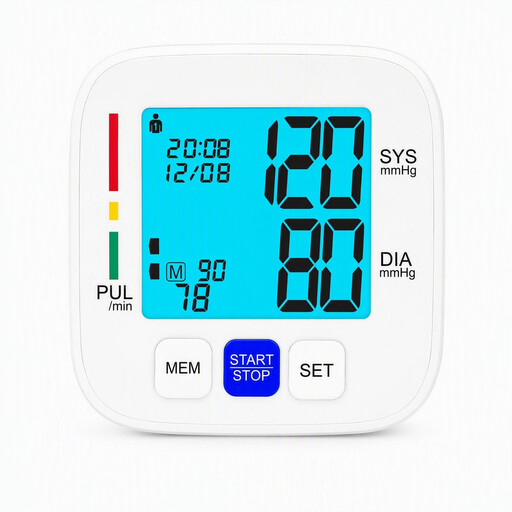
Why this product fits the profile: This automatic blood pressure monitor is designed for daily home use and offers straightforward operation with a digital display.
The cuff covers 22–42 cm according to the product information. Two memories with 90 slots each and an average display of the last three readings reduce the need for manual note-taking.
Compact housing, time stamp for stored readings and automatic shut-off. It runs on four AAA batteries.
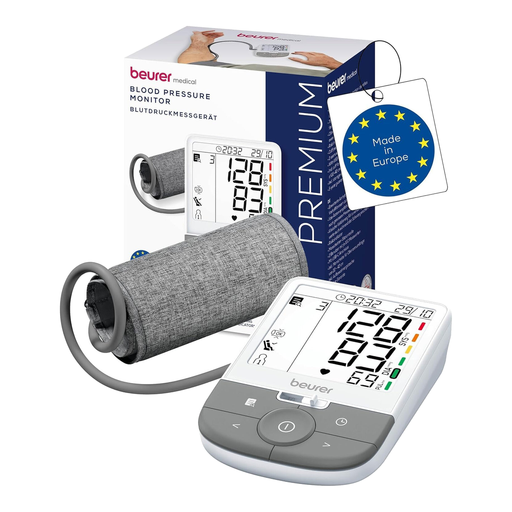
Why this product fits the profile: This model combines an XL display with backlighting, control indicators and app connectivity for structured documentation.
The cuff is designed for 22–42 cm according to the product description. A rest indicator and a cuff fit check provide additional guidance before and during the measurement.
Two user profiles with 100 memory slots each, seven-day averages and synchronisation with popular health platforms.
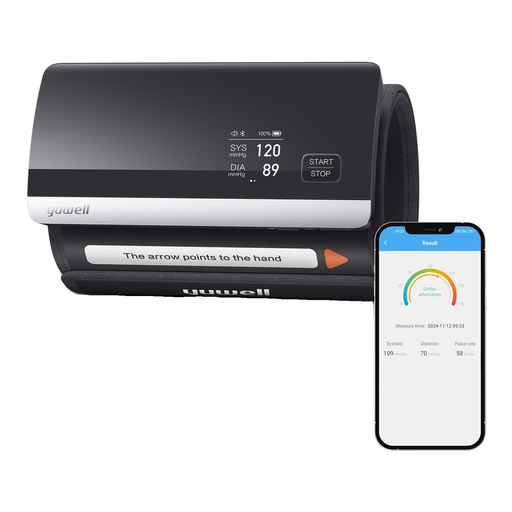
Why this product fits the profile: The combination of Bluetooth, app, voice output and an extended cuff range caters to users who need to document readings frequently.
The 360° upper arm cuff covers 22–45 cm according to the product information. The voice output and easy-to-read display address the common weakness of hard-to-understand results.
Bluetooth transfer to the free yuwell HealthCare+-Connect app, rechargeable battery and arrhythmia detection according to the product description.
We’ve put together a full, regularly updated list of products that fully meet these strict selection criteria and the safety regulations in force in the EU.
For comparable readings, try to measure under similar conditions each time. Sit quietly, place both feet flat on the floor and rest your arm relaxed on a surface. Readings can differ straight after exercise, coffee or excitement. Follow the recommended measurement intervals and instructions in the user manual.
When it comes to ongoing costs, batteries, charging accessories and cuffs are the main factors. A built-in rechargeable battery can reduce battery changes. With a device that uses an app, also check whether basic use is possible without a smartphone. This is important if family members need to operate a blood pressure monitor for home use.
The lifespan depends on build quality, storage, batteries and how the cuff is used. Keep the device dry, protected from direct sunlight and stored according to the manufacturer’s instructions. Check the cuff and cable for damage before each use. If readings are unclear or fluctuate significantly, it may be worth having the device checked or compared with a medical measurement.
An automatic blood pressure monitor can simplify operation because the measurement starts at the press of a button. For seniors, a large display, few buttons, clear symbols and, if needed, voice output are particularly important. The right cuff and clear instructions remain essential.
For battery-operated devices, there are costs for AA or AAA batteries. Models with a USB port or rechargeable battery instead need a suitable charging cable or power adapter. With Bluetooth devices, the app may be free; however, always check the current information from the manufacturer. The readings are for health documentation and do not replace medical advice.