
Lieferung heute & morgen

Qualitätsgarantie

Willkommens-Angebote freischalten: KOSTENLOSE Lieferung | Bis zu 80 % RABATT | Kostenlose 30-Tage-JoyPlus-Testphase
App herunterladen
An upper arm blood pressure monitor can make regular home checks much easier. However, for the device to work well in everyday life, it’s not just about having a large display or the word “automatic” on the box. Cuff size, ease of use, memory and power supply all determine whether every family member can use it reliably.
That’s why the selection from the Joybuy Product Recommendation Officer focuses on clear product data and practical usage scenarios.
A standard cuff doesn’t automatically fit every upper arm. Among adults and older people, arm circumference can vary significantly. A cuff that’s too tight or poorly positioned can make measurement difficult and lead to unusable comparison readings. Before buying, measure your upper arm circumference at the intended measurement point.
For many households, a blood pressure monitor with a large cuff makes sense. Models covering 22–42 cm suit a wide range of adult users. For larger upper arms, a blood pressure monitor 22–45 cm offers more flexibility.
Bluetooth, app connectivity, voice output and multiple memory profiles can all be useful. However, they’re only practical if the device remains straightforward to use. For parents or grandparents, a clear display, a simple start button and an easy-to-understand manual are often more important than a long list of features.
An automatic blood pressure monitor handles the inflation and analysis for you. The cuff still needs to be positioned correctly, though. A cuff position indicator or movement detection can help guide you through the process.
A single measurement doesn’t automatically reflect a long-term trend. A digital blood pressure monitor with memory can record readings with date and time. Some models also show the average of your last three measurements. This makes it easier to keep track, but it doesn’t replace a medical assessment.
An arrhythmia detection feature (or IHB indicator) highlights irregular heartbeats during measurement. These alerts are not a diagnosis. If you repeatedly get unusual results, you should seek medical advice.
Pay attention to the stated upper arm circumference, not just the label “Large Cuff”. A model covering 22–42 cm works well for many adult family members. For a larger or more variable arm circumference, a blood pressure monitor 22–45 cm may be more suitable.
The cuff should be placed on your bare upper arm. During measurement, keep your back and feet supported, your arm at heart level, and your body still. Always follow the manufacturer’s specific instructions.
For a blood pressure monitor for seniors, large digits, high-contrast displays and minimal controls are important. A screen showing blood pressure and pulse results, along with symbols for memory, heartbeat or low battery, makes daily use easier.
Voice output can help with operation. Check before buying whether the language you need is available and whether the feature is activated by default or needs to be set up separately.
If several people will use the device, separate memory profiles are helpful. Check the number of memory slots per person. Battery operation is good for flexible use, while USB or mains power can reduce the need for regular battery changes. For Bluetooth models, check smartphone compatibility, the app name and what data can be transferred.
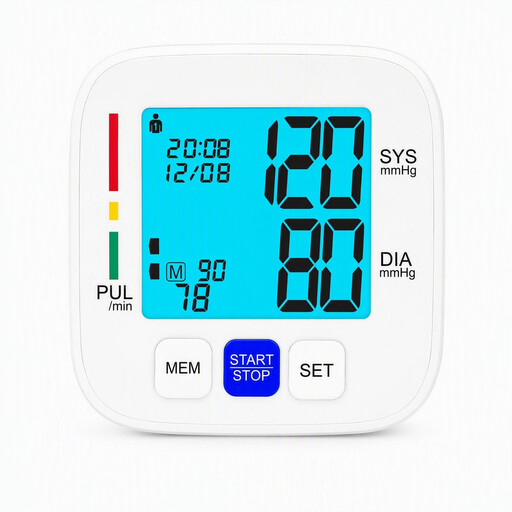
Why this product fits the profile: This compact automatic blood pressure monitor works with a 22–42 cm cuff and features a simple digital display. Two memory profiles with 90 slots each support daily record-keeping.
The cuff size is clearly stated. Date and time are recorded with stored readings, and the average of three measurements reduces the need for manual note-taking.
Compact size, two memory profiles and automatic shut-off after inactivity.
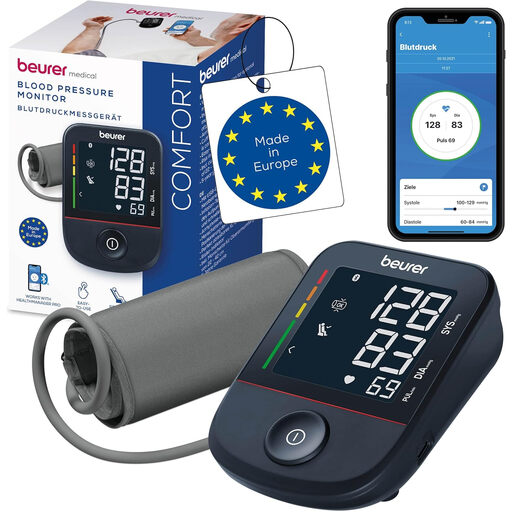
Why this product fits the profile: This model combines one-button operation, an extra-large display, arrhythmia detection and Bluetooth transfer to the HealthManager Pro app.
The cuff is designed for 22–42 cm. A rest indicator and cuff position control also help ensure consistent preparation.
Bluetooth synchronisation, app support and four AAA batteries included.
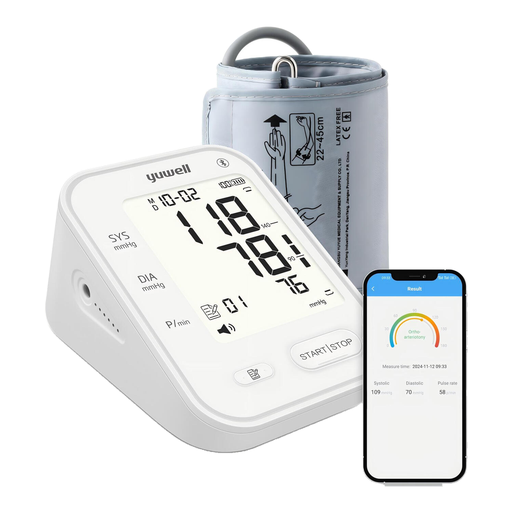
Why this product fits the profile: The 22–45 cm cuff suits households with different arm circumferences. Bluetooth, app connectivity, a backlit display and a rechargeable battery are designed for frequent use.
The wide cuff range reduces the risk of an ill-fitting size. Readings can be stored digitally and exported as PDF or CSV.
22–45 cm cuff, rechargeable battery and app documentation for larger data sets.
We’ve put together a full, regularly updated list of products that fully meet these strict selection criteria and the safety regulations in force in the EU.
Before measuring, it’s a good idea to rest for about five minutes. Coffee, physical exertion or a tense posture can affect the comparability of your readings. Measure according to the instructions, ideally at similar times of day, and make a note of any unusual circumstances.
When it comes to ongoing costs, the main factors are batteries, possibly a mains adapter, and looking after the cuff. A rechargeable battery can be practical if you use the device frequently. For battery-powered models, use suitable alkaline batteries and avoid mixing them with old ones or different battery types.
The lifespan depends on usage, storage, batteries and the condition of the cuff. Keep the device dry, protected from knocks and out of direct sunlight. Regularly check the tubing, Velcro fastening and cuff material. For specific details, refer to the manufacturer’s information.
No. Bluetooth is optional. It’s mainly useful if you want to store lots of readings, compare them on your smartphone or export them for a doctor’s appointment. For simple single measurements, a model with a display and internal memory is sufficient.
What matters is your measured upper arm circumference. A blood pressure monitor 22–42 cm fits many adults. For larger arms or multiple users, a blood pressure monitor 22–45 cm can offer more flexibility. The cuff should be neither too tight nor too loose.