
Lieferung heute & morgen

Qualitätsgarantie

Willkommens-Angebote freischalten: KOSTENLOSE Lieferung | Bis zu 80 % RABATT | Kostenlose 30-Tage-JoyPlus-Testphase
App herunterladen
An upper-arm blood pressure monitor is part of the regular health routine for many adults and older people. However, the wide choice of automatic devices does not necessarily make it easier to choose the right one. Features that are rarely used in everyday life are often heavily promoted, while important details such as cuff size, ease of use and memory capacity receive too little attention.
The cuff must fit the circumference of your upper arm. If it is too small or too large, it can affect the measurement result. A standard cuff will therefore not necessarily suit every member of the family. For many adults, a range of 22–42 cm is practical. If you have larger upper arms, choose a blood pressure monitor with a large cuff that fits up to 45 cm.
A digital blood pressure monitor with numerous menu options is not automatically practical for everyday use. Small digits, low contrast or several operating steps can be problematic for older people. A large display, an easy-to-find start button and clear symbols are often more important than additional statistics features.
An arrhythmia detection or AFib detection feature can indicate an irregular heartbeat during the measurement. However, it does not replace a medical examination and does not provide a diagnosis. Colour-coded classifications based on blood pressure categories are also intended only as a guide. Repeatedly abnormal readings should be discussed with a healthcare professional.
Measure the circumference of your bare upper arm and compare it with the manufacturer's specification. The cuff is generally positioned at heart level. During the measurement, sit still, do not speak and rest your arm in a relaxed position. A cuff fit check or movement detection feature can help prevent common user errors.
A blood pressure monitor with memory is useful if you want to record readings over a longer period. Check the number of memory spaces and whether two people can use separate profiles. Models with, for example, 2 × 90 or 2 × 120 memory spaces prevent the readings of different users from being mixed together. An average reading of the last three measurements can also make it easier to keep track of your results.
A blood pressure monitor with an app transfers readings to a smartphone via Bluetooth. This is useful if you want to record trends digitally or export data for a medical appointment. Before buying, check whether the app is compatible with your operating system and which health platforms it supports.
Battery type and power supply are relevant to ongoing costs. Some devices use AAA or AA batteries, while others have a USB port or a rechargeable battery. Automatic shut-off helps reduce unnecessary power consumption.
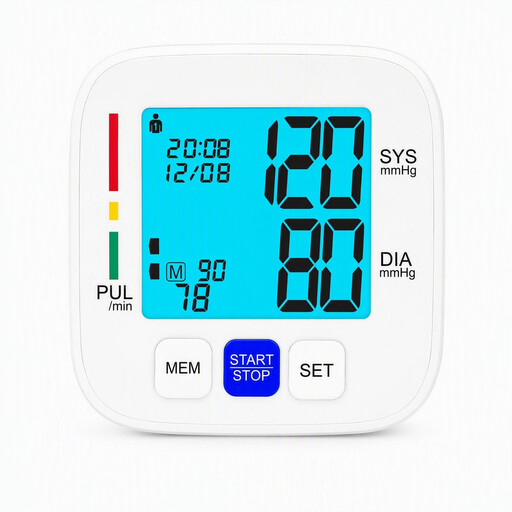
Why this product suits this profile: This compact automatic blood pressure monitor focuses on essential home measurements and is easy to operate in just a few steps. The cuff is designed for upper-arm circumferences of 22–42 cm.
The display shows readings with the date and time, so results do not necessarily have to be written down straight away. Two memory profiles with 90 spaces each keep the readings of two people separate.
Compact dimensions, automatic averaging of three measurements and automatic shut-off after a period of inactivity.
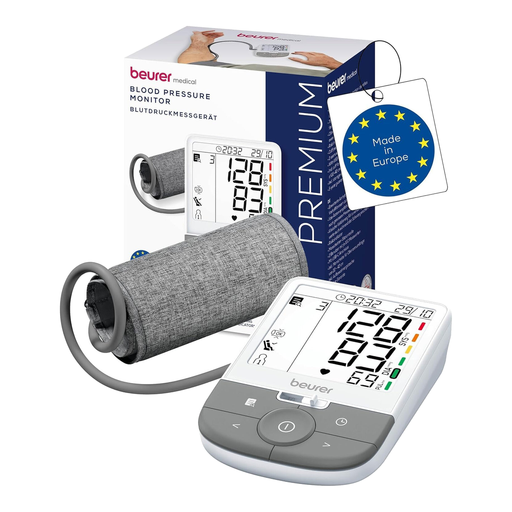
Why this product suits this profile: This model combines an XL backlit display with triple measurement, a resting indicator and enhanced arrhythmia and AFib detection.
The cuff fit check and resting indicator address two common sources of error. Nevertheless, the rhythm display should be understood solely as an indication.
100 memory spaces per user, seven-day average and synchronisation with beurer HealthManager Pro, Apple Health, Samsung Health and Health Connect.
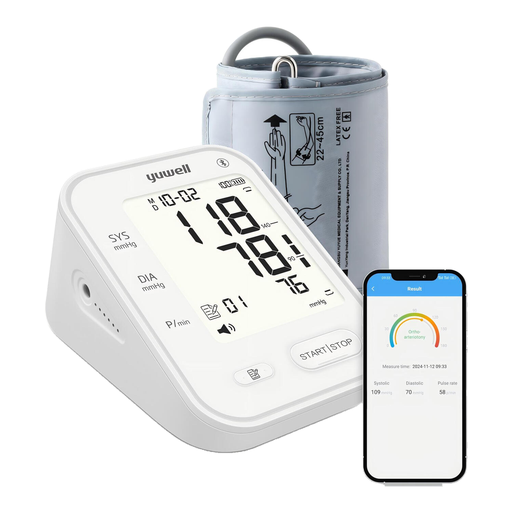
Why this product suits this profile: For users who want to keep a digital blood pressure log, this Bluetooth blood pressure monitor offers app connectivity for iOS and Android, as well as a rechargeable battery.
The 22–45 cm cuff covers a wider range of upper-arm circumferences. This can make it easier to find the right size, but you should still measure your arm beforehand.
App synchronisation, PDF and CSV export according to the product description, an illuminated display and memory management via the app.
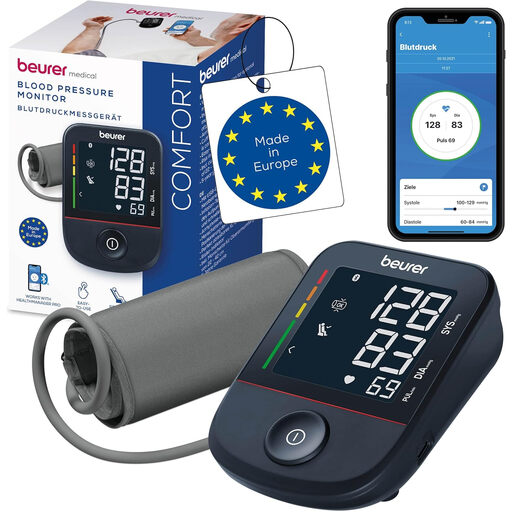
Why this product suits this profile: One-button operation and the extra-large display make everyday use easier. Data can be transferred automatically to the beurer HealthManager Pro app via Bluetooth.
The controls avoid a complicated button menu. A resting indicator and cuff positioning check provide additional guidance before the measurement.
Arrhythmia detection, 22–42 cm cuff and support for Apple Health, Samsung Health and Health Connect.
We have put together a complete, regularly updated list of products that fully meet these strict selection criteria and the safety regulations applicable in the EU.
Its lifespan depends on usage, batteries, the cuff and proper storage. Store the device in a dry place, protected from direct sunlight and strong impacts. The cuff should not be folded or excessively twisted. If you use the monitor regularly, it is also advisable to have its function or accuracy checked against another device according to the manufacturer's instructions.
Upper-arm monitors are often preferred for home use because the measurement is taken closer to heart level and the cuff surrounds the upper arm. Correct cuff size, posture and following the instructions remain crucial. A device with a suitable cuff is preferable to choosing one based solely on its design.
For battery-operated devices, the main ongoing cost is AA or AAA batteries. A USB port can provide an alternative power supply, while a rechargeable battery reduces the need for frequent battery replacement. With an app-enabled model, you should also check whether the basic functions are available without a paid subscription.