
Lieferung heute & morgen

Qualitätsgarantie

Willkommens-Angebote freischalten: KOSTENLOSE Lieferung | Bis zu 80 % RABATT | Kostenlose 30-Tage-JoyPlus-Testphase
App herunterladen
An upper arm blood pressure monitor should provide a clear overview of your readings in everyday life and be easy to use without complicated setup. However, some purchasing decisions can lead to unnecessary ongoing costs or unreliable measurements. People often focus on having a particularly large display, while overlooking whether the cuff fits their arm circumference. App functions may also seem appealing, but go unused if connecting to a smartphone is unnecessarily complicated.
This buying guide explains which technical specifications are important to consider before purchasing an automatic blood pressure monitor, and which model may suit different usage situations.
The cuff is not merely an accessory. It must fully and evenly wrap around the upper arm. If it is too small, the result may be inaccurate; if it is too large, it may not stay securely in place. Before buying, check your actual upper arm circumference and compare it with the specified range.
A large 22–45 cm cuff covers many adult users. Other models are designed for measurements such as 22–42 cm or 22–36 cm. If several people in your household will be using the device, a blood pressure monitor with a cuff covering a wider range may be more practical.
A digital blood pressure monitor with Bluetooth and an app can automatically save readings and display trends. This is useful if you regularly document your data or want to present it in an organised way at a doctor’s appointment. If you only want to take readings in the morning and evening, you may not need an app.
Check that the device is genuinely compatible with your smartphone. Important points include:
Many devices indicate irregular heartbeats or possible arrhythmias. A blood pressure monitor with arrhythmia detection can therefore provide additional information during a measurement. However, such an indication does not replace medical assessment and is not a diagnosis. If unusual readings or symptoms occur repeatedly, seek medical advice.
For regular monitoring at home, taking measurements on the upper arm is a common design. The cuff is placed on bare skin, roughly at heart level. Models covering 22–42 cm fit many adults. For larger upper arms, a range of 22–45 cm offers greater flexibility.
Also consider the shape of the cuff. A pre-shaped or fully integrated cuff can make fitting it easier. Correct positioning according to the instruction manual remains essential.
A blood pressure monitor for seniors should have easy-to-read numbers, clearly identifiable buttons and understandable symbols. A large or backlit display can be helpful in poor lighting conditions. Voice prompts are an additional option if users prefer audio assistance.
For comparable results, sit quietly for around five minutes before taking a measurement, do not speak and rest your arm in a relaxed position. Some devices detect movement or an incorrectly positioned cuff and display corresponding warnings.
A blood pressure monitor with memory makes it easier to track multiple readings. Two user profiles help prevent family members’ readings from being mixed up. Automatically calculating the average of three readings can provide additional guidance on your personal trend.
Power is often supplied by batteries, a USB connection or an integrated rechargeable battery. A rechargeable device is practical when travelling. For use in a fixed location, batteries or a mains adapter may be sufficient. Check whether batteries, a USB cable and a carry case are included.
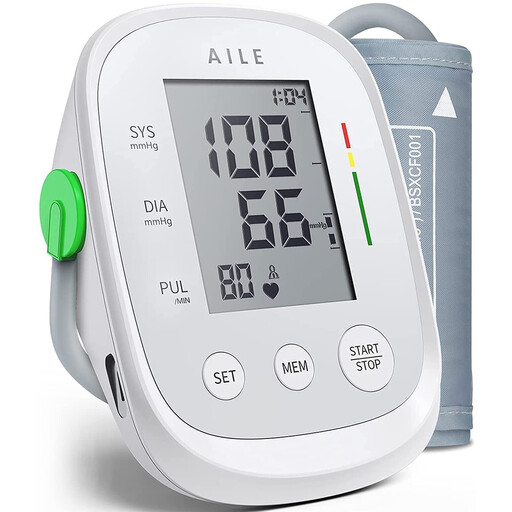
Why this product suits this profile: This model is designed for basic measurements at home and offers two user profiles, each with 99 memory slots. Operation is focused on the essential functions.
The 22–42 cm cuff covers a wide range. USB cable and battery operation offer flexibility, although you should check separately whether batteries and a mains adapter are included.
Large cuff, two user memories and an average reading display for the last three measurements.
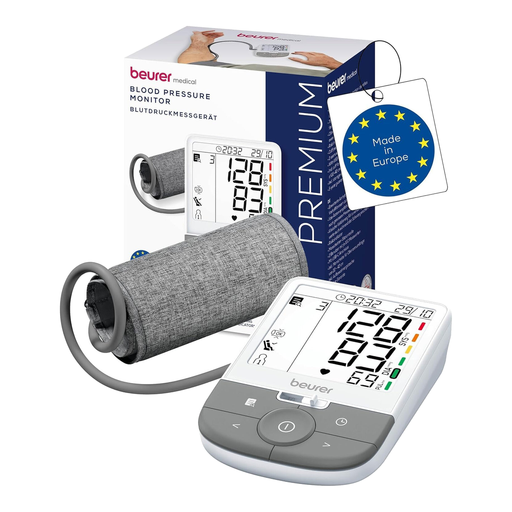
Why this product suits this profile: This device combines an XL display, a 22–42 cm cuff, two memory profiles and app connectivity with resting-position and cuff-position control functions.
The sitting-position and cuff-position functions address two common usage errors. The app synchronises data with selected health platforms.
100 memory slots per user, seven-day average, Bluetooth and advanced arrhythmia display according to the product description.
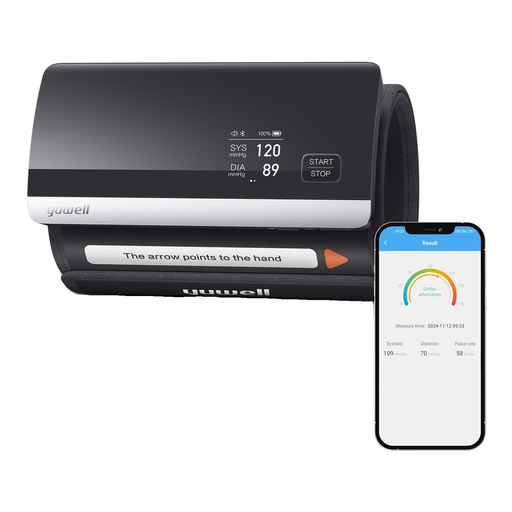
Why this product suits this profile: The 22–45 cm cuff, voice output, rechargeable battery and AFib detection are aimed at users looking for extensive features or support with daily record-keeping.
The wider cuff range reduces the risk of choosing the wrong size. The app, voice output and movement warnings support a structured measuring routine, but do not replace medical advice.
Bluetooth synchronisation, rechargeable battery, voice output and 360° cuff for 22–45 cm according to the product specifications.
We have put together a complete, regularly updated list of products that fully meet these strict selection criteria and the safety regulations applicable in the EU.
For the most consistent record-keeping possible, it is advisable to take measurements at a set time. Sit still, place both feet flat on the floor and rest your arm in a relaxed position on a suitable surface. Do not speak or move during the measurement. Also follow the instructions provided by the relevant manufacturer.
When considering running costs, the battery type and battery capacity are particularly important. A device using four AAA or AA batteries will incur regular replacement costs. An integrated rechargeable battery can reduce this expense, but requires a suitable charging cable and should be charged regularly. Using the app may also require registration or permissions on your smartphone.
There is no fixed replacement period that applies to every model. Regularly check the cuff, tube, display and buttons for damage. Follow the instructions in the manual regarding the product’s service life, storage and function checks. If you notice visible cracks or implausible readings, stop using the device until the cause has been clarified.
No. An app is particularly useful if you want to store numerous readings, view them over time or share them digitally. For occasional measurements, a device with internal memory and an easy-to-read display is often sufficient. Before buying, check that the app is compatible with your smartphone.
This function can indicate irregular heartbeats or possible patterns associated with atrial fibrillation during a measurement. It is intended as an indication feature, not a medical diagnosis. If warnings, unusual blood pressure readings or symptoms recur, please contact a doctor, nurse or the NHS 111 service.