
Lieferung heute & morgen

Qualitätsgarantie

Willkommens-Angebote freischalten: KOSTENLOSE Lieferung | Bis zu 80 % RABATT | Kostenlose 30-Tage-JoyPlus-Testphase
App herunterladen
An upper-arm blood pressure monitor is a practical way for many households to record readings regularly. However, for your purchase to be genuinely useful in everyday life, you should look beyond the price and the number of extra features. The key factors are a correctly sized cuff, straightforward operation and clear information about the measurement method.
A cuff that is too small can distort readings and feel uncomfortable as it inflates. A cuff that is too large may not sit securely. You should therefore measure your upper-arm circumference before buying. Many devices cover 22 to 42 cm, while some models use smaller or larger cuffs.
Bluetooth, app connectivity, voice prompts and a colour scale can make a device easier to use. However, they cannot replace the correct sitting position or a properly fitted cuff. An arrhythmia detection feature merely indicates irregular pulse patterns during the measurement; it does not provide a diagnosis.
Stress, movement, coffee, a full bladder or talking during the measurement can affect the result. An automatic blood pressure monitor should therefore always be used under conditions that are as similar as possible. Several readings and saved averages are more meaningful for monitoring changes over time than one isolated result.
An upper-arm blood pressure monitor is placed on the bare upper arm at heart level. Before taking a measurement, it is advisable to rest for around five minutes. Keep your feet flat on the floor, support your back and rest your arm comfortably on a surface. Do not speak or move while the cuff is inflating.
When buying, check the following:
A blood pressure monitor with a large display can be useful for older people and those with impaired vision. Large digits, high contrast and an easy-to-find start button are more important for everyday use than an especially stylish casing.
A blood pressure monitor with memory should be able to store readings separately for each user at a minimum. Time stamps and averages from several readings are useful additions. This makes it easier to interpret a series of readings during a GP appointment. Saved readings do not replace a medical assessment.
If you are looking for a clinically validated blood pressure monitor, check the exact model designation and the stated validation evidence. A general marketing claim about the brand is not sufficient. For a Bluetooth blood pressure monitor or a blood pressure monitor with app, you should also check compatible operating systems, data protection, whether an account is compulsory and the available export options.
The power supply also affects everyday use. Battery operation is suitable for flexible use, while USB-C or a mains adapter can be practical if you have a fixed measuring area. Check which batteries and cables are actually included.
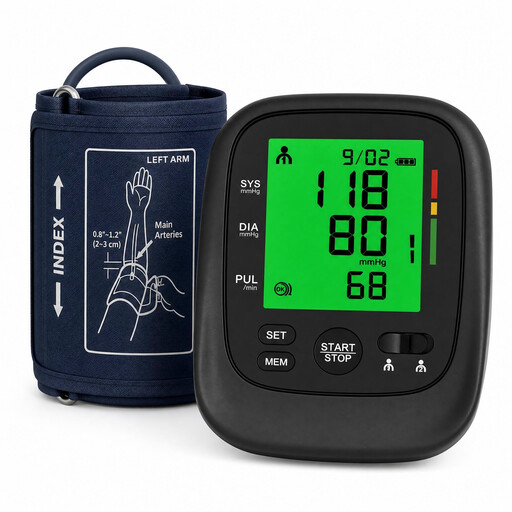
Why this product suits this profile: This automatic blood pressure monitor combines a 63 × 81 mm LCD, a 22–42 cm cuff and two separate memories, each with space for 120 readings.
The cuff size is clearly stated, while additional indicators alert you to incorrect positioning and body movement.
Dual power supply via 4 AA batteries or USB-C; voice prompts and Bluetooth are available as optional features.
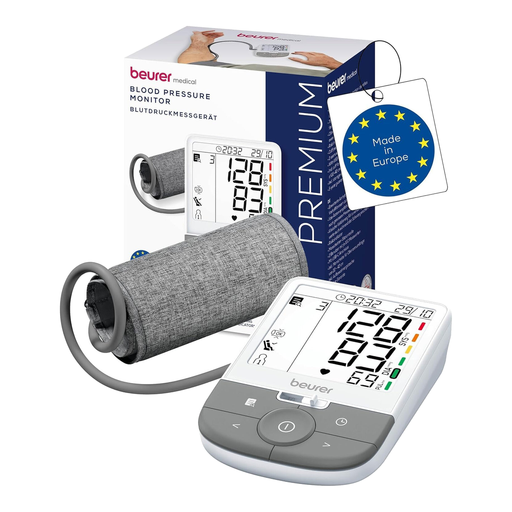
Why this product suits this profile: According to the product description, this model is clinically validated and offers an XL backlit display together with enhanced AFib detection.
Triple measurement, a resting indicator and cuff fit control support consistent use.
2 × 100 memory slots, a seven-day average and synchronisation with HealthManager Pro and selected health platforms.
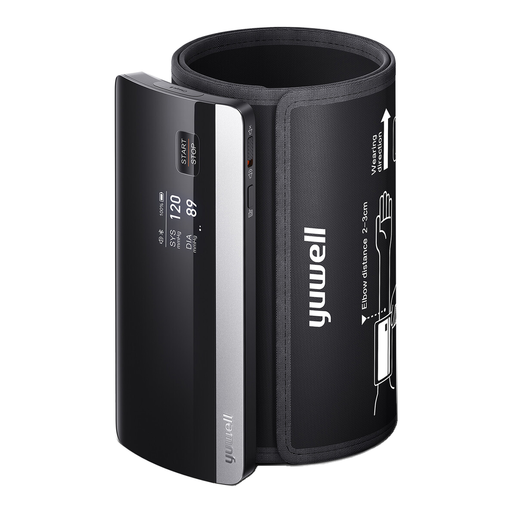
Why this product suits this profile: For users who want to document readings while out and about or digitally, this device combines Bluetooth transfer, voice prompts and a rechargeable battery.
The app function is linked to a specific application; check smartphone compatibility and the set-up involved before buying.
257 g in weight, a 22–36 cm cuff and, according to the product information, up to 250 uses per charge.
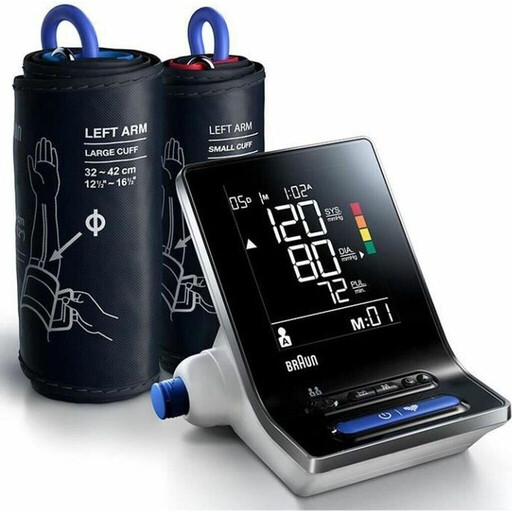
Why this product suits this profile: According to the product information, the two included cuffs cover sizes up to 21 cm and 33–43 cm, making the device suitable for several people in the household.
The cuff size is not left to chance; the description also highlights fit control and triple measurement.
XL backlit display, automatic detection of irregular heartbeats and two user profiles with 40 memory slots each.
We have put together a complete, regularly updated list of products that fully meet these strict selection criteria and the safety regulations applicable in the EU.
If readings remain consistently unusual, you have symptoms or the device indicates an irregular heartbeat, seek medical advice. The display on a digital blood pressure monitor is not a diagnosis.
Its lifespan depends on the build quality, storage conditions, batteries and regular inspection of the cuff. Check the tubing and hook-and-loop fasteners for cracks and signs of wear. If readings seem implausible or there is visible damage, reconsider whether the device should continue to be used. Regular comparison measurements at your GP surgery may be advisable.
For battery-powered models, the main running costs are AA or AAA batteries. USB-C or rechargeable devices can reduce battery consumption, but require a suitable cable and power source. For app-enabled models, check any account requirements, additional services or smartphone requirements before buying.
Voice prompts can be helpful if the numbers on the display are difficult to see. However, they are no substitute for a high-contrast display, a correctly fitted cuff and easy-to-use buttons. For relatives, it is advisable to choose a model whose memory can manage several users separately.