
Lieferung heute & morgen

Qualitätsgarantie

Willkommens-Angebote freischalten: KOSTENLOSE Lieferung | Bis zu 80 % RABATT | Kostenlose 30-Tage-JoyPlus-Testphase
App herunterladen
Finding a new USB-C charger seems simple at first glance. However, the reality is often different: unclear power ratings, incompatible fast-charging standards, and exaggerated marketing claims frequently lead to a bad buy. The result is a charger that only slowly charges your smartphone, takes up too much space in your backpack, or, in the worst-case scenario, could even damage your devices.
As your Joybuy Product Recommendation Officer, I'm here to help you navigate these pitfalls. We'll focus on the objective facts and technical specs that truly matter. Here are the most common mistakes and how to avoid them.
To find the right USB-C power adapter, you should check three core aspects. These determine whether a charger meets your needs for speed, compatibility, and convenience.
The power, measured in watts (W), indicates the maximum energy a charger can deliver. However, it's not just the wattage that's crucial, but also the charging standard. Power Delivery (PD) is the most important term here. It's an intelligent protocol where the charger and the device communicate to negotiate the optimal charging power.
When you see the term GaN charger, it stands for Gallium Nitride. This semiconductor material replaces traditional silicon and enables significantly higher efficiency. The concrete advantages for you are:
A modern charger should be flexible. Consider how many devices you want to charge simultaneously.
Here are some recommendations tailored to specific use cases that take the above criteria into account.
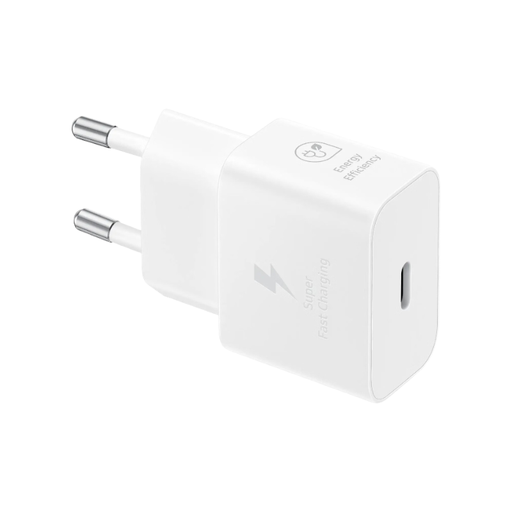
Why This Fits Their Persona: Ideal for users seeking a reliable and efficient charging solution primarily for their smartphone (e.g., Samsung Galaxy or iPhone). It's compact, comes from an established manufacturer, and includes a matching cable.
This charger avoids the "wattage trap" by delivering 25W, exactly the right amount of power for fast-charging modern smartphones. As a GaN charger, it is also compact and efficient.
Supports Super Fast Charging (SFC) and PPS for optimized charging of compatible Samsung devices. A 1-meter USB-C cable is included in the box.
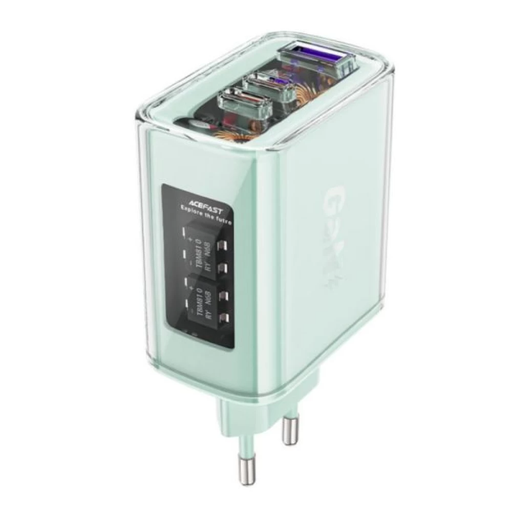
Why This Fits Their Persona: Perfect for commuters and travelers who want to charge their laptop, smartphone, and headphones with just one power adapter. The GaN technology ensures a compact design that fits into any bag.
This 65W charger provides enough power for most ultrabooks and avoids the problem of carrying multiple, bulky individual adapters. It's a modern, all-in-one solution.
Three ports (2x USB-C, 1x USB-A) offer maximum flexibility. An intelligent chip monitors the temperature and adjusts the power output to prevent overheating.
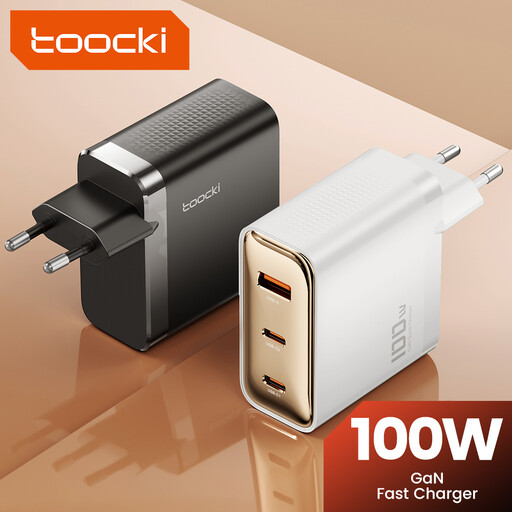
Why This Fits Their Persona: Designed for users with a demanding device setup, such as a MacBook Pro, a tablet, and a smartphone, all of which need to be charged simultaneously and at high speed.
With 100W of total power, there are no compromises. This charger prevents power bottlenecks, even when multiple power-hungry devices are connected at the same time.
Very high total output of 100W, which is intelligently distributed across three ports. It supports PD 3.0, making it capable of rapidly charging even demanding laptops.
We have compiled a complete, up-to-date list of products that fully meet these strict selection criteria and German safety regulations.
Physically, the USB-C plug fits into any USB-C port. However, this doesn't mean the charging performance will always be optimal. Compatibility depends on the supported wattage and charging protocols (like Power Delivery). A charger with PD can adapt its output to the connected device, but it can only supply as much power as its maximum rating and as much as the device can request.
GaN stands for Gallium Nitride, a modern semiconductor material. A GaN charger is significantly smaller, lighter, and generates less heat compared to traditional silicon chargers with the same power output. It is the technology of choice for a modern, high-performance fast charger.
You can find the required wattage on your laptop's original power adapter. Most ultrabooks and compact laptops (e.g., MacBook Air, Dell XPS 13) work well with a 65W charger. More powerful models (e.g., 15/16-inch MacBook Pro, gaming laptops) often require 90W or more. Check the manufacturer's specifications to be sure.