
Lieferung heute & morgen

Qualitätsgarantie

Willkommens-Angebote freischalten: KOSTENLOSE Lieferung | Bis zu 80 % RABATT | Kostenlose 30-Tage-JoyPlus-Testphase
App herunterladen
The USB-C port has become the standard for almost all modern devices, from the iPhone 15 and Samsung smartphones to the MacBook. But this universality has a downside: the market is flooded with cables, and their technical differences are opaque to non-experts. The wrong cable, at best, means slow charging. At worst, it can shorten your battery's lifespan or fail after just a few months.
As your Joybuy Product Recommendation Officer, I'm here to help you spot the common pitfalls and make an informed decision. We'll focus on the facts that truly matter and ignore the empty marketing promises.
The 3 Most Common Traps When Buying Cables:
To avoid these problems, you should check three key technical specifications before buying. These determine the performance, durability, and functionality of your cable.
The most important factor for fast charging is the supported power output, measured in watts (W). Modern devices use a charging standard called Power Delivery (PD) to negotiate the optimal charging power with the adapter and the cable.
For cables that transfer more than 60W (or 3A of current), an E-Marker chip in the connector is mandatory. This chip communicates with the charger and the device to ensure safe and efficient power transfer. If a high-performance cable is missing this chip, the charging power will be throttled for safety reasons.
Not every USB-C cable is a fast USB-C data cable. The speed depends on the supported USB standard:
For everyday charging needs, a cable with USB 2.0 data speeds is perfectly adequate.
A cable's longevity is determined by its materials and build quality.
Based on these objective criteria, we have selected a few products from our range that provide an ideal solution for specific use cases.
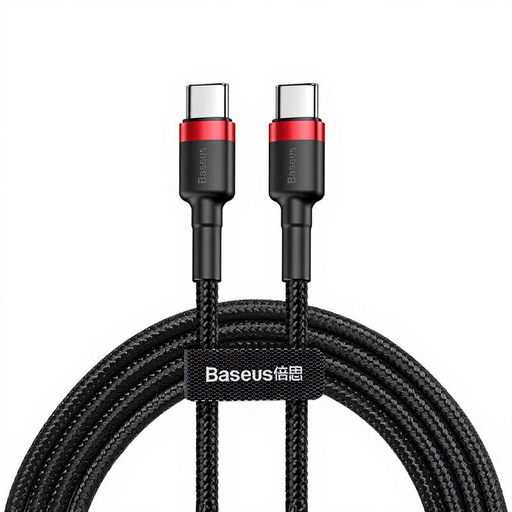
Why It's a Great Fit: Ideal for reliably charging smartphones, tablets, and other everyday devices. The nylon jacket provides high durability for daily plugging and unplugging at home or in the office.
The high-density nylon braid and reinforced aluminum alloy connectors directly counter the common problem of premature cable failure.
Supports 60W Power Delivery, enabling fast charging for a wide range of devices. Includes a Velcro strap for easy storage.
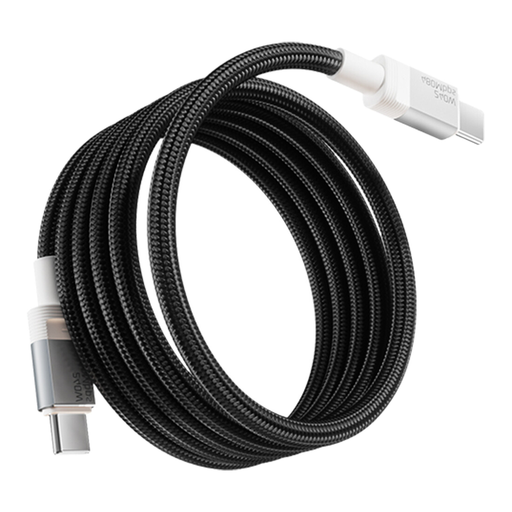
Why It's a Great Fit: Designed for users of high-performance laptops (e.g., MacBook Pro), gaming notebooks, or other devices that require maximum charging power. The 240W capacity ensures that even the most power-hungry devices are charged at optimal speed.
It eliminates the "slow charging" pitfall for high-end devices by supporting the PD 3.1 standard with 240W. The integrated E-Marker Pro Chip ensures safe and intelligent power adjustment.
Extreme 240W charging power for future-proof charging. Very robust construction with aluminum alloy and a 48-strand nylon jacket.
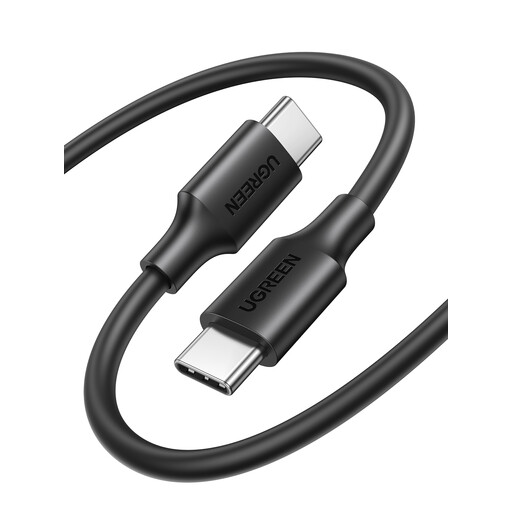
Why It's a Great Fit: The 3-meter length offers exceptional freedom, whether at a desk with a distant outlet, on the couch, or in a hotel room. It's the solution for anyone tired of being "tethered" to the wall.
It solves the practical problem of standard 1-meter cables being too short in many everyday situations. This prevents strain on the cable and ports caused by constant pulling and tension.
Generous 3-meter length for maximum reach. With 60W (3A) support, it still provides fast charging for most common devices.
We have compiled a complete, up-to-date list of products that fully meet these strict selection criteria and safety regulations.
No. The ability to fast charge depends on the maximum power (wattage) the cable can handle and whether it supports standards like Power Delivery (PD). A basic cable can limit the output of a powerful adapter. Pay attention to the cable's wattage rating and ensure it matches your power adapter and device.
Look for external quality markers. A braided nylon cable is often more durable than a smooth PVC one. The joint between the connector and the cable is especially important: a long, flexible strain relief and a sturdy connector housing (e.g., made of aluminum) are good indicators of a longer lifespan.
Usually not. Most smartphones, including the iPhone 15, charge at a power level between 20W and 45W. A 60W cable is more than sufficient for this and offers some headroom. A 100W cable is primarily relevant for laptops and other very high-power devices. Using a more powerful cable won't harm your smartphone, as the charging electronics automatically regulate the power, but it won't offer any speed advantage either.