
Lieferung heute & morgen

Qualitätsgarantie

Willkommens-Angebote freischalten: KOSTENLOSE Lieferung | Bis zu 80 % RABATT | Kostenlose 30-Tage-JoyPlus-Testphase
App herunterladen
A low battery on your smartphone or laptop during an important car trip is more than just an annoyance—it can interrupt your navigation or limit your ability to stay connected. A reliable car charger is therefore essential for many drivers, commuters, and families. However, the market offers an overwhelming variety of models. This article serves as a guide, presenting a selection of devices for different needs to help you make an informed decision.
To find the right model for your needs, several technical specifications are crucial. Paying attention to these criteria will help ensure the functionality and longevity of your devices.
The charging power, measured in watts (W), determines how quickly your devices charge. While older chargers often delivered only 5W, modern smartphones, tablets, and laptops require significantly more power for efficient charging. Look for two common standards for fast car charging:
A charger with at least 20-30W of power per USB-C port is a solid choice for most current smartphones.
Consider how many and what types of devices you need to charge simultaneously. A 12V USB charger with multiple ports is ideal for families or users with multiple devices (e.g., work and personal phones). Common configurations include:
The design affects how it fits and is handled in your car's interior. Compact, flush-fitting models are discreet, while larger adapters often provide more power or extra features. A car charger with a retractable cable is a practical solution to avoid cable clutter and keep your interior tidy. For demanding users who need to charge a laptop in the car, models with a high total output of 60W or more are required.
Based on the criteria above, we've curated a selection of chargers that cover various use cases—from simply charging two smartphones to powering a laptop.
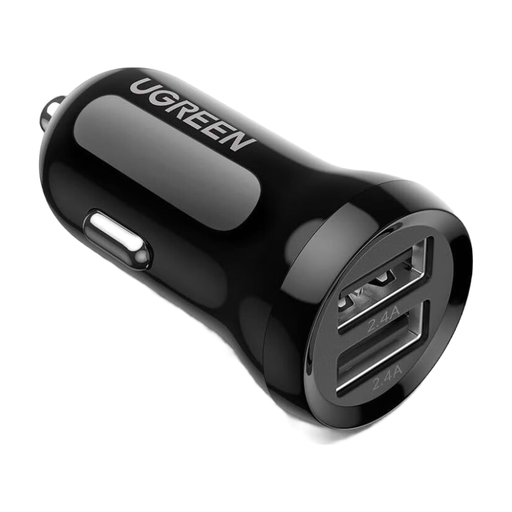
Why it stands out: This charger from UGREEN is a very compact and straightforward solution. It focuses on the essentials: reliably charging two devices simultaneously via classic USB-A ports. With a total output of 24W (4.8A), it intelligently distributes power to both ports.
Pros:
Best for: Users looking for a simple, budget-friendly, and reliable charging solution for one or two devices with USB-A cables, such as older smartphones, GPS devices, or accessories.

Why it stands out: The Anker 30W charging adapter is an all-rounder that combines modern fast-charging technology in a small package. It offers a powerful 30W USB-C port with PowerIQ 3.0 (compatible with PD) as well as an additional USB-A port, making it ready for most modern charging needs.
Pros:
Best for: Users who need a future-proof and flexible solution for fast-charging their modern smartphone while also powering a second device via USB-A.
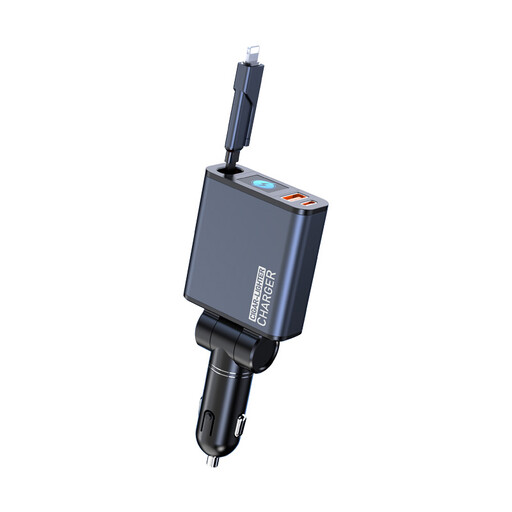
Why it stands out: This model from ATSHARK is a high-performance charging station for your car. With a total output of 160W, two integrated retractable cables, and additional ports, it can easily power multiple demanding devices at once—including laptops.
Pros:
Best for: Power users, families, and professionals who need to charge multiple devices simultaneously at maximum speed, including power-hungry devices like laptops or tablets.
The models featured here cover common use cases. If your specific needs require different features, you might find the right product in our broader selection.
? Discover more models in our Car USB Charger Adapters category
1. Can a car charger drain my car's battery? In most modern vehicles, the power supply to the cigarette lighter is cut off when the engine is turned off. In this case, there is no risk. However, in older vehicles where the socket is always powered, a plugged-in charger could slowly drain the battery over a very long period (several days or weeks). It's good practice to unplug the charger when not in use.
2. What does "PD" mean on a car charger? PD stands for Power Delivery. It is a universal fast-charging standard that uses the USB-C port. A PD-enabled charger communicates with the connected device (e.g., a smartphone or laptop) to negotiate the optimal charging voltage and current. This allows for significantly faster and safer charging than with conventional USB ports.
3. How many watts should a good car charger have? The required wattage depends on the devices you need to charge: