
Lieferung heute & morgen

Qualitätsgarantie

Willkommens-Angebote freischalten: KOSTENLOSE Lieferung | Bis zu 80 % RABATT | Kostenlose 30-Tage-JoyPlus-Testphase
App herunterladen
As a Joybuy Product Recommendation Officer, I analyse market information to provide you with objective and practical purchasing advice. This guide will help you understand the critical features of a high-performance USB-C car charger and sidestep common marketing traps.
Anyone who travels frequently knows the problem: your laptop, smartphone, or tablet battery dies just when you need it most. A powerful USB-C car charger is the solution, but the market is overwhelmingly confusing. Many products promise high performance but disappoint in practice.
Before you make a decision, you should be aware of the typical issues that can lead to a bad purchase.
To ensure your new charger meets your needs, focus on these three core aspects.
The most important specification is not the total output, but the maximum power a single USB-C port can deliver. To charge a laptop in the car, a single USB-C port should provide at least 65 watts. For larger notebooks or exceptionally fast charging, models with 100W per port are the better choice. Check the product specifications carefully for details like "USB-C1 Output: 100W".
Modern devices rely on the USB-C port combined with the Power Delivery (PD) protocol. This standard enables intelligent communication between the charger and the device to negotiate the optimal charging voltage and power. A good fast car charger should have at least one high-performance USB-C PD port. Models with multiple ports, often a combination of USB-C and the older USB-A (with Quick Charge), offer flexibility for charging different devices simultaneously.
An often-overlooked but critical feature is the input voltage. A high-quality cigarette lighter adapter should be compatible with both 12V electrical systems (found in most cars and SUVs) and 24V systems (in trucks and RVs). This ensures flexible and safe use in virtually any vehicle.
Here are some recommendations tailored to specific user profiles that avoid the pitfalls mentioned above.
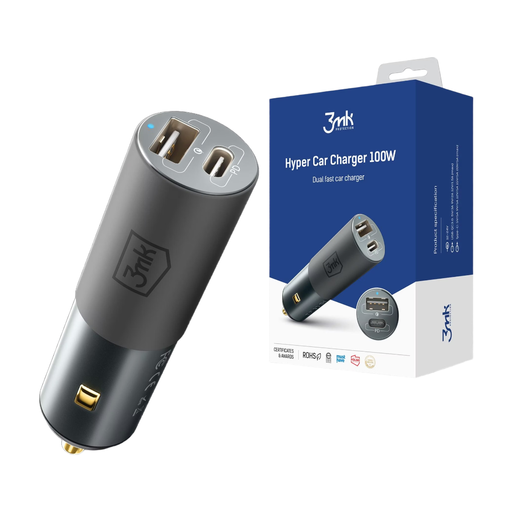
Why This Fits Their Persona: Ideal for professionals who need to reliably and quickly charge their laptop between appointments or on the way to the office. The high single-port output from the USB-C port ensures that even power-hungry notebooks are supplied with energy.
This charger bypasses the "total output" trap by delivering a high power of up to 100W via the USB-C port, rather than splitting the power inefficiently.
High output of 100W, suitable for most laptops. Supports common fast-charging protocols and is compatible with 12V/24V systems.
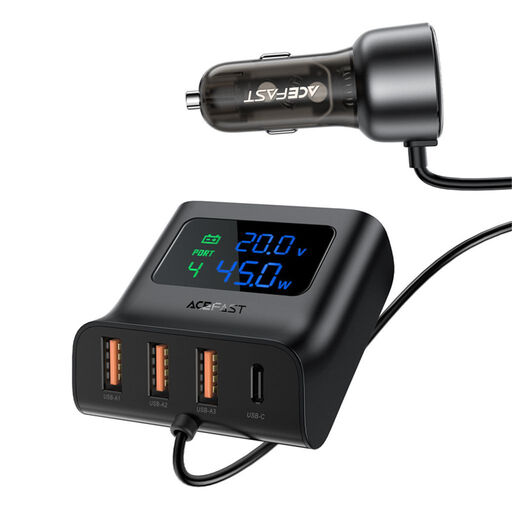
Why This Fits Their Persona: Perfect for long family road trips or for users with many devices. With six ports, smartphones, tablets, power banks, and other gadgets can be charged simultaneously without creating a bottleneck.
The high total output of 138W is intelligently distributed across the six ports. The integrated display shows the power output in real-time, providing transparency about the charging process.
Six charging ports (4x USB-A, 2x USB-C) and a digital display to monitor charging performance. Robust construction from aluminum and PC/ABS.
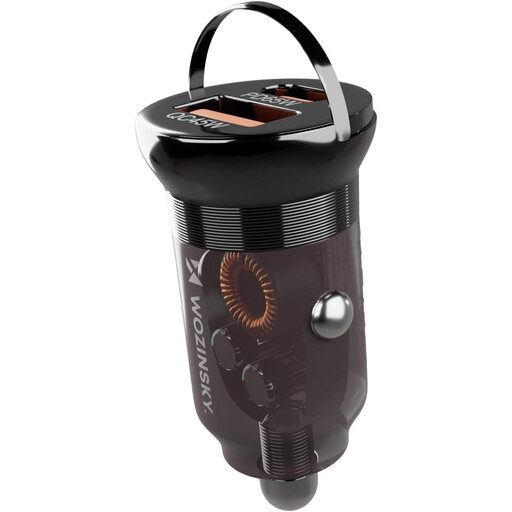
Why This Fits Their Persona: A balanced solution for users who want to fast-charge a modern smartphone or tablet and occasionally need to power a second device. The 65W output on the USB-C port is sufficient for many ultrabooks and all common tablets.
This model clearly states the power per port (65W PD and 45W QC), so it doesn't set false expectations. The aluminum and ABS construction suggests better heat dissipation than all-plastic models.
Strong single-port performance on both ports (USB-C with PD, USB-A with QC 3.0). Compatible with 12V and 24V vehicles and offers excellent value for money.
We have compiled a complete, up-to-date list of products that fully meet these strict selection criteria and German safety regulations.
When the engine is running, the charger is powered by the alternator and does not strain the battery. However, in some vehicle models, the cigarette lighter socket remains active even when the engine is off. To avoid draining the car battery during long periods of inactivity, it is advisable to unplug the charger when not in use. Some chargers have built-in undervoltage protection that cuts off power before the battery voltage becomes critical.
There could be several reasons for this. First, the USB-C cable being used must be rated for 100W power transfer; standard cables often limit the power. Second, the charger must support the specific Power Delivery profile that your laptop requires. Third, the power may be reduced if other devices are simultaneously connected to other ports on the charger, causing the total output to be split.
No. To achieve high charging outputs like 65W or 100W, you need an appropriately certified USB-C cable. Cables rated for more than 60W typically include a special E-Mark chip that ensures the safe transfer of high currents. Using an unsuitable cable will cause the charger to throttle the power to a lower level for safety reasons.