
Lieferung heute & morgen

Qualitätsgarantie

Willkommens-Angebote freischalten: KOSTENLOSE Lieferung | Bis zu 80 % RABATT | Kostenlose 30-Tage-JoyPlus-Testphase
App herunterladen
As a Joybuy Product Recommendation Officer, I see countless drivers struggle daily with unsuitable or underpowered chargers. A modern USB-C car charger is now essential for reliably powering smartphones, tablets, and even laptops on the go. However, the market is flooded with products whose marketing promises often fall short in practice. This guide will help you identify the crucial features and make an informed decision.
Before we dive into the important specifications, let's highlight the three most common problems that lead to frustration and unnecessary expense.
To avoid these pitfalls, focus on three verifiable criteria. These determine whether a car charger is right for your needs.
The total output is only relevant if you charge multiple devices simultaneously. The crucial factor is the maximum power a single USB-C port can deliver.
Modern devices require specific protocols to activate their fast-charging capabilities.
The number and type of ports should match your collection of devices. A dual USB-C car charger is a great foundation for most users. However, if you need to charge devices for the whole family or in a professional context, models with more ports are a sensible choice.
Equally important is compatibility with the vehicle's voltage. A good charger should function safely as a 12V/24V charger in both standard cars (12V) and trucks or RVs (24V).
Here are some recommendations tailored to specific use cases that meet the criteria mentioned above.
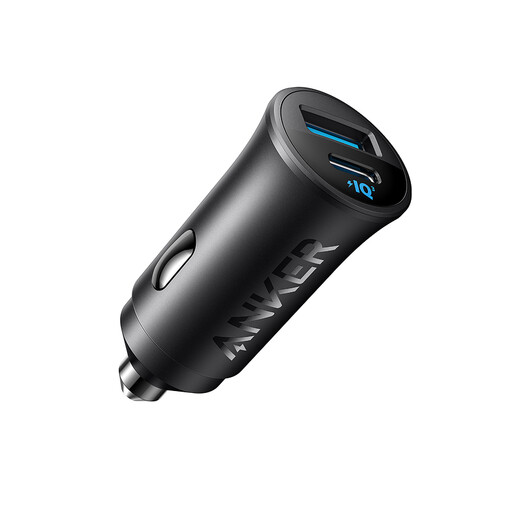
Why This Fits Their Persona: Ideal for commuters who need to fast-charge their smartphone while powering a second device (e.g., headphones). The ultra-compact design blends seamlessly into any dashboard.
Anker's MultiProtect technology guards against overheating and overvoltage, thus avoiding the safety risk of low-quality chargers.
Combines a powerful 30W USB-C port with an additional USB-A port in a very small form factor.
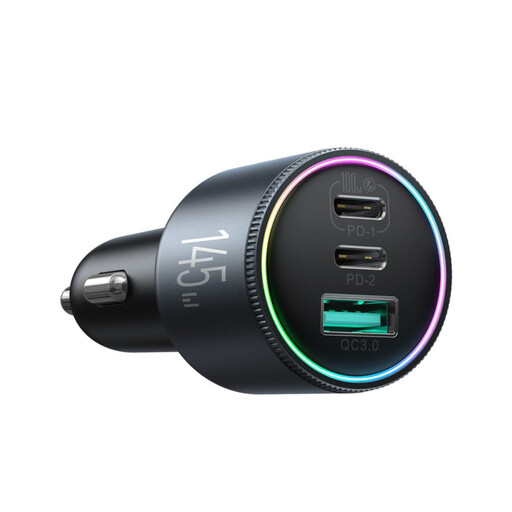
Why This Fits Their Persona: Perfect for professional drivers or field representatives who need to charge a laptop on the go. With 100W of power from a single port, it replaces a full-fledged laptop power adapter.
Solves the "total output" trap by explicitly providing 100W on a single USB-C port. The metal casing ensures superior heat dissipation and prevents overheating.
True laptop-charging power with 100W PD, supporting PD 3.0 and PPS. A compatible 100W USB-C cable is included in the box.
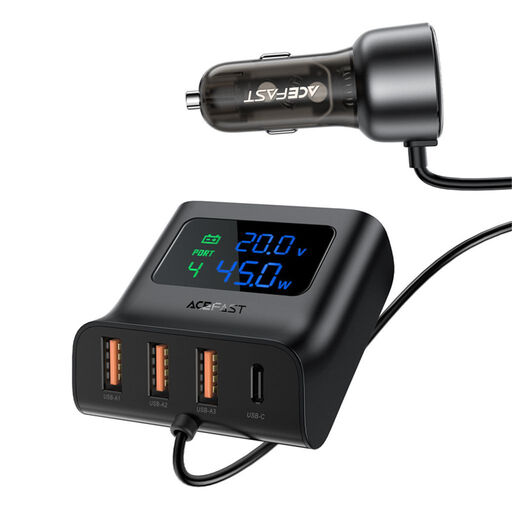
Why This Fits Their Persona: The solution for long road trips with the family or for carpools. With six ports, it can simultaneously charge smartphones, tablets, and other gadgets for all passengers.
The digital display shows the charging power for each port in real time. This creates full transparency and exposes the "total output" trap, as you can see exactly what power is being delivered to each device.
Six charging ports (4x USB-A, 2x USB-C) and a clear real-time power display. Compatible with both 12V and 24V systems.
We have compiled a complete, up-to-date list of products that fully meet these strict selection criteria and all relevant safety standards.
In most modern vehicles, the power supply to the cigarette lighter socket is cut off when the ignition is turned off. In this case, there is no risk. For some older models or vehicles where the socket is permanently powered, a plugged-in charger could draw a minimal amount of power (even without a device charging). It is good practice to unplug the charger during prolonged periods of parking.
Both are fast-charging technologies, but they work differently. Power Delivery (PD) is a universal standard that operates over the USB-C port and can negotiate a wide range of voltages and currents, making it ideal for everything from headphones to laptops. Quick Charge (QC) is a proprietary technology from Qualcomm, mainly used in Android devices with a USB-A port. Many modern chargers support both standards for maximum compatibility.
Yes, the cable is an often-overlooked yet critical part of the charging system. To utilize the full power, especially above 60W, you need a USB-C cable rated for that high output (e.g., 100W). A standard cable can limit the power or, in the worst case, overheat. When buying a cable, always check its specified maximum wattage.