
Lieferung heute & morgen

Qualitätsgarantie

Willkommens-Angebote freischalten: KOSTENLOSE Lieferung | Bis zu 80 % RABATT | Kostenlose 30-Tage-JoyPlus-Testphase
App herunterladen
A USB-C car charger is meant to reliably power your smartphone, tablet or sat nav while you're on the road. In practice, however, it's not just low charging speeds that cause problems. Vague information about total power output, incompatible fast-charging protocols and poorly fitting plugs can all lead to a wasted purchase.
This guide from the Joybuy Product Recommendation Officer explains which technical specifications really matter before buying a car charger, and which model suits different driving situations.
A total output of, say, 60 or 70 watts doesn't automatically mean that each port delivers that amount individually. With a dual-port car charger, the power is often shared between multiple devices. What really counts is the output per port and the maximum total output.
Terms like Power Delivery, Quick Charge or PPS describe different methods of communication between the charger and your device. A USB-C port alone doesn't guarantee fast charging. Your smartphone, charging cable and car fast charger all need to support the same protocol.
A car typically runs on a 12-volt electrical system, while many lorries use 24 volts. A 12V-24V car charger is therefore ideal for mixed use. With a pure 12-volt model, you shouldn't use the charger in a 24-volt system unless it's explicitly approved.
For modern smartphones and tablets, a USB-C port with Power Delivery (PD) is often the best choice. PD can negotiate different voltage and current levels depending on the device and charger. If your device also supports PPS, it may allow even finer adjustment of charging parameters.
A USB-A car charger is still practical if you have older cables, cameras, headphones or sat navs with a USB-A connector. For multiple devices, a combination of USB-C and USB-A is recommended.
If you only charge one smartphone, you don't necessarily need multiple ports. Commuters, families and frequent drivers, on the other hand, will benefit from two or more ports. Check the following:
Aluminium can help with heat dissipation; ABS or PC plastic is often used for compact housings. What matters most isn't just the material, but also a secure fit in the socket and adequate ventilation.
Useful safety features include overcurrent, overvoltage, overload, short-circuit and overheat protection. However, these features don't replace proper use. A damaged charger, liquid in the ports or a covered socket can still pose risks.
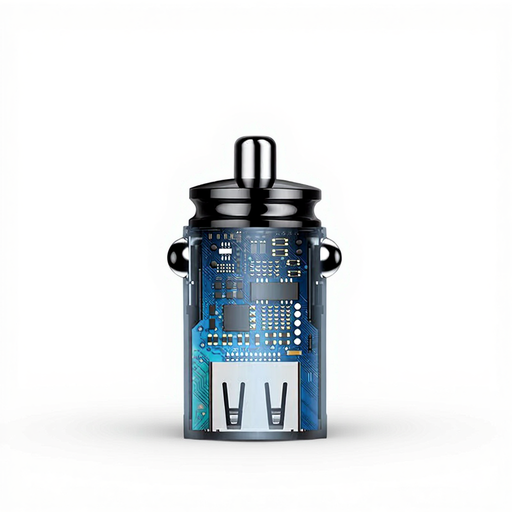
Why this product fits the profile: This compact model offers one USB-C and one USB-A port with a stated output of up to 30 W. It's ideal for the daily commute and for charging individual smartphones or smaller mobile devices.
The product description clearly states USB-C, USB-A as well as PD, QC and PPS. This makes it easier to check before buying whether your device is supported.
USB-C and USB-A in one housing; stated safety features against overcurrent, overvoltage and short-circuit.
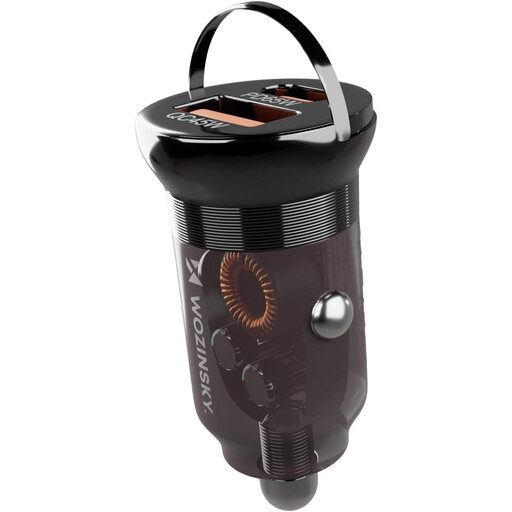
Why this product fits the profile: This model is aimed at users who want a more powerful USB-C car charger for their smartphone, tablet or multiple mobile devices.
The specifications clearly distinguish between 65 W on the USB-C PD port and 45 W on the USB-A QC 3.0 port. It also states compatibility with both 12- and 24-volt electrical systems.
USB-C PD and USB-A QC 3.0; aluminium-ABS housing; according to product information, suitable for cars, SUVs and lorries.
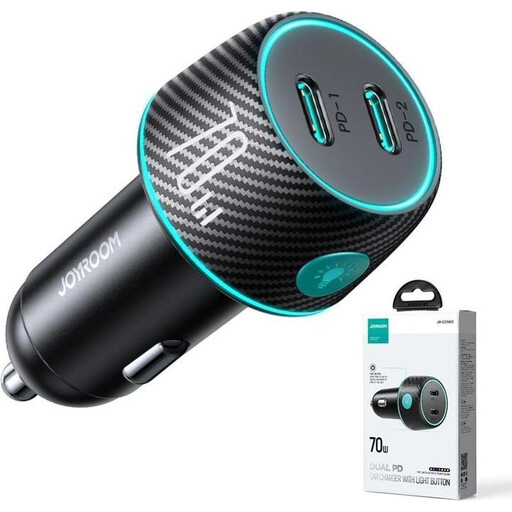
Why this product fits the profile: Two USB-C PD ports are ideal for frequent drivers, families and users with multiple USB-C devices. The total output is stated as up to 70 W.
The description explicitly states that the power is shared between the ports. This prevents false expectations when charging multiple devices at the same time.
Two USB-C PD ports; support for PD 3.0, QC 3.0 and PPS; LED rings can be switched off according to the product description.
We've put together a complete, regularly updated list of products that fully meet these strict selection criteria and the safety regulations in force in the EU.
A dedicated battery charger for a vehicle battery is not the same as a USB-C car charger. Products with 400 W or 30 A ratings from the battery maintenance category are connected directly to 12- or 24-volt lead-acid batteries and are not designed for charging a smartphone via the cigarette lighter socket.
No. For fast charging, the charger, cable and smartphone must all use compatible standards. If your device doesn't support PD or PPS, for example, it will usually charge at a lower power level.
Only if the manufacturer explicitly states that it can be used with a 24-volt electrical system. A model rated 12V/24V is generally more flexible for both cars and lorries, provided the socket has the correct connection standard.
It's impossible to give a reliable lifespan. It depends on factors such as heat, mechanical stress, socket contact and how often it's used. A charger that fits securely, good ventilation and following the manufacturer's instructions can all improve its working conditions.