
Lieferung heute & morgen

Qualitätsgarantie

Willkommens-Angebote freischalten: KOSTENLOSE Lieferung | Bis zu 80 % RABATT | Kostenlose 30-Tage-JoyPlus-Testphase
App herunterladen
Your smartphone battery is nearly dead while the navigation app is running at full throttle. On the back seat, the tablet for the kids' entertainment is about to die, and the laptop for your upcoming client meeting urgently needs power. Scenarios like these are a daily reality for many drivers. A powerful USB-C car charger is therefore no longer a trivial item, but an essential accessory for professional commuters, families, and field service staff.
The selection of models is vast, and the technical specifications can be overwhelming. This article serves as a practical guide. It explains which features matter most when making a choice and presents various models designed for different needs—from simply charging a smartphone to powering multiple devices, including a laptop.
To make an informed decision, three criteria are particularly important: charging power, the number of ports, and compatibility with your vehicle.
The power output, measured in watts (W), determines how quickly your devices charge. Modern smartphones and tablets benefit from fast-charging car charger technologies. A key standard for this is Power Delivery (PD), which enables high power output via the USB-C port.
Consider how many devices you typically need to charge simultaneously.
A standard cigarette lighter USB adapter must be compatible with your vehicle's electrical system.
Based on the criteria above, we have compiled a selection of models that cover different use cases.
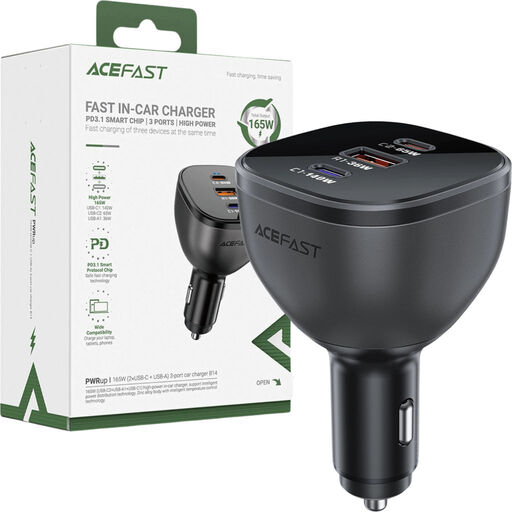
Why It Stands Out: With a total output of 165 watts, this charger is designed for maximum performance. It can easily power a power-hungry laptop and other devices simultaneously at high speed.
Key Features:
Who It's For: Field professionals and tech-savvy users who need a powerful charging solution for multiple demanding devices like laptops, tablets, and smartphones.
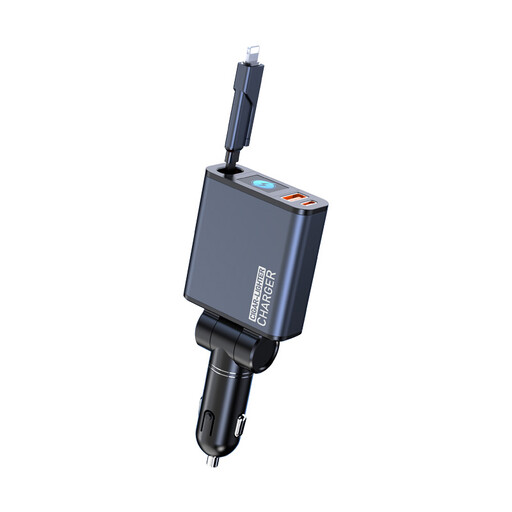
Why It Stands Out: This model combines high charging power with the convenience of two integrated, retractable charging cables. This ensures a tidy vehicle interior without cable clutter.
Key Features:
Who It's For: For drivers who value tidiness and convenience. The integrated cables make separate charging cables unnecessary and are ideal for daily use.
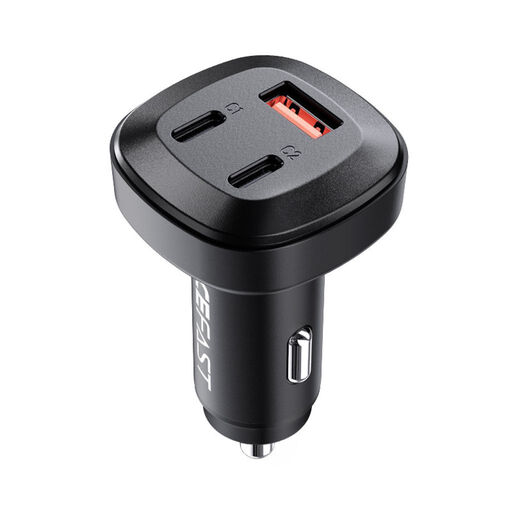
Why It Stands Out: The ACEFAST B3 is a compact and durable charging solution with a metal housing. With 66 watts of total power, it's a solid all-rounder for simultaneously charging smartphones and tablets.
Key Features:
Who It's For: For the daily commuter or families who primarily charge smartphones and tablets and are looking for a durable, compact solution.
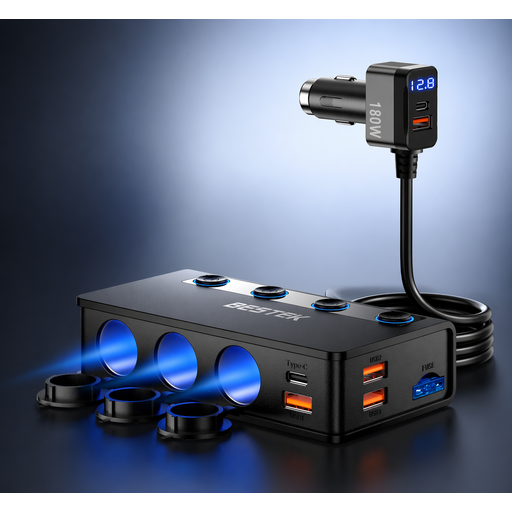
Why It Stands Out: This device is more than just a charger—it's a complete in-car power station. With six charging ports and three additional cigarette lighter sockets, it can power up to nine devices at once.
Key Features:
Who It's For: For large families, travel groups, or professional drivers who need to operate and charge a multitude of devices simultaneously and require centralized power distribution in their vehicle.
Our selection covers common use cases. However, if you have more specific requirements or want to compare other options, you can find a broader range of products in our full category.
Discover More USB-C Car Charger Models
Can I charge a laptop with a car charger? Yes, it's possible, provided the charger delivers a sufficiently high power output (e.g., 65W or 100W) through a USB-C port with the Power Delivery (PD) protocol. It's important to check the specific charging requirements of your laptop model, which are usually listed on the original power adapter.
What does the 12V/24V specification on a car charger mean? This specification means that the cigarette lighter USB adapter can be safely operated in both standard cars (with a 12V electrical system) and larger vehicles like trucks, RVs, or buses (with a 24V electrical system). This ensures broad compatibility across different vehicle types.
What is the advantage of a charger with a retractable cable? A car charger with a retractable cable helps keep your vehicle's interior tidy. It prevents cable clutter and eliminates the need to carry separate charging cables, as the cable is integrated directly into the device. When not in use, it can be easily retracted with the push of a button or a pull mechanism.