What to look for when buying
First, check that the reader supports your camera’s card and the connection on the device you’ll use to import your photos. Then weigh up whether the card bus, portability or extra ports matter most for the way you’ll use it.
| What matters to you |
What to check when buying |
Who should pay particular attention |
| Card format |
Check the exact card name, the matching slot and the card capacity specified for the model. |
If I want to read my camera card directly, its format needs to match the reader. That’s why around 33% of consumers put card compatibility first. |
| Import speed |
Check whether both the card and reader support UHS-I or UHS-II, as well as the data connection on your importing device. ‘Up to’ figures aren’t a measure of your own import speed. |
If you often transfer large volumes of photos, pay particular attention to matching card bus support. Around 25% of consumers make this a priority. |
| Connection and portability |
Check the USB-C port on the device you’ll actually use and, for mobile devices, the recommended way to import files. |
If I want to connect the reader to my own laptop or mobile device and take it with me, the connector and card format need to be right. Around 17% of consumers focus mainly on this. |
| File management |
If you’re using a shared computer, check the rules for external devices. Also check where your files will be imported and how to back up important photos. |
If you’re importing photos at a shared workstation, you’ll want to know where your personal files are saved and whether external devices are allowed. Around 17% of consumers prioritise control over their files. |
| Extra ports |
Check which hub ports you need, along with the separate SD or microSD specifications for that model. |
If I need to connect other devices to my laptop as well as import photos, a hub may suit my workstation better. Around 8% of consumers prioritise extra ports. |
Joybuy product selection
This selection includes USB-C card readers and hubs with SD, microSD or TF slots. The hubs are aimed at users who need extra ports. Check the format specifications and compatibility with your importing device for each model.
 No image available
Acer ODK6V0 7-in-1 USB-C hub
For a laptop workstation where you need extra ports as well as a way to read SD or TF cards.
Product specifications list HDMI up to 4K@30Hz, 100W PD passthrough and three USB 3.0 ports at 5 Gbps. This USB port figure isn’t a measure of card reading speed.
Joybuy
 No image available
4-in-1 USB-C card reader with USB-A and OTG
For importing SD, microSD, TF or SDHC cards on a compatible USB-C device.
The product specifications also list SDXC and a USB 2.0 interface with speeds of up to 480 Mbit/s. This is an interface specification, not a guaranteed card reading speed.
Joybuy
 No image available
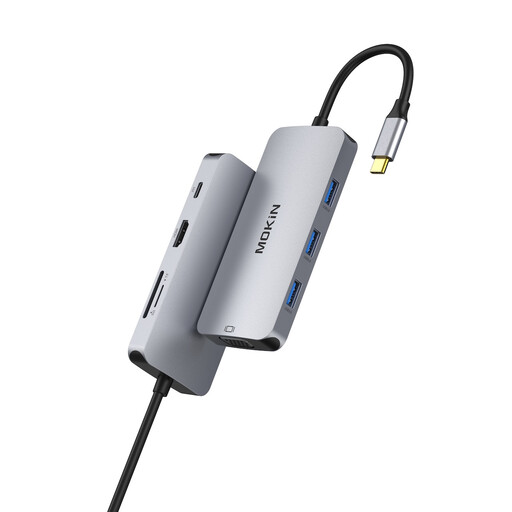
MOKiN USB-C hub with HDMI, VGA and SD/TF
For importing photos from an SD or TF card when you also need extra ports at your workstation.
The product name lists HDMI, VGA, three USB 3.0 ports and PD. According to the product description, the host device must have a fully functional USB-C or Thunderbolt 3 port.
Joybuy
 No image available
WOZINSKY 14-in-1 USB-C hub with SD and TF
For a workstation where you need extra ports as well as a way to import SD or microSD cards.
The product specifications list USB, HDMI, DisplayPort, Ethernet and audio connections, among others, plus a 15 cm cable.
Joybuy
 No image available
HOCO HB45 Spirit 2-in-1 card reader
For importing microSD or TF cards when you use devices with different host connections.
The product name lists USB-A and USB-C, while the product description highlights portable use and file transfers from microSD cards.
Joybuy
Frequently asked questions
Can I import camera photos directly into the Photos library on a Mac using a card reader?
Yes. Apple explains how to import from a card reader into Photos using ‘File’ and ‘Import’. You can select images and choose where to save them. Also check that your specific reader and card are recognised.
Do I need a UHS-II reader for a UHS-I SD card?
Not just because you have a UHS-I card. Both the card and reader need to support UHS-II to use the UHS-II card bus. According to Lexar and TP-Link’s product specifications, the readers described here can also be used with UHS-I cards.
When should I remove the memory card after importing?
Wait until the import is complete, check the files you’ve transferred and eject the card using your operating system’s function before removing it. Apple explains how to eject cards on a Mac, while Microsoft describes the ‘Safely Remove Hardware’ function in Windows. Germany’s Federal Office for Information Security recommends keeping extra backups of important data.
Does every USB-C card reader in Germany need a CE mark?
Not necessarily. According to the European Union, CE marking is required when a specific product falls under relevant harmonised rules that require it; otherwise, the mark must not be used. Check the product identification and relevant conformity information. Germany’s Federal Network Agency lists these details as a focus of its market surveillance.
What rights do I have if a card reader bought online in Germany is faulty?
If goods are faulty, you may have statutory rights against the seller. These are separate from any voluntary guarantee. The Consumer Advice Centre says that, for new goods, you have two years to assert your statutory rights. Online contracts also generally come with a 14-day right to cancel from the date you receive the goods, subject to the relevant conditions and exceptions.


