Recorder users who swap between cards
If you copy recordings from different devices, make sure the slot matches the card you actually use. ZOOM’s H6essential manual specifies microSD, while Tascam lists SD/SDHC/SDXC for the DR-40X.


Choose a reader to match your recorder’s card format and your destination device’s USB-C port. A compact reader is usually enough for a small desk, while a hub makes sense if you need its other ports too. UHS-II is only relevant when your card and the rest of the transfer setup support it. Open the copied recordings and safely eject the storage device before reusing it.
If you copy recordings from different devices, make sure the slot matches the card you actually use. ZOOM’s H6essential manual specifies microSD, while Tascam lists SD/SDHC/SDXC for the DR-40X.
If desk space and device ports are limited, choose between a standalone card reader and a hub. Designs and extra ports vary by model.
If you regularly use UHS-II cards, check that both the reader and the rest of the transfer setup support them. A USB-C connector alone doesn’t tell you how quickly a card can be read; the SD Association describes UHS-I and UHS-II as different bus interfaces.
First, check that the card reader works with both your card and destination device. Then decide whether a direct reader is enough, or whether you’ll actually use extra hub ports or UHS-II support.
| What matters | What to check | Who should pay particular attention |
|---|---|---|
| Compatible card format | Check the card type and, where relevant, SDHC or SDXC support against your recorder, card and reader. | If I read cards from different recorders, the slot needs to match each card. Around 36% of consumers put card format first. |
| Space and ports | Check the design, cable or direct connector, clearance around neighbouring ports and any extra ports you actually need. | If I work at a small desk, I want to fit the reader in without taking up ports unnecessarily. Around 29% of consumers prioritise limited workspace. |
| Verifiable copy | Open files after copying and properly eject the storage device before disconnecting it. | If I’ll need the recorder card again soon, I want to check the transferred recordings first. Around 21% of consumers prioritise being able to verify their import. |
| Suitable transfer speed | Check the UHS standard of the card and reader separately from the destination device’s data connection. | If I regularly copy from fast cards, I want to make the most of their potential speed rather than just looking at the USB-C connector. Around 14% of consumers prioritise transfer speed. |
Recorders don’t all use the same card format: the ZOOM H6essential manual specifies microSD, while Tascam lists SD/SDHC/SDXC for the DR-40X.
Check your recorder’s manual and match the card type it specifies to the reader’s details.
An interface specification doesn’t automatically tell you the read speed of the card slot. Verbatim Europe gives separate maximum speeds for the SD and microSD slots on model 32156.
Check the card slot specifications against your card instead of assuming a marketed USB data rate means a particular copy time.
Extra ports are only useful if you actually need them at your desk; card slots have model-specific features.
Choose a hub for the ports you need, and check the card reader’s specifications separately.
A completed copy doesn’t necessarily mean the transferred audio files will open. Microsoft recommends safely removing storage devices in Windows before disconnecting them to help prevent data loss.
Open the copied files, consider making another backup of important recordings, and properly eject the device before removing it.
Model 00200131 is a USB-C reader with SD and microSD slots.
Model 50706 combines USB-C and USB-A connectors with SD and microSD slots.
According to the manufacturer, the PGM0.5 is a direct USB-C reader with SD and microSD slots for UHS-II.
The USB-C Essentials Multiport Hub 32156 combines card reading with additional ports.
The 553 USB-C Hub is one option if you need connections beyond SD and microSD card slots.
The Joybuy products below combine card reading with USB-C. They include compact readers and hubs with extra ports.
 No image available
This hub is a good fit if you need extra ports as well as card importing.
The title lists HDMI with 4K@30Hz, three USB 3.0 ports with 5Gbps, an SD/TF card reader and 100W PD charging.
 No image available
This card reader is an option if you want to read the listed card formats on a USB-C device.
The title lists SD, MicroSD, TF and SDHC, as well as USB-C and USB-A.
 No image available
Card reading is part of this external DVD drive and isn’t listed as its only function.
The title lists an SD/TF card reader, as well as USB 3.0 and Type-C.
 No image available
This hub is worth considering if you need extra ports at your desk as well as card importing.
The title lists 22 × 11 × 3 cm, RJ45, two HDMI ports, USB ports and 100W charging.
 No image available
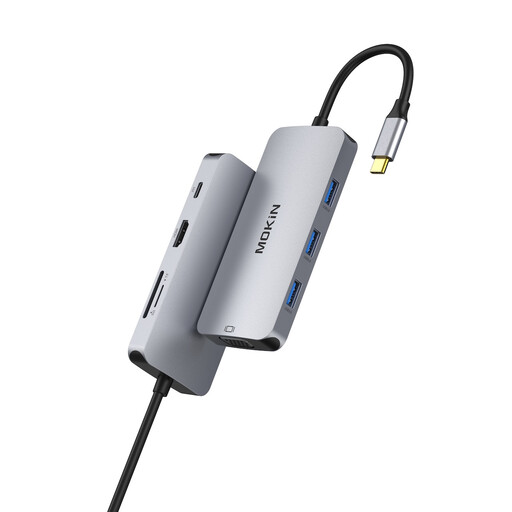
This hub combines a card reader with extra ports, if you need those features too.
The title lists USB 3.0, HDMI, VGA, SD/TF and PD.
No. ZOOM’s H6essential manual specifies microSD, while Tascam lists SD/SDHC/SDXC for the DR-40X. Check your recorder’s card type and make sure the specific reader supports it.
It depends on the recorder. The ZOOM H6essential manual describes a USB connection that lets you check and move files on its microSD card. Check your model’s manual to see if it supports this too, and which mode you need.
First, open the copied files. Then eject the storage device using your destination device’s ejection procedure. For Windows 10 and 11, Microsoft recommends safely removing connected storage devices before disconnecting them to help prevent data loss.
No. According to official EU information, when you buy as a consumer in the EU, you have a legal guarantee from the seller of at least two years from the date you receive the goods. Any additional manufacturer’s warranty has its own terms and doesn’t replace these rights.
Germany’s Federal Network Agency explains that products covered by the relevant EU harmonisation rules must carry a CE marking. CE doesn’t mean a product was made in Europe. Check the details for the specific product rather than assuming a logo alone is proof of exceptional quality.