
Lieferung heute & morgen

Qualitätsgarantie

Willkommens-Angebote freischalten: KOSTENLOSE Lieferung | Bis zu 80 % RABATT | Kostenlose 30-Tage-JoyPlus-Testphase
App herunterladen
By the Joybuy Product Recommendation Officer, July 05, 2026
Fumbling through a drawer full of identical-looking power bricks to find the right one is a common frustration. What's more, many standard chargers lack the power needed for modern devices like laptops or tablets. A powerful USB-C charger can solve this problem by acting as a central charging hub for all your devices—from your smartphone to your laptop.
This guide is designed to help you understand the technical features of modern chargers and make an informed decision. We'll introduce a selection of models that stand out for their different performance features and use cases.
Choosing the right charger depends on your specific needs. Three key criteria can help guide your decision: power, technology, and the number of ports.
A charger's power is measured in watts (W) and determines how quickly a device can be charged. While a smartphone often only needs 20–30W, a laptop charger typically requires 65W or more. The most important fast-charging protocol is Power Delivery (PD). It allows the charger and the device to negotiate the optimal charging speed, ensuring a safe and efficient process. Make sure both the charger and your device support PD to take full advantage of fast charging.
GaN chargers use gallium nitride instead of traditional silicon. This semiconductor material allows for higher efficiency with less heat generation. The result is significantly smaller and lighter chargers with the same or even higher power output. This compact design makes a GaN charger an ideal travel charger, as it saves precious space in your luggage.
A multi-port charger with several USB-C and/or USB-A ports offers the convenience of charging multiple devices simultaneously with just one USB-C power adapter. This is especially useful in the office, at home, or while travelling to avoid the clutter of multiple individual power bricks. Modern chargers intelligently distribute the total power among the connected devices, ensuring each one is charged optimally.
Based on the criteria above, we've compiled a selection of chargers suitable for different user profiles.
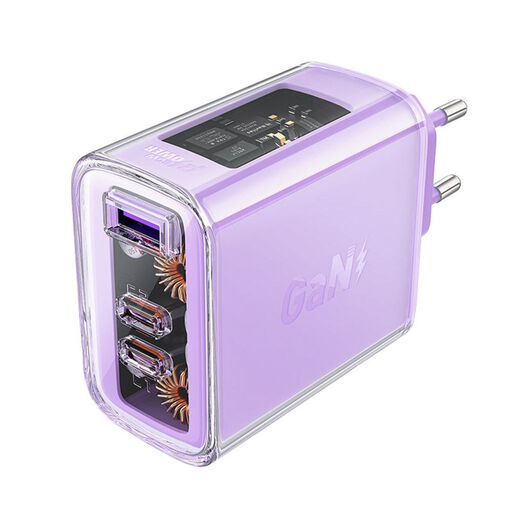
Why It Stands Out The Acefast A45 combines solid charging performance with a striking design. Its transparent casing offers a glimpse of the internal components. Thanks to 3rd-generation GaN technology, it delivers 65W of power in a compact form factor while staying cooler than conventional chargers.
Pros
Who Is It For? This model is an excellent choice for users looking for a versatile and stylish charging solution for everyday use. It can easily power a smartphone, headphones, and a smaller notebook or tablet simultaneously, making it perfect for a desk or home office setup.
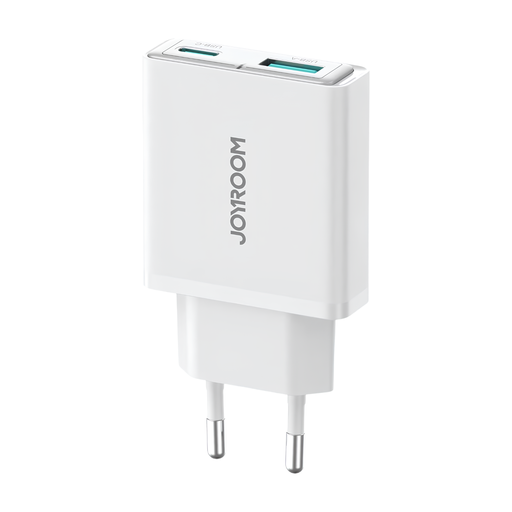
Why It Stands Out The Joyroom JR-TCF14 stands out for its exceptionally slim and lightweight design. Weighing just 47 grams and significantly thinner than standard chargers, it's designed for maximum portability.
Pros
Who Is It For? Ideal for travellers, commuters, and anyone who needs the most compact and lightweight charging solution for their smartphone and another small device, like headphones or a smartwatch.
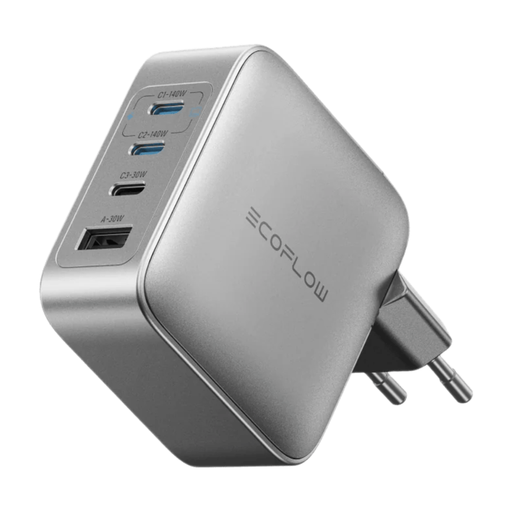
Why It Stands Out With a total output of 140W and four ports, the EcoFlow RAPID Pro is a powerhouse capable of powering even the most demanding setups. It can charge high-performance laptops, serving as a full-speed MacBook charger while simultaneously powering other devices.
Pros
Who Is It For? This 140W charger is aimed at power users, professionals with multiple devices, and families. It's the ideal solution for quickly and efficiently charging multiple laptops, tablets, and smartphones from a single outlet.
Haven't found the right model for your needs yet? There is a wide variety of charging solutions tailored to different needs, from ultra-compact single-port chargers to powerful desktop charging stations.
Explore our full range of Port Chargers and find the perfect solution for your devices.
A GaN charger uses gallium nitride, a modern semiconductor material. Compared to traditional silicon-based chargers, GaN allows for higher energy efficiency. This means less energy is lost as heat, allowing the chargers to be built smaller, lighter, and more powerful.
The required wattage depends on the device you're charging. Here are some general guidelines:
In most cases, yes. The USB-C standard with Power Delivery (PD) is designed for universal compatibility. The charger and the connected device communicate to determine the safe and correct charging power. As long as the charger's maximum power output meets or exceeds your device's requirements, you can use it without any issues. For example, a 140W charger can also charge a smartphone that only needs 20W—the power output is adjusted automatically.