
Lieferung heute & morgen

Qualitätsgarantie

Willkommens-Angebote freischalten: KOSTENLOSE Lieferung | Bis zu 80 % RABATT | Kostenlose 30-Tage-JoyPlus-Testphase
App herunterladen
By: Joybuy Product Recommendation OfficerDate: 2026-07-09
The transition to USB-C has standardised how we charge our devices. But with a growing variety of gadgets—from smartphones and tablets to laptops—choosing the right charger has become increasingly complex. An underpowered adapter will charge agonisingly slowly, while an incompatible model might not take full advantage of your device's fast-charging capabilities.
This guide is designed to help you understand the technical specifications and make an informed decision. We'll walk you through objective criteria and present a selection of USB-C chargers that cater to various needs.
To find the perfect model, three technical aspects are crucial: power output, the technology used, and the number of ports.
A power adapter's output is measured in watts (W) and is the key factor determining charging speed. Modern devices, especially those with fast-charging features, require a specific minimum wattage to reach their full potential.
A crucial standard in this context is Power Delivery (PD). A Power Delivery charger communicates with the connected device to negotiate the exact voltage and current required. This ensures not only fast but also safe charging that protects the battery.
If you're looking for a compact and efficient fast charger, you'll often come across the term "GaN". A GaN charger uses gallium nitride semiconductors instead of traditional silicon. The advantages of this material are:
Daily life often requires charging multiple devices at once. A multi-port charger can be a practical solution to reduce cable clutter and occupy only one wall outlet. With these models, pay attention to the total power output and how it's distributed among the ports when multiple devices are connected simultaneously. Many models combine USB-C with classic USB-A ports for maximum compatibility.
Based on the criteria above, we've curated a selection of chargers suitable for different use cases.
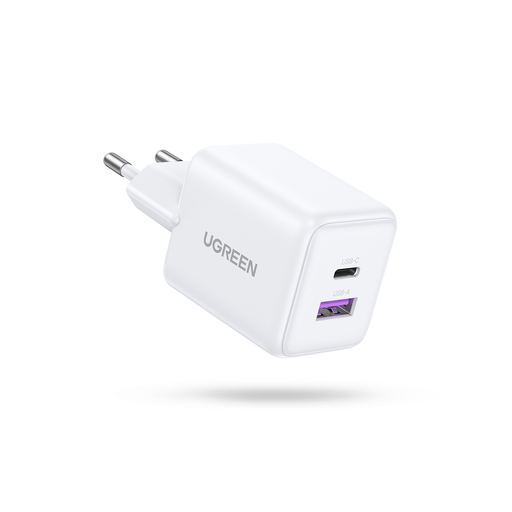
Why it stands out: This model from Ugreen combines the compact dimensions of GaN technology with the flexibility of two ports. With a 30W output, it's a solid choice for modern smartphones and smaller devices.
Advantages:
Who it's for: Users looking for a very compact and lightweight USB-C power adapter for daily use. It's ideal for fast-charging a smartphone like an iPhone 17 charger or Samsung S24 charger while simultaneously powering a second device (e.g., headphones).
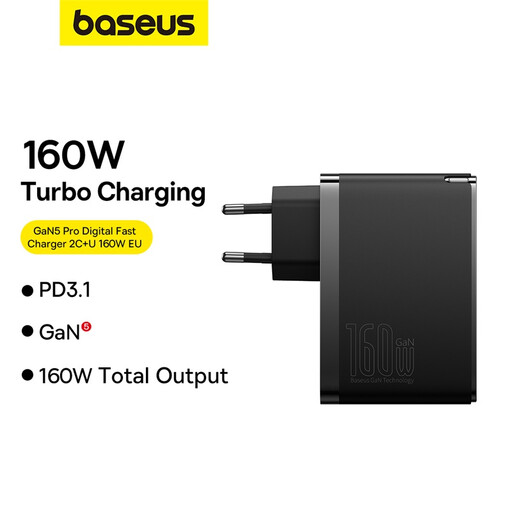
Why it stands out: With a total output of 160 watts and three ports, this charger from Baseus is a powerful hub for your desk or for travel. It can easily power multiple demanding devices at the same time.
Advantages:
Who it's for: Power users and professionals looking for a single charging solution for all their devices, including a high-performance laptop. It replaces multiple individual power adapters and tidies up your workspace or travel bag.
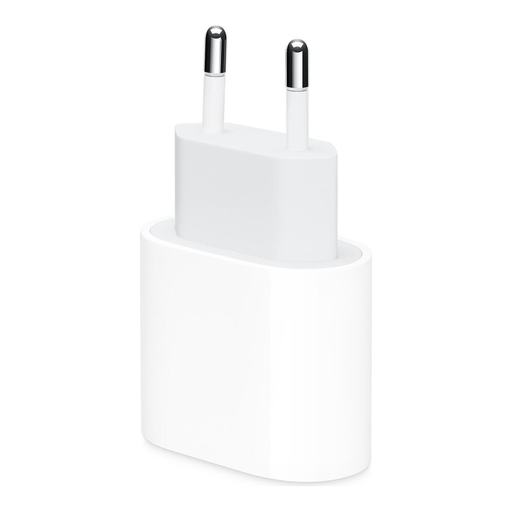
Why it stands out: This is the official 20-watt power adapter from Apple. It is specifically designed for the fast-charging feature of newer iPhone and iPad models, offering performance optimised for these devices.
Advantages:
Who it's for: Apple users who want a reliable, manufacturer-recommended charging solution for their iPhone or iPad. It's the natural choice for anyone who values genuine accessories and primarily wants to fast-charge a single Apple device.
The selection of chargers is vast, and everyone's needs are different. If the models featured here don't perfectly match your requirements, you can find a wider range of options in our main category, from ultra-compact travel adapters to powerful multi-port stations.
Discover more models in our USB Electronic Accessories category.
Generally, yes, as USB-C is a universal standard. However, the charging speed depends on the charger's maximum power output (in watts) and the supported charging protocols (like Power Delivery). To use the fast-charging feature, the charger's specifications should match your device's requirements.
A GaN charger uses the semiconductor material gallium nitride instead of traditional silicon. This material allows for the creation of chargers that are smaller, lighter, and more energy-efficient at the same power output. They also generate less heat during operation.