
Lieferung heute & morgen

Qualitätsgarantie

Willkommens-Angebote freischalten: KOSTENLOSE Lieferung | Bis zu 80 % RABATT | Kostenlose 30-Tage-JoyPlus-Testphase
App herunterladen
The transition to USB-C is in full swing, but choosing the right charger can quickly become overwhelming. Many users invest in a new USB-C charger only to be disappointed when their smartphone or laptop doesn't charge any faster. Others fall for supposed bargains that turn out to be a safety risk. Before you make a purchase, it's crucial to understand the most common pitfalls.
This guide will help you navigate these issues and find a USB-C power adapter that is perfectly tailored to your needs.
To make an informed decision, you should understand three core technical parameters. These determine the performance, safety, and convenience of your new charger.
The charging power of an adapter is specified in watts (W). It is the primary factor determining how quickly your device's battery charges. Modern devices use charging standards to negotiate the optimal power level. The most important standard in the USB-C ecosystem is Power Delivery (PD).
Ensure that both the charger and your device support the PD standard to achieve maximum charging speed.
GaN stands for Gallium Nitride, a semiconductor material that is increasingly replacing traditional silicon in modern chargers. A GaN charger offers significant advantages:
A modern wall charger should offer more than just one port. Consider which devices you charge regularly:
Don't forget the importance of the cable. A low-quality USB-C charging cable can throttle the performance of even the most powerful charger. For charging power above 60W, you need a cable explicitly rated for up to 100W (5A).
Based on the criteria above, we have selected a few products for typical use cases.
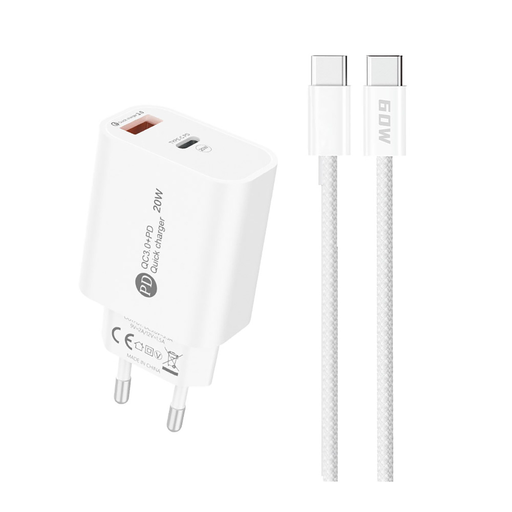
Why This Fits Their Persona: Ideal for users seeking a straightforward and affordable solution for their smartphone and another accessory. The included cable makes it a ready-to-use, out-of-the-box package.
Solves the "single-port problem" by combining USB-C and USB-A. The 20W output via Power Delivery (PD) is tailored for modern smartphones, avoiding the wattage trap.
Supports both PD and Quick Charge 3.0 for broad compatibility. A 1m USB-C to USB-C cable is already included in the box.
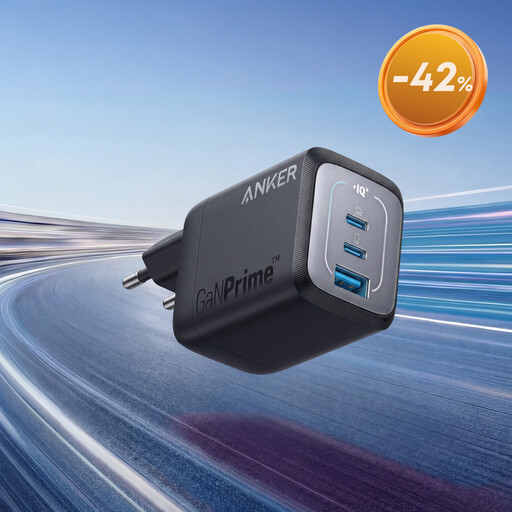
Why This Fits Their Persona: Perfect for users who need to charge a laptop, smartphone, and another device simultaneously, whether at home or on business trips. Its compact design, thanks to GaN technology, saves valuable space in their bag.
With 67W of total power and two USB-C ports, it's powerful enough for most laptops, bypassing the pitfall of an underpowered adapter. The ActiveShield 2.0 safety system addresses device safety concerns.
Enables simultaneous charging of three devices. Intelligent power distribution delivers up to 67W to a single port when used alone.
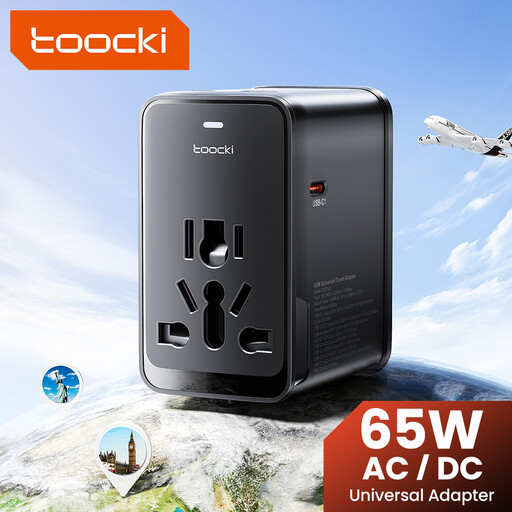
Why This Fits Their Persona: The all-in-one solution for anyone who travels internationally. This travel adapter replaces multiple country-specific chargers and reduces clutter in your luggage.
Solves the compatibility problem abroad with integrated plugs for the EU, UK, US, and AUS. With four ports (3x USB-C, 1x USB-A), it eliminates the need for multiple chargers.
Powerful 65W PD fast charging in a universal travel format. The high port density allows for charging up to four devices at once.
We have compiled a complete, up-to-date list of products that fully meet these strict selection criteria and safety regulations.
No, that's one of the biggest advantages of USB-C and Power Delivery. A single, powerful multi-port charger can supply power to multiple devices like a laptop, tablet, and smartphone simultaneously. Pay attention to the charger's total output and how it's distributed among the ports when multiple devices are connected.
GaN stands for Gallium Nitride, a modern semiconductor material. A GaN charger is significantly more compact, lighter, and more energy-efficient than traditional silicon-based chargers with the same power output. It generates less waste heat, which increases its lifespan and safety. For mobile users, choosing a GaN model is often a worthwhile investment.
No, there is no risk of this with modern devices. Thanks to smart charging protocols like Power Delivery (PD), the charger and the device communicate to negotiate the maximum permissible charging power. A 100-watt laptop charger will only supply 25 watts to a smartphone that can only accept 25 watts. So you can safely use a more powerful adapter to be prepared for future devices.