
Lieferung heute & morgen

Qualitätsgarantie

Willkommens-Angebote freischalten: KOSTENLOSE Lieferung | Bis zu 80 % RABATT | Kostenlose 30-Tage-JoyPlus-Testphase
App herunterladen
A single USB-C charger for your laptop, smartphone, and tablet—that's the standard in 2026. But the market is crowded and confusing. Promotional claims of ultra-fast charging and universal compatibility often lead to disappointment and, in the worst-case scenario, damaged devices. Many chargers fail to deliver what their technical specs seem to promise.
As a Joybuy Product Recommendation Officer, I analyse product data daily to help you separate fact from fiction. In this guide, I'll reveal the three most common pitfalls when buying a USB-C charger and what you need to look for to make an informed decision.
Before you invest in a new power adapter, you should be aware of these common issues that often only become apparent after purchase.
To avoid these traps, focus on three verifiable technical features. These define the true performance and safety of your future charger.
Don't just look at the total output; focus on the maximum power a single USB-C port can deliver. For modern laptops, like a MacBook charger, at least 45W, or preferably 65W, is required from one port. A good multi-port USB charger features dynamic power distribution, which intelligently allocates and prioritises energy among the connected devices.
A modern fast charger should support universal standards. The most important is Power Delivery (PD 3.0), used by most devices, including iPhones and MacBooks. For maximum compatibility, especially with Samsung devices, support for PPS is a crucial advantage. The product description should explicitly list these protocols.
GaN chargers (Gallium Nitride) are the current industry standard. Compared to traditional silicon-based chargers, they are significantly smaller, lighter, and more energy-efficient. They generate less waste heat, which increases the charger's lifespan and enhances safety during charging. A GaN charger is therefore often the superior choice for travel and mobile use.
Based on these objective criteria, we have identified several models that offer a suitable solution for specific user groups.
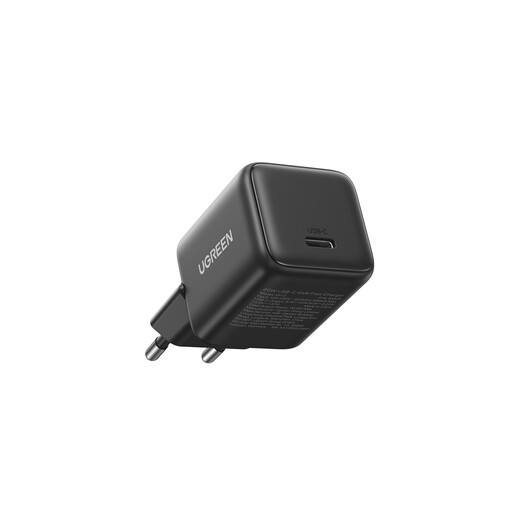
Why This Fits Their Persona: Ideal for users who primarily want to charge their smartphone (e.g., as an iPhone charger) quickly and safely, without paying for unused power or extra ports. Its compact design, thanks to GaN technology, also makes it highly portable.
This charger has only one port, so the advertised 20W of power is always available. It supports PD 3.0 and QC 4.0, which avoids the compatibility trap for most modern smartphones.
Combines modern GaN technology with a focused feature set. Very compact and lightweight design.
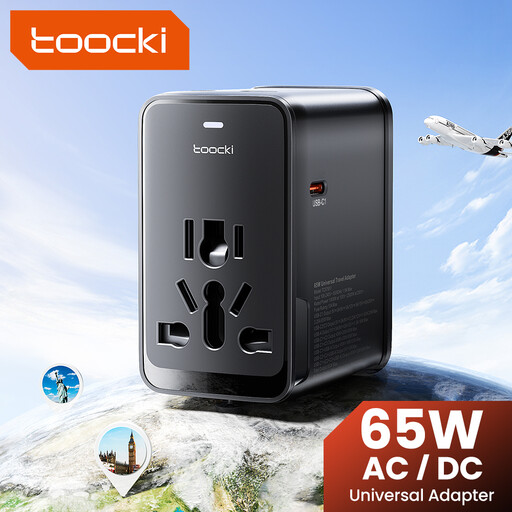
Why This Fits Their Persona: This universal travel adapter is the solution for anyone who travels internationally. It combines a powerful 65W charger with socket adapters for the EU, UK, US, and AUS in a single device. Perfect for charging a laptop, phone, and other devices simultaneously in a hotel room.
It delivers 65W from a single USB-C port, providing enough power for most laptops and thus avoiding the trap of weak per-port performance. The combination of a power adapter and plug adapter also eliminates the need to buy multiple separate items.
All-in-one solution for international travel. Four charging ports (3x USB-C, 1x USB-A) and high power output.
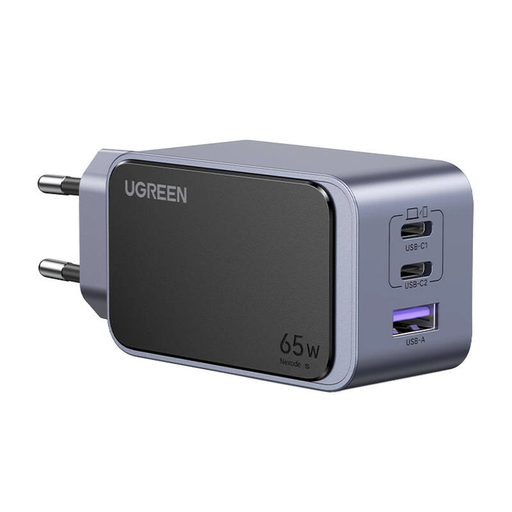
Why This Fits Their Persona: For users who need to charge a laptop, tablet, and smartphone simultaneously every day. This Power Delivery adapter replaces three individual chargers, decluttering your desk or bag. According to the manufacturer, it can charge a MacBook Air M2 to 51% in 30 minutes.
It offers a clear power rating of up to 65W on a single port and supports a wide range of protocols (PD 3.0, PPS, QC 4+), ensuring maximum compatibility and speed for almost all modern devices.
High performance and efficiency thanks to GaN II technology. Three ports for charging multiple devices simultaneously.
We have compiled a complete, up-to-date list of products that fully meet these strict selection criteria and local safety regulations.
GaN stands for Gallium Nitride, a semiconductor material that is replacing silicon in modern power adapters. A GaN charger can be built smaller and lighter while delivering the same power, operates more efficiently, and generates less heat. This increases the device's safety and lifespan.
Yes, this is generally safe. Modern devices with USB-C Power Delivery communicate with the charger to negotiate the required amount of power. A smartphone that can draw a maximum of 20W will only be charged at 20W (or less, depending on the battery level) by a 65W charger. The charger will not supply "too much" power.
Look for the CE mark, which confirms that the product meets the EU's essential health and safety requirements. Additionally, purchase from trusted retailers who provide clear information about the manufacturer and technical specifications. Avoid extremely cheap, unbranded products from unknown platforms.