
Lieferung heute & morgen

Qualitätsgarantie

Willkommens-Angebote freischalten: KOSTENLOSE Lieferung | Bis zu 80 % RABATT | Kostenlose 30-Tage-JoyPlus-Testphase
App herunterladen
Finding the right charging cable for modern devices like laptops, tablets, and smartphones can quickly become overwhelming. For high-performance devices in particular, a compatible Samsung 100W USB-C charging cable is often required to unlock full charging speeds. However, the market is flooded with products making misleading claims. This guide will help you navigate the most common traps and make an informed decision.
Many users invest in expensive technology but skimp on accessories, only to be frustrated by slow charging speeds or defective cables after just a few months. Watch out for these typical problems:
To ensure your cable delivers on its promises and is built to last, you should check three core technical features.
The maximum charging power of a USB-C cable is determined by the supported current (measured in amperes, A). The formula is: Voltage (Volts) × Current (Amps) = Power (Watts).
A longer cable offers more flexibility in daily use. A 1.8m Power Delivery cable is a good compromise between reach and portability. However, pay close attention to material quality. Cheap cables often use thin jackets that break quickly at the connectors. Higher-quality models feature reinforced strain relief and durable materials like thermoplastic elastomers (TPE) or braided nylon, which significantly increases their lifespan.
Here are some recommendations tailored to specific use cases that meet the quality criteria mentioned above.
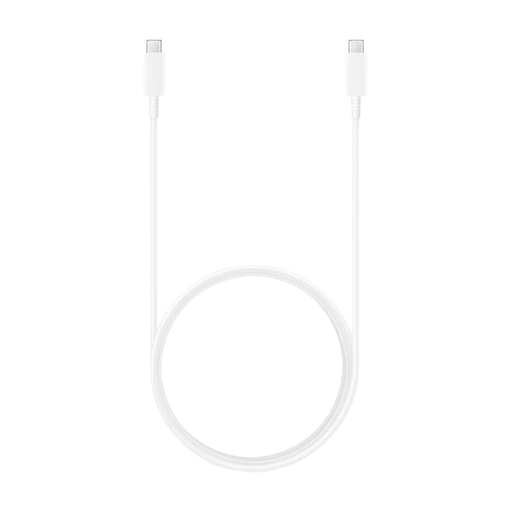
Why this product fits: Ideal for users who want to charge a powerful notebook (e.g., as a Type-C charging cable for MacBook) and a smartphone with a single, high-performance cable. The 5A specification is crucial for ensuring full charging power for demanding devices.
According to the manufacturer, this cable explicitly supports Power Delivery up to 100W (20V/5A), thus avoiding the trap of insufficient charging power for laptops.
Genuine brand quality that supports both Samsung Super Fast Charging 45W and universal Power Delivery up to 100W. The 1.8-meter length provides extra flexibility.
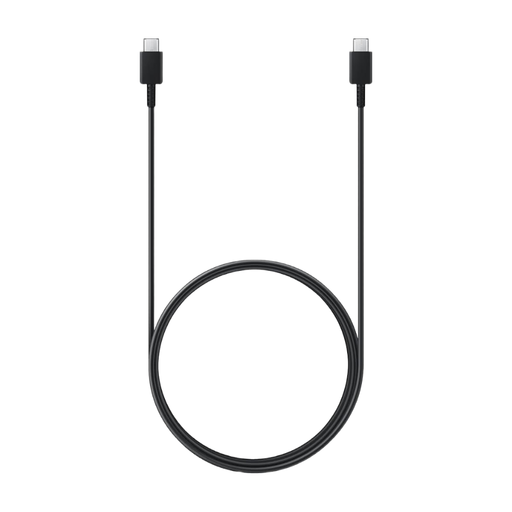
Why this product fits: An excellent choice for users of Samsung Galaxy smartphones and other devices that don't require 100W charging but still want to benefit from fast charging speeds and a reliable, durable connection.
As a genuine Samsung product, it offers reliable build quality and avoids the material lottery of no-name brands. Its performance specifications are clearly defined.
Supports Power Delivery up to 60W (3A) and Super Fast Charging up to 25W. The 1.8-meter length is practical for use at a desk or on the sofa.
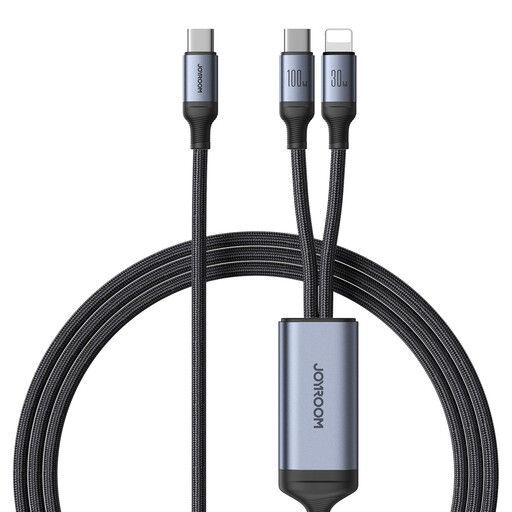
Why this product fits: Solves the problem of carrying multiple cables for different ecosystems. Ideal for households or users who own both Android/Windows devices (USB-C) and Apple devices (Lightning).
It combines high charging power with maximum compatibility, eliminating the need to buy multiple separate, potentially inferior cables for each connector type.
A single cable for almost all modern devices thanks to its 2-in-1 design (USB-C and Lightning) with support for up to 100W charging via the USB-C connector.
We have compiled a complete, up-to-date list of products that fully meet these strict selection criteria and UK safety regulations.
Yes, it is safe to use. Modern chargers and devices communicate with each other via the USB Power Delivery protocol to negotiate the maximum safe charging power. A 100-watt capable cable will not supply more power to a smartphone that can only accept 25 watts than it is designed for. The cable simply ensures that the maximum power is available when needed.
The difference lies in the maximum current the cable can safely transfer. A 3A cable is limited to a power output of up to 60 watts (20V x 3A). For charging power beyond that, up to 100 watts (20V x 5A), a specially designed 5A USB-C to USB-C cable is mandatory. It contains an E-Marker chip that signals to the charger that it is suitable for the higher current.
Look for visible quality features. Robust strain relief at the transition from the plug to the cable is crucial, as this is the most common point of failure. A jacket made of braided nylon or high-quality TPE is more resistant to abrasion and tangling than simple PVC. Additionally, products from established brands are often a safer choice as they typically undergo stricter quality controls.