
Lieferung heute & morgen

Qualitätsgarantie

Willkommens-Angebote freischalten: KOSTENLOSE Lieferung | Bis zu 80 % RABATT | Kostenlose 30-Tage-JoyPlus-Testphase
App herunterladen
You've just unboxed a new smartphone, tablet, or notebook, but the included charger is slow, or worse, missing entirely. The market for charging solutions is overwhelming, and the marketing claims are bold. As a Joybuy Product Recommendation Officer, I see daily how users are misled by marketing hype and technical misunderstandings, leading to poor purchasing decisions. Before you invest, you should know the three most common pitfalls that sabotage your charging efficiency and cause unnecessary costs.
Pitfall 1: Over-fixating on wattage. A 100-watt charger sounds impressive, but if your smartphone can only draw 25 watts, it won't charge any faster. You're paying for power you can't use.
Pitfall 2: Ignoring the cable. The most powerful charger is useless if the cable acts as a bottleneck. A cable rated for 20 watts cannot transfer the power from a 65-watt charger.
Pitfall 3: Unclear safety standards. Not every charger reliably protects your device from overheating or overvoltage. A lack of certifications or the use of subpar components poses a risk to your expensive electronics.
To make an informed decision, focus on the technical facts, not the marketing slogans. These three parameters are crucial for the performance and safety of your charging setup.
The charging power, measured in watts (W), indicates the maximum energy a charger can deliver. However, the supported charging protocol is just as crucial as the wattage.
Check your device's specifications to determine the maximum supported charging power.
GaN stands for Gallium Nitride, a semiconductor material that is increasingly replacing silicon in chargers. A GaN charger isn't inherently faster, but it offers clear advantages:
A high-performance charger requires an equally capable cable. Look for the following features:
Based on objective criteria, we have selected products for typical use cases.
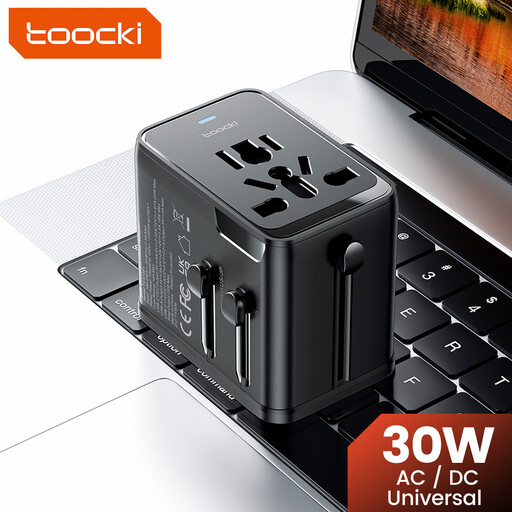
Why This Fits Their Persona: Ideal for those who travel internationally and need a single solution for various socket systems without sacrificing fast charging.
Solves the problem of carrying multiple adapters and chargers. It integrates a full-fledged 30W PD charging port into a universal travel adapter.
Compatibility with EU, UK, US, and AUS sockets. Three charging ports (2x USB-C, 1x USB-A) for charging multiple devices simultaneously.
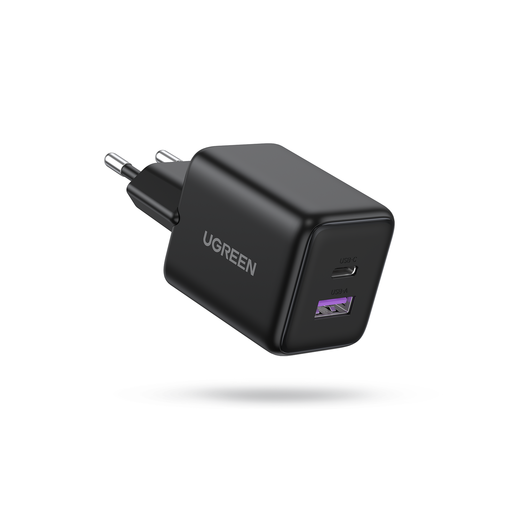
Why This Fits Their Persona: Perfect for users who need a compact yet powerful charger for their smartphone and another small device (e.g., headphones).
Avoids the wattage trap by offering an optimal 30W of power for most modern smartphones without being oversized. GaN technology ensures a compact design.
Features one USB-C and one USB-A port for high compatibility with new and older devices. Achieves Level VI energy efficiency according to the manufacturer.
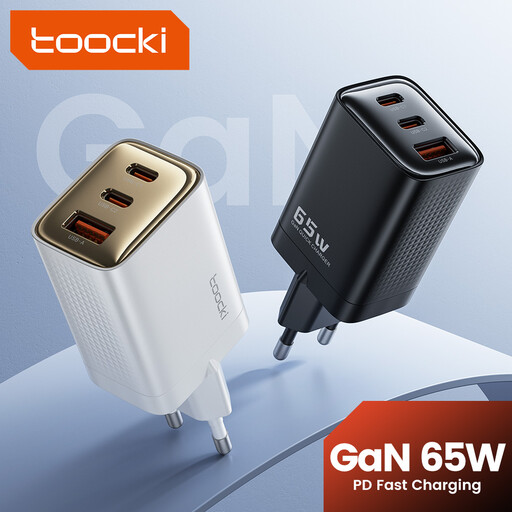
Why This Fits Their Persona: For users who need to charge their laptop, smartphone, and tablet simultaneously, whether in the office or at home. This charger replaces three individual power bricks.
Delivers 65W, enough power for most USB-C laptops, and intelligently distributes power across three ports, preventing the user from having to juggle multiple mismatched chargers.
Combines high power with a compact GaN design. The three ports (2x USB-C, 1x USB-A) offer maximum flexibility for a modern set of devices.
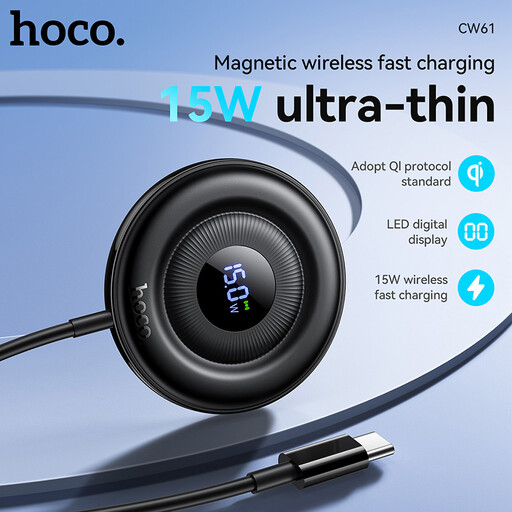
Why This Fits Their Persona: Specifically for owners of an iPhone with MagSafe functionality who are looking for a convenient, wireless charging solution for their desk or nightstand.
Solves the problem of inefficient positioning with conventional Qi chargers. The magnetic alignment ensures optimal power transfer and prevents slow charging or interruptions.
Offers MagSafe-compatible charging power of 7.5W. An integrated digital display shows the current charging power in watts, providing direct feedback on the charging process.
We've compiled a complete, up-to-date list of products that fully meet these strict selection criteria and safety regulations.
Yes, that is safe. Modern charging protocols like USB Power Delivery (PD) enable communication between the charger and the device. The smartphone only requests as much power as it can safely handle. Therefore, a higher-wattage charger will not charge the device faster than its specified maximum, but it will not harm it either.
Yes, the cable is a critical component. For charging power above 60 watts, a cable with an integrated E-Marker chip is mandatory. This chip signals to the charger that the cable is designed for high currents. Without such a cable, like a 100W USB-C charging cable, the charging power will be limited to a lower value for safety reasons, even if the charger could provide more.
A GaN charger uses gallium nitride instead of silicon as its semiconductor material. This allows for higher energy efficiency, which results in less heat generation. The practical benefit for the user is a significantly more compact and lighter charger with the same or even higher power output. This is particularly advantageous for a multi-port USB-C charger or a travel adapter, where space and weight are important factors.