
Lieferung heute & morgen

Qualitätsgarantie

Willkommens-Angebote freischalten: KOSTENLOSE Lieferung | Bis zu 80 % RABATT | Kostenlose 30-Tage-JoyPlus-Testphase
App herunterladen
As a Joybuy Product Recommendation Officer, I see users struggle daily with a growing number of devices and the resulting cable clutter. A powerful USB-C fast charger promises a solution, but the market is overwhelming. Misleading claims and technical incompatibilities often lead to frustration and unnecessary expenses. Before you invest, you should know the three most common pitfalls that can slow down or even damage your devices.
To avoid these pitfalls, you should check three core parameters. These determine whether a charger is suitable for your needs, safe, and future-proof.
Power, measured in watts (W), indicates the maximum energy the charger can deliver. Power Delivery (PD) is the universal standard for fast charging over USB-C. It enables intelligent communication between the charger and the device to negotiate the optimal charging power.
Traditional chargers are based on silicon. Newer models use Gallium Nitride (GaN). A GaN charger is significantly smaller, lighter, and generates less waste heat for the same power output. This not only makes it more efficient but also an ideal travel charger, as it saves valuable space in your bag.
A single charger for all your devices—that's the goal. A multi-port USB charger with a combination of USB-C and USB-A ports offers maximum flexibility. This allows you to charge your new USB-C notebook and older USB-A devices at the same time, without needing to carry multiple power adapters. Pay attention to how the total power is distributed among the individual ports when multiple devices are connected.
Based on these objective criteria, we have identified some models that represent a fitting solution for specific user groups.
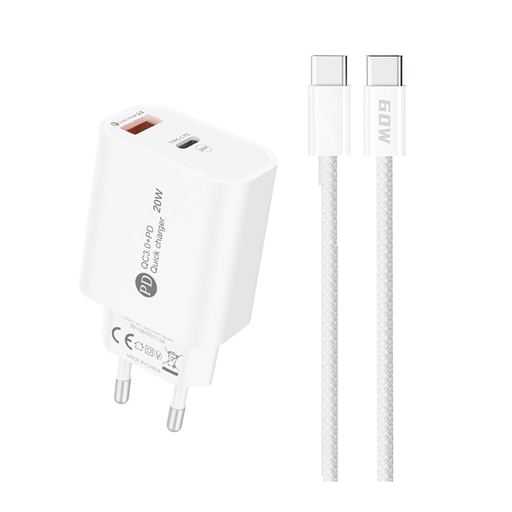
Why This Fits Their Persona: Ideal for users looking for a straightforward and budget-friendly solution for their smartphone. The combination of USB-C and USB-A offers flexibility for new and older devices, and the included cable makes it ready to use out of the box.
With 20W of power and Power Delivery (PD) support, it bypasses the trap of slow charging for modern smartphones. It's a complete set that requires no additional purchases.
Two ports (USB-C and USB-A) for broad compatibility. A 1m USB-C to USB-C charger with cable is included in the package.
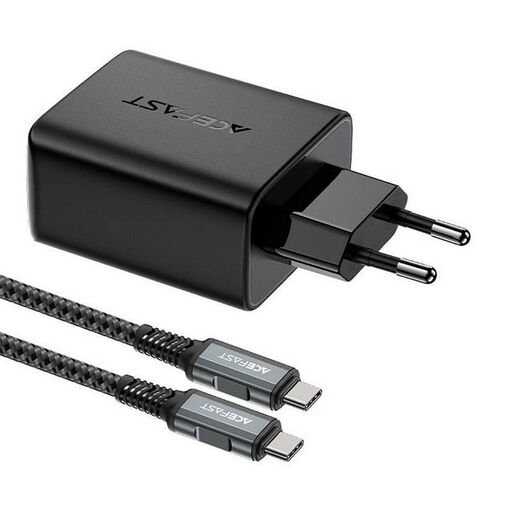
Why This Fits Their Persona: Perfect for commuters and travellers who need to charge their laptop and smartphone while also giving a presentation on an external monitor. This device replaces three separate adapters: a laptop power brick, a phone charger, and an HDMI dongle.
It solves the compatibility dilemma by combining charging and video output in one compact GaN housing. The 65W power output is perfectly tailored to the needs of modern ultrabooks.
Combines a 65W laptop charger with a 4K@60Hz HDMI output. The GaN technology ensures a compact design, making it an ideal travel charger.
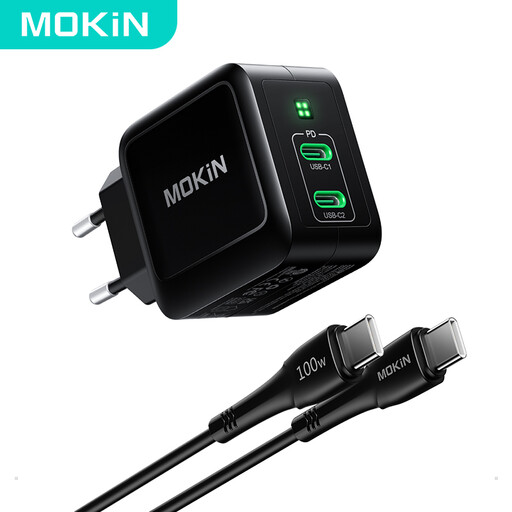
Why This Fits Their Persona: For users who want maximum power in a minimal footprint. This charger can fast-charge a MacBook Air and an iPhone simultaneously, yet it's barely larger than a standard phone adapter. Ideal for a minimalist desk or light travel.
It avoids the trade-off between power and size. Thanks to advanced GaN II technology, it delivers 67W of power in a housing that the manufacturer claims is 50% smaller than comparable standard chargers.
Extremely compact and lightweight (127g) with a high output of 67W. Two USB-C ports allow for simultaneous charging of two devices, such as a laptop and a smartphone.
We have compiled a complete, continuously updated list of products that fully meet these strict selection criteria and German safety regulations.
1. How do I know how many watts my device needs? The easiest way is to check the original charger. The output power is listed there in volts (V) and amps (A). Multiply these two values to get the wattage (e.g., 20V x 3.25A = 65W). Alternatively, you can find this information in your device's manual or on the manufacturer's website.
2. Is GaN technology really better? From a practical standpoint, yes. A GaN charger converts power more efficiently, which results in less heat loss. This allows manufacturers to build powerful chargers in significantly smaller and lighter housings. For users, this means more power in less space—a clear advantage for mobile use.
3. Can I use a charger with more watts than my device requires? Yes, that is perfectly safe. Thanks to the Power Delivery standard, the charger and the device communicate with each other. The charger will only supply as much power as the connected device can safely handle. So, you can safely use a 65W laptop power adapter to charge your smartphone—it will simply charge at the optimal speed for the phone.