
Lieferung heute & morgen

Qualitätsgarantie

Willkommens-Angebote freischalten: KOSTENLOSE Lieferung | Bis zu 80 % RABATT | Kostenlose 30-Tage-JoyPlus-Testphase
App herunterladen
More and more devices are adopting the USB-C standard, yet new smartphones, tablets, or laptops often no longer include a suitable power adapter. This frequently results in slow charging or a tangled mess of cables from different chargers. A high-performance USB-C fast charger can solve this problem by powering multiple devices simultaneously and at optimal speed.
This article serves as a guide. We will introduce various models and explain the most important technical features to help you make an informed decision for your needs.
Choosing the right charger depends on your devices and usage habits. Three key criteria will help you decide.
The power output, measured in watts (W), is crucial for charging speed. A modern smartphone already benefits from a 30W power adapter, while a USB-C laptop charger often requires 65W or more to charge efficiently.
Look for the Power Delivery (PD) standard. A Power Delivery power adapter communicates with the connected device to supply the exact voltage and current required. This ensures not only a fast but also a battery-friendly charging process.
The abbreviation GaN stands for Gallium Nitride. A GaN charger uses this semiconductor material instead of traditional silicon. The advantages are significant: for the same power output, GaN chargers are considerably smaller, lighter, and more energy-efficient. They also generate less heat, which increases safety and longevity. This technology is particularly advantageous for a compact travel charger.
Anyone who owns multiple devices will benefit from a multi-port USB charger. Models with two or more ports (often a combination of USB-C and the older USB-A) allow you to charge a smartphone, headphones, and tablet at the same time. This not only reduces the number of required power outlets but also keeps your desk or travel bag more organized.
Based on the criteria mentioned, we have compiled a selection of chargers with different specializations.
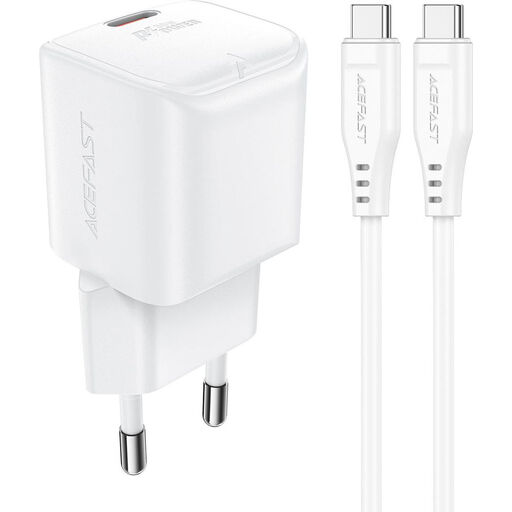
Why it stands out: This charger combines the compact dimensions of GaN technology with the convenience of a permanently integrated USB-C cable. It is a thoughtful solution for users who value minimalism and portability.
Advantages:
Who it's for: Users looking for a straightforward and extremely portable charging solution for a single USB-C device. Perfect as a dedicated phone charger for daily use or travel.
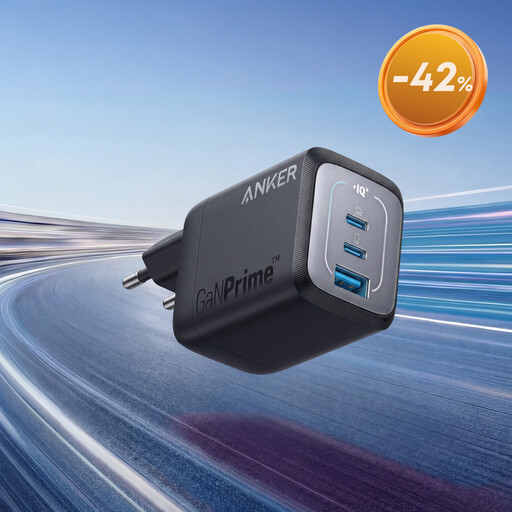
Why it stands out: With a total output of 67 watts and three ports, this charger is a true powerhouse. It can effortlessly power a notebook, a tablet, and a smartphone simultaneously, while remaining compact thanks to GaN technology.
Advantages:
Who it's for: Users who need a powerful all-in-one solution for their desk or travel bag. Ideal for anyone who regularly needs to charge a USB-C laptop charger and other devices at the same time.
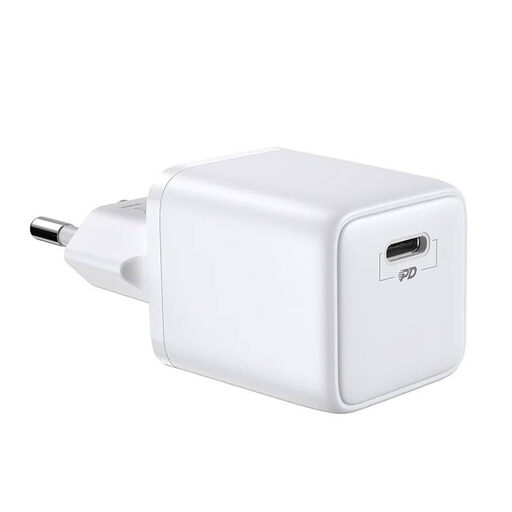
Why it stands out: This model focuses on the essentials: reliable and fast charging via a single USB-C port. With 25 watts of power and support for Power Delivery 3.0, it is a functional and budget-friendly choice.
Advantages:
Who it's for: Users looking for a simple, reliable, and cost-effective USB-C fast charger primarily for their smartphone or other smaller devices.
Haven't found the right model for your specific needs yet? There is a wide variety of other chargers with different power levels, port configurations, and form factors.
Browse our entire assortment to find the ideal charging solution for your devices.
Explore more models in the USB Plugs category here.
A GaN charger uses the semiconductor Gallium Nitride instead of traditional silicon. This material allows for higher efficiency in energy transfer. As a result, chargers can be built smaller and lighter for the same power output and generate less waste heat, which increases the device's lifespan and safety.
While the USB-C connector is universal, the charging speed depends on the compatibility of the charging protocols. A modern Power Delivery power adapter is intelligent and will never supply too much power to a device. It communicates with the device to determine the optimal charging power. However, a charger with insufficient power will charge a demanding device like a laptop very slowly, if at all.
This depends heavily on the model. Compact ultrabooks often manage with 45W to 65W. A 67W charger is therefore a very flexible choice for many common laptops. However, more powerful workstation-grade laptops may require 90W, 100W, or even more. It's best to check the manufacturer's specifications or the details on the original charger.