
Lieferung heute & morgen

Qualitätsgarantie

Willkommens-Angebote freischalten: KOSTENLOSE Lieferung | Bis zu 80 % RABATT | Kostenlose 30-Tage-JoyPlus-Testphase
App herunterladen
A USB-C fast charger should reliably power your smartphone, tablet or laptop. In practice, unclear wattage claims, missing cables and incompatible charging protocols can easily lead to the wrong purchase. So when comparing an iPhone charger, Samsung fast charger and MacBook charger, it’s worth checking the technical details rather than focusing solely on the advertised charging speed.
A figure such as 65 W or 140 W often refers to the maximum total output or the output of a single port. When you connect several devices at once, the USB-C power adapter may divide the available power between them. So a charger with multiple ports may not deliver full power through every port at the same time.
For fast charging, the charger, cable and device need to be compatible with one another. A Power Delivery charger with a USB-C port may work with many smartphones and tablets, but it won’t necessarily charge every model at its maximum speed. Samsung devices may also require PPS. For iPhones, you’ll need a compatible USB-C to Lightning or USB-C to USB-C cable.
Some USB-C wall chargers are sold without a cable. A suitable standard cable is often enough for 20 W. However, for 65 W or more, the cable should support the required power. An unsuitable cable can limit charging speed, even if the power adapter is rated for a higher output.
The power output you need depends on your device:
The device itself regulates the maximum charging power. A 65W USB-C charger won’t force a smartphone to draw 65 W.
USB Power Delivery (PD) is a widely used protocol for negotiating power between a charger and a device. The charger supplies only the power requested by the connected device. A PD charger is therefore a good choice for current USB-C devices.
Other protocols, such as QC 3.0, PPS, AFC, FCP and SCP, can improve compatibility with certain manufacturers. The key question, though, is whether the smartphone or tablet in question actually supports the standard.
A multi-port charger with two USB-C ports is handy for charging a smartphone and tablet. A model with USB-C and USB-A is useful if you still want to use older cables or accessories. Check the product description for:
A GaN charger uses gallium nitride instead of conventional semiconductor materials in certain components. This can allow for a compact design and efficient power conversion. However, GaN alone doesn’t guarantee a particular charging speed or better safety. Also look for protective features such as overcurrent, overvoltage, short-circuit and overheating protection.
For use in Germany, the power adapter should also be designed for the intended mains supply and have a suitable EU plug. A damaged casing, loose contacts or unusual heat are reasons to stop using the charger.
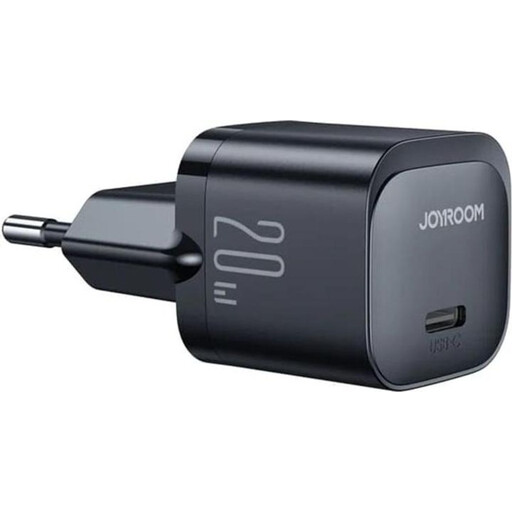
Why it’s a good fit: This compact 20W model has a single USB-C port and is suitable for smartphones, smaller tablets and charging on the go. Its EU plug is designed for German sockets.
Its rated output of 20 W and single USB-C port make it easy to know what to expect. The product description lists support for PD 3.0 and QC 3.0, among other standards.
20 W output, a weight of 42 g according to the product details, and overload and overvoltage protection.
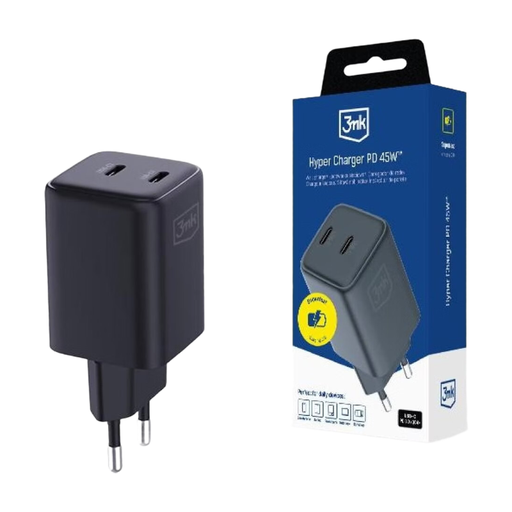
Why it’s a good fit: Two USB-C ports and 45 W of total output make this a good choice if you want to power a smartphone and tablet, or another accessory.
The product details explicitly list PD, QC4+ and PPS. When two devices are connected, the power is automatically shared between them.
GaN technology, two USB-C ports and a stated output of 45 W.
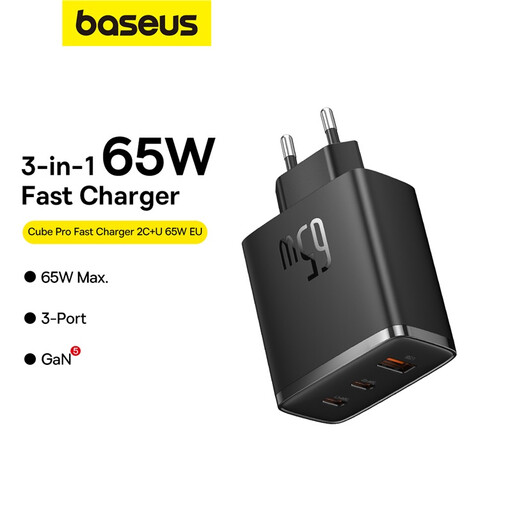
Why it’s a good fit: Two USB-C ports and one USB-A port make this a good option for households with both newer and older cables, as well as anyone using a smartphone, tablet and laptop.
The port types and maximum output for each port are clearly specified. USB-C delivers up to 65 W, while USB-A has a separate specification.
Up to 65 W via USB-C, 2 × USB-C plus USB-A, and a compact GaN design, according to the product details.
We’ve put together a complete, regularly updated list of products that meet these strict selection criteria and the safety regulations in force in the EU.
For many smartphones, 20 W to 30 W is enough. Devices with specialist fast-charging technology may support 45 W or more. Check the manufacturer’s specifications and use a compatible cable.
A properly designed PD charger negotiates the power level with the connected device. The smartphone only draws the power it requests. Even so, make sure the power adapter and cable are undamaged, and follow the manufacturer’s safety advice.
Its lifespan depends on build quality, how it’s used, how much heat it generates and how it’s stored. Don’t cover the charger while it’s in use, keep it away from moisture and stop using it if you notice any visible damage. Check the plug and cable regularly for cracks, loose contacts and deformation.