
Lieferung heute & morgen

Qualitätsgarantie

Willkommens-Angebote freischalten: KOSTENLOSE Lieferung | Bis zu 80 % RABATT | Kostenlose 30-Tage-JoyPlus-Testphase
App herunterladen
The USB-C port has established itself as the universal standard for laptops, tablets, and smartphones. However, exchanging data between new and older devices remains a challenge. A fast and versatile USB-C flash drive is often the most straightforward solution for transferring data, expanding storage, or securely transporting sensitive information.
This guide will help you understand the technical specifications relevant to your needs. We present a selection of models designed for various use cases—from rapid data transfers in your daily workflow to the secure storage of confidential documents.
Selecting the right flash drive depends on more than just capacity. Speed, connectors, and security features are crucial factors that significantly impact the user experience.
A USB drive's speed is determined by its interface and internal storage technology. A modern USB 3.2 drive already offers high transfer rates, but there are significant differences. Models with SSD USB drive technology achieve speeds comparable to external solid-state drives. This is particularly relevant for creative professionals editing large video files or for users who regularly perform extensive backups. Pay attention to the manufacturer-specified read and write speeds (in MB/s) to gauge the actual performance.
A dual USB drive with both a USB-C and a classic USB-A connector offers maximum flexibility. It enables seamless data transfer between a new MacBook or Android smartphone and an older PC or peripheral device without an adapter. This makes it a practical tool for anyone working in a mixed-device environment. For users of the iPhone 15 or newer models, a Type-C flash drive is also a direct way to expand storage or externally save ProRes videos.
For transporting business documents, personal data, or confidential projects, an encrypted USB drive is a sensible choice. Modern drives offer hardware encryption based on the AES-256 standard, which is considered highly secure. Some models go a step further by integrating a fingerprint sensor. This allows access to the secured data only for authorised users, effectively protecting the contents from unauthorised access even if the drive is lost.
Based on the criteria above, we have compiled a selection of USB-C flash drives that are well-suited for different user groups due to their specific features.
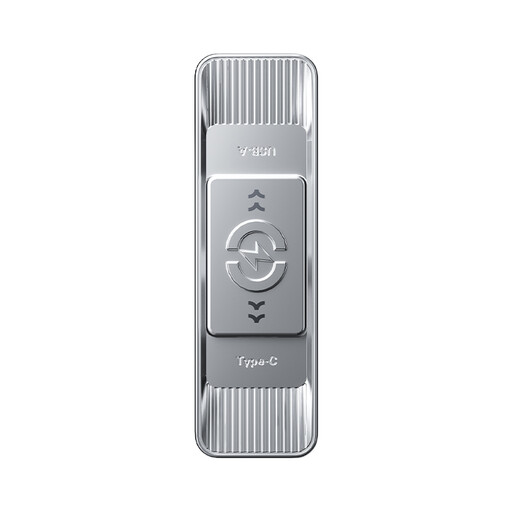
Why this model stands out: This drive combines high storage capacity with fast transfer rates and a convenient dual connector. The robust zinc alloy casing and sliding mechanism make it a durable companion for daily use.
Advantages:
Who is this model for? Ideal for professionals, students, and creatives who need a reliable and fast all-rounder for data exchange between various devices like laptops, tablets, and smartphones.
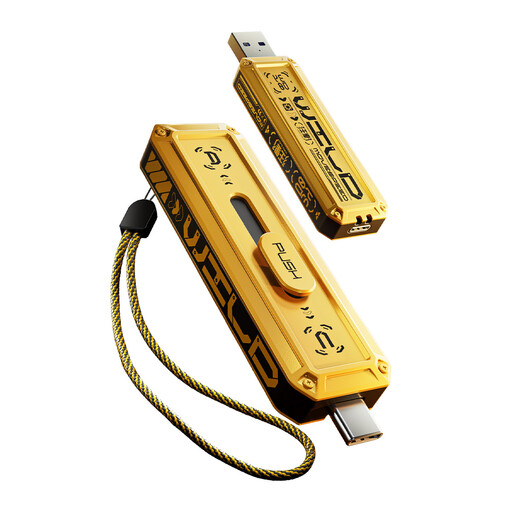
Why this model stands out: With a 1TB capacity and extremely high transfer speeds, this drive positions itself as an alternative to an external SSD. The striking mecha design and robust sliding mechanism underscore its focus on performance.
Advantages:
Who is this model for? Perfect for videographers, gamers, and power users who require maximum speed and capacity for demanding tasks like 4K video editing, running games directly from the drive, or performing fast, large-scale backups.
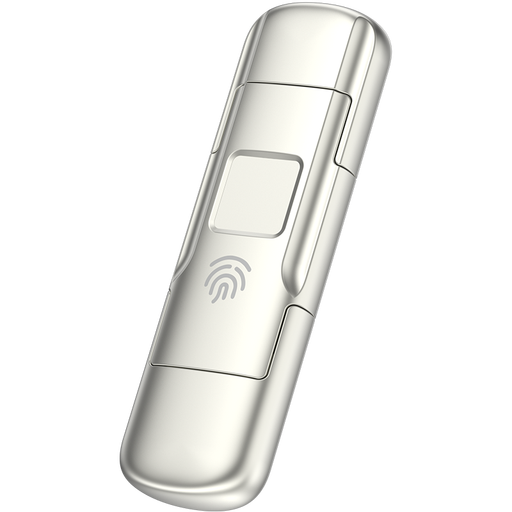
Why this model stands out: This drive clearly focuses on data security. It combines fast, SSD-like performance with hardware encryption and biometric authentication via a fingerprint sensor.
Advantages:
Who is this model for? An excellent choice for business professionals, lawyers, researchers, and any private user who needs to securely transport and store sensitive personal or business data.
The selection presented here covers specific use cases. If you are looking for different capacities, designs, or price points, you can find a broader range of models in our main category.
Discover more USB 3.2 drive models
The main difference lies in the maximum theoretical transfer speed. USB 3.2 Gen 1 (formerly known as USB 3.0) offers speeds of up to 5 Gbit/s. USB 3.2 Gen 2 doubles this to 10 Gbit/s. Therefore, a fast USB drive with a Gen 2 interface can potentially be twice as fast, provided that the computer or end device also supports this standard.
Yes, most modern Android smartphones and the iPhone 15 (and newer models) with a USB-C port support OTG (On-The-Go) functionality. This allows you to connect a USB drive for mobile phones directly to copy files, create backups, or expand storage without needing a computer.
Such a drive has two partitions: a public one and a secure one. The secure partition can only be accessed after successful authentication via fingerprint. The data is encrypted on the hardware level (e.g., with AES-256). This means that even if someone physically tampers with the drive, the data remains unreadable. The setup and management of fingerprints are typically handled via a small software application pre-installed on the drive.