
Lieferung heute & morgen

Qualitätsgarantie

Willkommens-Angebote freischalten: KOSTENLOSE Lieferung | Bis zu 80 % RABATT | Kostenlose 30-Tage-JoyPlus-Testphase
App herunterladen
The transition to USB-C is nearly complete for smartphones, laptops, and even gaming consoles. This has also transformed the headphone market. However, the search for the right model can quickly become overwhelming. Many products overpromise and underdeliver, leading to disappointment and wasted money. As your Joybuy Product Recommendation Officer, I'll help you identify the crucial features and sidestep common marketing traps.
Before you make a decision, you should be aware of the most prevalent issues that often only become apparent after the purchase.
To avoid a bad purchase, focus on the following technical features that are critical for reliable performance.
The choice between wired headphones and a wireless model depends entirely on your use case.
These two terms are often confused but describe completely different functions.
Instead of making a one-size-fits-all recommendation, we have identified models tailored to specific requirements and usage scenarios.
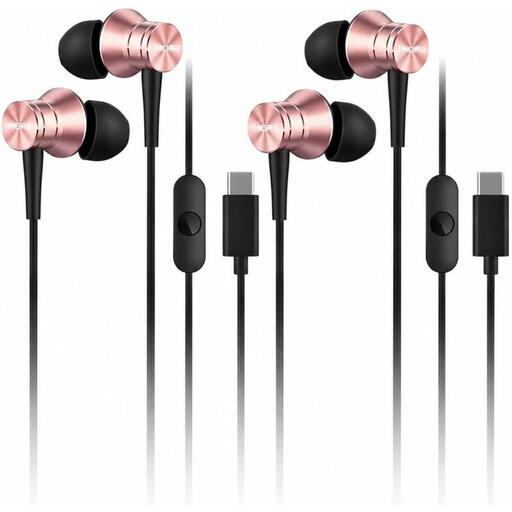
Why it's a good fit: Ideal for users looking for a simple, reliable, and budget-friendly solution. Just plug in and go—perfect for the daily commute, podcasts, or occasional calls without worrying about batteries or connection issues.
As a wired headphone, the problem of misleading battery life is completely eliminated. The direct USB-C connection ensures broad plug-and-play compatibility, bypassing the trap of complex DAC requirements.
The Kevlar-reinforced cable is designed for durability and reduces tangles and friction noise. The in-line microphone allows for easy call and music control.

Why it's a good fit: For users who value high-quality sound and effective noise isolation. Ideal for the daily commute on public transport or for focused work in a café. The USB-C charging case ensures convenient charging.
Addresses the poor microphone quality pitfall with a six-microphone system and noise reduction for clear calls. The fast-charging feature (5 mins of charge for 4 hours of playback, per the manufacturer) mitigates the problem of limited real-world battery life.
The adaptive noise cancelling technology adjusts to the environment in real-time. The ACAA coaxial acoustic system with separate drivers for bass and treble ensures a detailed and differentiated sound reproduction.
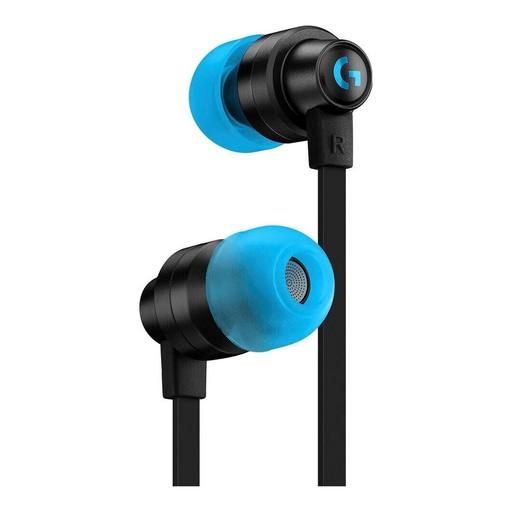
Why it's a good fit: A compact PC gaming headset for players who need precise audio and clear communication without Bluetooth latency. The dual drivers separate highs and lows for better positional audio in-game.
As a wired model, it eliminates latency and battery issues. The included USB-C adapter, in addition to the 3.5mm jack, offers maximum compatibility across various platforms, solving the limited connectivity pitfall.
The dedicated dual dynamic drivers provide clearer and more detailed audio reproduction than conventional in-ear headphones. The in-line microphone is optimised for voice communication.
We have compiled a complete, real-time updated list of products that fully meet these strict selection criteria and UK safety regulations.
Do all USB-C headphones work with the iPhone 15? Not necessarily. Although the iPhone 15 has a USB-C port, compatibility issues can arise with headphones whose integrated Digital-to-Analogue Converter (DAC) is not compatible with Apple's system. It is advisable to check the manufacturer's compatibility list before purchasing or to choose models confirmed to work with Apple devices.
What is the difference between ANC and ENC in headphones?ANC (Active Noise Cancellation) is for the listener. It actively reduces ambient noise so you can enjoy your music or podcast without disturbance. ENC (Environmental Noise Cancellation) is a feature for the microphone. It filters background noise from your voice, so the person you're talking to can hear you clearly, even if you are in a noisy environment.
Do wired USB-C headphones have worse sound quality than those with a 3.5mm jack? No, that is not the case. The sound quality of a USB-C headphone is determined by its internal Digital-to-Analogue Converter (DAC). A high-quality DAC can deliver audio quality that is equal to or even superior to that of a standard 3.5mm jack. Because the audio signal remains digital for longer, it is less susceptible to interference, which can result in a cleaner sound.