
Lieferung heute & morgen

Qualitätsgarantie

Willkommens-Angebote freischalten: KOSTENLOSE Lieferung | Bis zu 80 % RABATT | Kostenlose 30-Tage-JoyPlus-Testphase
App herunterladen
A USB-C hub can expand a single laptop port to include HDMI, USB, memory cards, Ethernet and charging functions. In practice, however, models vary considerably. A product with lots of ports is not automatically suitable for every home office, MacBook or gaming setup.
As a Joybuy Product Recommendation Officer, I filter the available information according to clear, verifiable technical criteria. This shows that the most common unsuitable purchases are not caused by missing ports, but by confusing performance specifications and poor device compatibility.
A USB-C hub with HDMI often highlights only the maximum resolution. For smooth movement, presentations and gaming, the refresh rate is also important. 4K at 60 Hz displays content noticeably differently from 4K at 30 Hz.
The laptop’s USB-C port must also support DisplayPort Alt Mode or a compatible Thunderbolt function. A USB-C port that supports data or charging only may not output a picture. You should therefore check your laptop’s technical specifications before buying.
A USB-C hub with 100 W Power Delivery will generally accept up to 100 W from the power adapter. Some of this power is used to run the hub and connected devices. The power actually reaching the laptop may therefore be lower.
The power adapter must also provide sufficient power and support the appropriate USB-C PD standard. The hub does not normally replace a charger unless a power adapter is explicitly included in the package.
A USB-C multiport adapter with several USB, HDMI and card-reader ports operates through a host connection with limited bandwidth. If external SSDs, memory cards and monitors are used at the same time, the available bandwidth may be divided between them.
Specifications such as 5 Gbit/s or 10 Gbit/s describe the technical interface speed. The actual transfer rate also depends on the laptop, cable, storage device and simultaneous use of other ports.
For a basic home office, HDMI, USB-A and a USB-C charging port are often sufficient. Photographers and video users will also need a USB-C hub with an SD card reader or SD and TF slots. If you rely on a wired network connection, look specifically for a USB-C hub with Gigabit Ethernet.
Typical combinations:
A USB-C hub 4K 60Hz should not only advertise the desired resolution, but also specify the connection used, the number of monitors supported and the operating system. On Windows, MST mode can enable several independent displays. macOS has different limitations depending on the MacBook model and chip.
A dual-HDMI hub may therefore only be able to show an extended display on a MacBook, or may show the same picture on both outputs. Product information such as “for MacBook” should always be checked against the exact model.
A metal casing may dissipate heat better than a fully enclosed plastic casing, but it cannot replace adequate ventilation. During extended use with 4K output, networking and multiple USB devices, a hub may become warm.
The following points are also important:
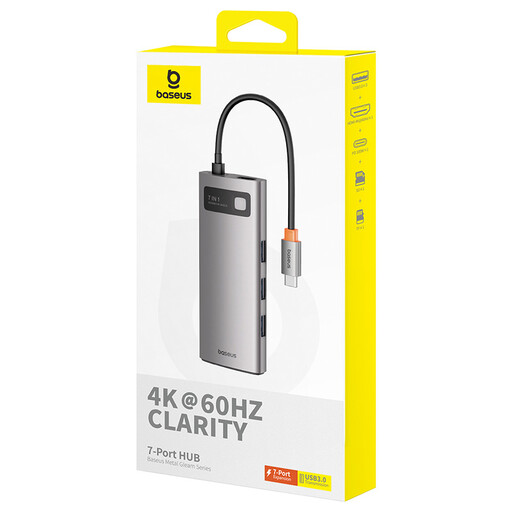
Why this product suits this profile: The 7-in-1 design combines HDMI, three USB-A 3.0 ports, SD/TF and USB-C PD in a compact format, covering the typical requirements of a laptop.
The specifications clearly state 4K at 60 Hz, speeds of up to 5 Gbit/s through the USB 3.0 ports and a PD input of up to 100 W. A separate charger is required.
HDMI, three USB-A data ports, SD/TF card reader and 100 W PD input in a single device.
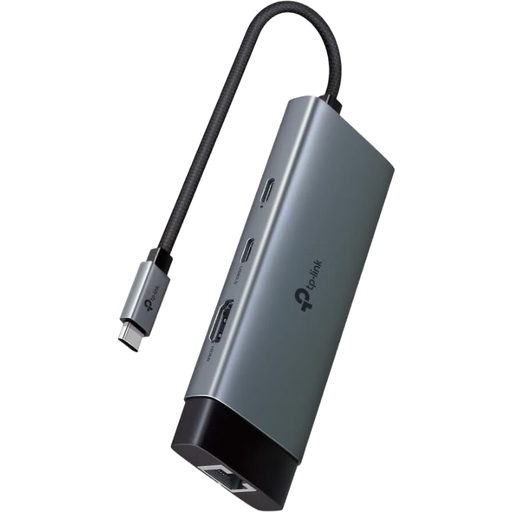
Why this product suits this profile: For home offices, video conferencing and an external monitor, this hub combines 4K output, Gigabit Ethernet and fast USB ports.
The specification clearly distinguishes HDMI with 4K at 60 Hz, 5 Gbit/s data ports, Gigabit Ethernet and PD of up to 100 W.
RJ45 with 10/100/1000 Mbit/s, HDMI 4K at 60 Hz, plus compatibility information for Windows, macOS, Linux and other systems.
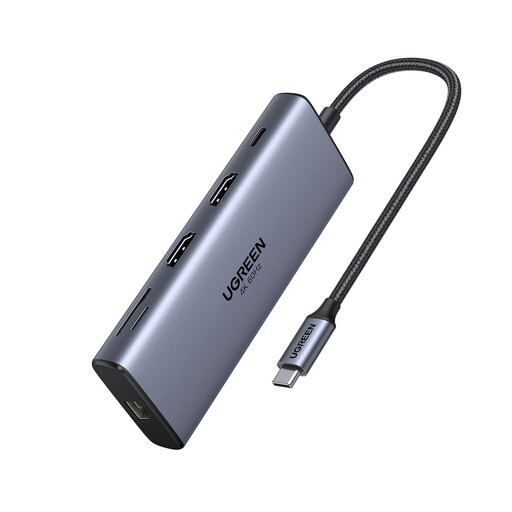
Why this product suits this profile: Two HDMI outputs, USB-C and USB-A ports, card readers, Gigabit Ethernet and 100 W PD make this a strong choice for users with an extensive workstation.
The product information specifies MST for Windows and dual 4K support for macOS. You should still check your specific laptop model before buying.
Two HDMI ports with 4K at 60 Hz, USB-C 3.2 speeds of up to 10 Gbit/s and an integrated Gigabit network connection.
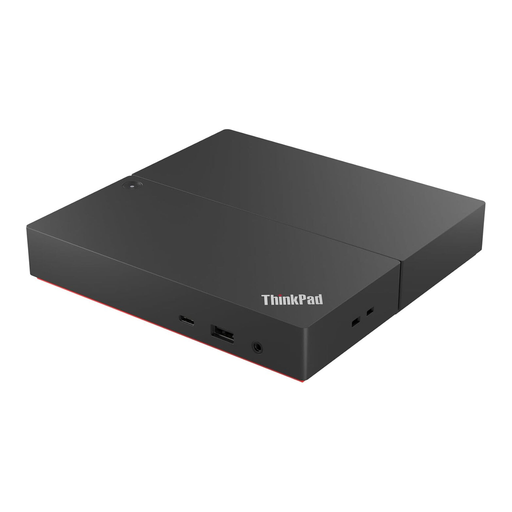
Why this product suits this profile: This docking station is designed for users who want to connect ThinkPad devices and several desktop peripherals using a single USB-C cable.
The product description highlights the need to check compatibility. Before buying, you should confirm that your laptop, monitors and peripherals are supported.
Single-cable connectivity for compatible Lenovo ThinkPad devices, with support for multiple desktop peripherals.
We have put together a complete, regularly updated list of products that fully meet these strict selection criteria and the safety regulations applicable in the EU.
No. For video output, the MacBook’s USB-C port must support the appropriate display functions. The macOS version, chip architecture and number of external monitors may also limit how the hub can be used. The hub’s compatibility information should be checked against the exact MacBook model.
A separate power adapter is often not required for basic USB devices. If you want to charge a laptop via Power Delivery or run several power-hungry devices, you will need a compatible USB-C charger. In many cases, the PD port on the hub is a pass-through input rather than an independent power supply.
There is no standard lifespan that applies in every case. It depends on connection cycles, heat generation, transport, cable strain and the connected hardware. Using the hub in a dry, well-ventilated environment, plugging and unplugging it carefully, and safely ejecting storage media can help maintain reliable everyday performance.