What should you look for when buying?
The main things to consider are the signal path from your playback device, the right connection for your headphones and the space the device will take up on your desk.
| Buying consideration |
What to check |
Who is this especially important for? |
| Easy connection |
Check USB audio and operating system compatibility; confirm whether the device needs a separate power supply or runs on USB power. |
If I play concert recordings directly from my laptop, I want to connect as few extra devices as possible. Around 36% of consumers prioritise a straightforward connection. |
| Headphone compatibility |
Check the connector type and the output you need; only compare power ratings when the load and output are the same. |
If my headphones need a particular connection or suitable amplification, I want to check both before buying. Around 29% of consumers prioritise compatibility with the headphones they already own. |
| Space and controls |
Allow for the casing dimensions and room for cables; check that the volume control and headphone socket are easy to reach. |
When desk space is limited, I want to consider the casing, cable clearance and controls together. Around 21% of consumers put footprint and ease of use first. |
| Existing analogue setup |
Check whether your playback device provides a suitable analogue signal and which input is compatible with it. |
If I already have a DAC or a suitable analogue output, I want to avoid unnecessary extra devices. Around 14% of consumers prioritise using their existing analogue setup. |
Joybuy product selection
This selection includes a USB DAC with a headphone amplifier for digital PC files, and an analogue headphone amplifier for an existing analogue output. Before buying, check which signal path suits your computer and headphones.
 No image available
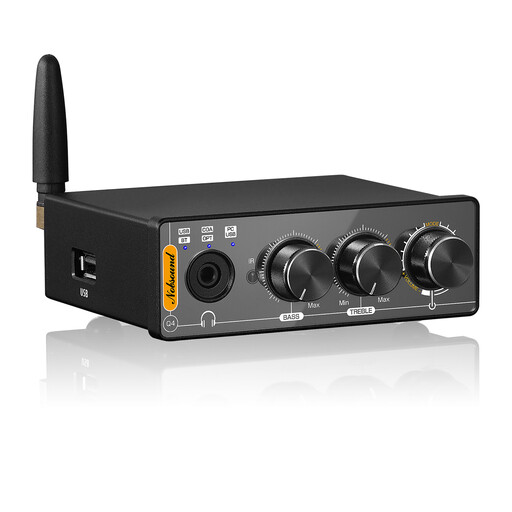
Nobsound Q4 USB audio DAC with Bluetooth headphone amplifier
A good fit for a digital PC source if you want to use several inputs and tone controls.
- USB, optical and coaxial inputs are listed.
- Headphone output for 16–300 Ω.
- Includes a remote control, input selector, and treble and bass controls.
- Specification shown in the product name: 24-bit 192 kHz.
View at Joybuy
 No image available
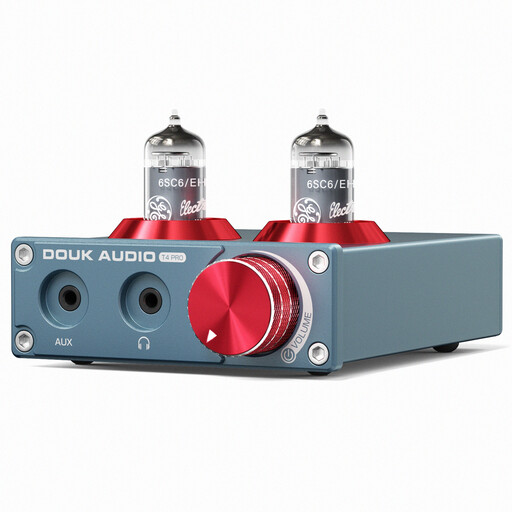
Douk Audio T4 PRO Mini Valve
A good fit for an analogue output if you’re looking for a separate headphone amplifier with its own volume control.
- 3.5-mm AUX input and 3.5-mm headphone output.
- Specified for headphones with 32–300 Ω impedance.
- Casing dimensions: 95 × 117 × 30 mm.
- An external 12-V power supply is included. Use only the correct power supply; an incompatible one can cause overheating, a fire risk or damage.
- For digital PC files, you’ll need a DAC or a suitable analogue output from your computer.
View at Joybuy
Frequently asked questions
Do I need a separate DAC for downloaded concert recordings?
Not necessarily, if your playback device already has a suitable analogue headphone or line output. For a digital USB connection from your computer, you’ll need a DAC built into the amplifier or a separate DAC connected before it.
How should I set up the amplifier for my first listen?
First, check the input source and headphone connection, then start at a low volume. iFi audio’s manual recommends turning the volume down before changing the PowerMatch gain setting; the World Health Organization (WHO) points out that volume, listening time and how often you’re exposed to sound all matter.
What should I do if the product develops a fault after I buy it in Germany?
The statutory rights you have against the seller are separate from a voluntary manufacturer’s warranty, as explained by the Verbraucherzentrale (German Consumer Advice Centre). For ordinary movable goods, Section 438 of the German Civil Code (BGB) generally provides for a two-year limitation period from delivery; your specific rights depend on the purchase and the fault.
Can I listen to any downloaded concert recording for personal use?
The fact that a file exists does not in itself tell you whether it was made available lawfully. Section 53 of the German Copyright Act (UrhG) allows private copies only under the conditions set out there, and excludes sources that were obviously made or made publicly available unlawfully. For recordings of public performances, subsection 7 generally requires the rights holder’s consent.
How should I dispose of an old headphone amplifier?
According to the German Environment Agency, electrical waste must not go in household rubbish. You can take it to a recycling centre, for example, or return it to a retailer under the applicable take-back arrangements.


