For large design project folders, choose a capacity based on the actual folder size and the number of draft versions you want to keep. Then compare the write performance of the specific capacity variant and check the connections on your devices. F.A.Z. Kaufkompass highlights differences between capacity variants, while the German Federal Office for Information Security (BSI) stresses that the lifespan of storage media cannot be predicted precisely. For confidential drafts, you’ll also need suitable encryption, but it doesn’t replace a separate, tested backup.
Who these choices matter to
Designers with growing project archives
If you keep several versions of your designs, plan for the storage space you’ll need as well as how you’ll access the files later. The BSI notes that the lifespan of storage media cannot be predicted precisely; F.A.Z. Kaufkompass highlights differences between capacity variants.
Teams that regularly export large files
If you regularly save updated project folders, the write performance of the specific variant matters. F.A.Z. Kaufkompass reports that speeds can vary between capacity options in the same product range.
Designers working with confidential drafts
If you carry confidential files on a portable storage device, plan separately for protection against unauthorised access and for recovery. The BSI describes encryption as a way to protect data if a storage device is lost or stolen.
What to consider when buying
Start by working out how much storage you need, including some room to spare, and plan for a separate backup. Then compare write performance, connections, the file system and, where needed, encryption.
| Priority |
What to check before buying |
Who it matters most to |
| Space for folders and draft versions |
Compare folder sizes and the number of versions you want to keep, and make sure there’s spare capacity after copying; plan for a separate backup. |
As my project folders and older versions grow, I want to allow enough space without relying on a one-size-fits-all GB figure. Around 33% of consumers put storage needs first. |
| Write speed when archiving |
Compare write specifications or test results for the exact capacity you want, and check the USB connection on the computer you’ll use. |
If I regularly copy large design files, I want to be able to assess the write performance that matters for the job. Around 27% of consumers prioritise copy time. |
| Keeping data confidential if the drive is lost |
Check software or hardware encryption, device compatibility and how to recover the key. |
If I store confidential drafts on a portable USB drive, preventing unauthorised access is a key concern. Around 20% of consumers put confidentiality first. |
| Connections and large individual files |
Check whether your devices have USB-A or USB-C ports, and compare the file system with the size of your largest individual file; Microsoft Learn states that FAT32 has a 4 GiB limit per file. |
If I use devices with different ports or work with large exported files, I want to check that the drive will connect and the files can be read on all my devices. Around 20% of consumers prioritise this compatibility. |
Avoiding common mistakes
-
Assuming read speed is the same as archiving speed
Write performance matters when saving large design files. F.A.Z. Kaufkompass highlights differences between capacity variants; USB transfer rates alone don’t tell you how quickly a project folder will be written.
Compare write specifications or test results for the exact capacity you want, and check your computer’s connection too.
-
Using a USB drive as your only permanent copy
The BSI notes that the lifespan of storage media cannot be predicted precisely. A successful copy also doesn’t prove that you’ll be able to recover the files later.
Keep a separate backup and periodically check that you can read the files back.
-
Checking only the plug, not the file system
With FAT32, individual files can be no larger than 4 GiB, according to Microsoft Learn. Having the right connection won’t get around this file system limit.
Check the size of your largest exported file and whether all your devices support the file system you’ve chosen. Back up any existing data before changing the file system, then test that you can read the files back.
-
Confusing encryption with a complete backup
Encryption prevents unauthorised access, but it won’t help you recover files if the only copy is lost or the drive fails.
For confidential files, plan for both suitable protection and a separate backup, including the access details you’ll need.
Key brands at a glance
Kingston
DataTraveler includes models for general storage and connection needs; IronKey is a separate product range with hardware encryption.
- Kingston’s comparison guide lists USB-A for the DataTraveler Kyson and both USB-A and USB-C for the microDuo 3C Gen3.
- IronKey’s security features and speed specifications don’t automatically apply to DataTraveler. Check each model and capacity individually.
Transcend
According to the manufacturer, the JetFlash 930C has USB-A and USB-C connectors for devices with different ports.
- Transcend lists capacities of up to 512 GB, with peak read speeds of 420 MB/s and write speeds of 400 MB/s.
- These are manufacturer specifications, not a guarantee of performance with a particular project folder. Transcend says the two connectors cannot be used at the same time.
Samsung
The FIT Plus is a compact USB-A option, provided the specific capacity is right for your archive.
- For the 256 GB FIT Plus, Samsung lists sequential read speeds of up to 400 MB/s.
- This doesn’t indicate a corresponding write speed. Samsung says the specified interface differs between the 256 GB and 512 GB versions.
Verbatim
The Store-’n’-Go USB-C variant is designed for devices with a USB-C port.
- For the 128 GB variant, Verbatim lists a retractable USB-C connector and speeds of up to 100 MB/s.
- Check this variant’s capacity against the actual size of your project archive; specifications can’t be assumed to apply to other Verbatim ranges.
SanDisk
The 128 GB Extreme PRO USB 3.1 Gen1 was included as a USB-A option in a German comparison test.
- COMPUTER BILD describes the tested 128 GB variant as offering high read and write speeds.
- The test notes that it has a large design; its results can’t necessarily be applied to other Extreme PRO versions.
USB drives for project files at Joybuy
This selection includes USB drives for storing and transferring project files. For each specific variant, compare capacity, stated write performance, connections and, where relevant, features for protecting confidential files.
 No image available
Kingston DataTraveler Kyson 256 GB
A 256 GB USB-A variant for project files, if this connection is compatible with your devices.
USB 3.2 Gen 1; metal casing; stated write speed of up to 60 MB/s.
View at Joybuy
 No image available
Kingston DataTraveler SE9 G3 64 GB
A 64 GB USB-A variant, if there’s enough space for the project files you want to store.
USB 3.2 Gen 1; metal casing; product specifications list write speeds of up to 100 MB/s.
View at Joybuy
 No image available
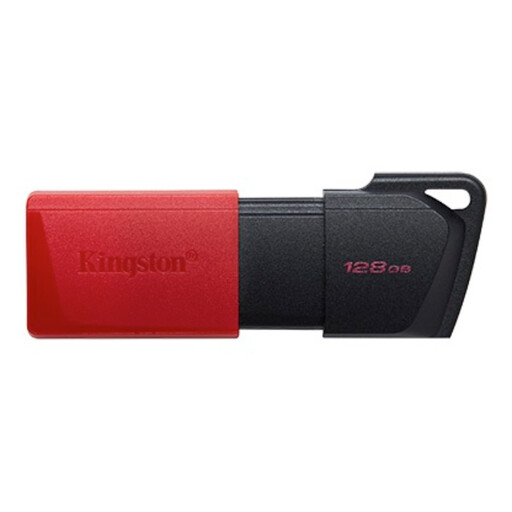
Kingston DataTraveler Exodia M 128 GB (Black + Red)
A 128 GB variant for project files, if the capacity and USB-A connection suit your workflow.
USB 3.2 Gen 1; movable protective cap; loop for attaching the drive.
View at Joybuy
 No image available
SanDisk Ultra 256 GB, USB 3.0
A 256 GB variant for project files; the product specifications also mention a password-protected area.
USB 3.0; stated write speed of up to 100 MB/s; password-protected area with 128-bit AES encryption, according to the product description.
View at Joybuy
 No image available
MOVESPEED YSUYC-256GSN 256 GB, USB-A and USB-C
A 256 GB variant with both connection types and fingerprint access, for workflows using compatible devices.
The product specifications list AES-256 encryption and write speeds of up to 500 MB/s. According to the product description, data in the Secure Partition cannot be recovered if password and fingerprint access are unavailable.
View at Joybuy
Frequently asked questions
Is one copy of my design drafts on a USB drive enough for an archive?
If you need to be able to recover your files later, don’t rely on a single copy on a USB drive. The BSI notes that the lifespan of storage media cannot be predicted precisely. Keep another backup separately and test that you can read the files back.
Why can’t I copy a large exported file even though there’s enough free space?
Check the file system first: Microsoft Learn gives FAT32 a maximum individual file size of 4 GiB; exFAT allows larger files. Back up any existing data before changing the file system, then check that the files can be read on all the devices you need to use.
Do I need a hardware-encrypted USB drive for confidential drafts?
A hardware-encrypted USB drive isn’t the only way to encrypt files; the BSI describes both software- and hardware-based methods. Check which option is compatible with your devices, and make sure you have a plan for accessing your keys and recovering your files.
What should I know about a faulty USB drive and customer service?
Your statutory rights for faulty goods are against the seller; a manufacturer’s guarantee is an additional voluntary service with its own terms. The Verbraucherzentrale explains the difference. Repairing or replacing the drive won’t restore files that weren’t backed up elsewhere.
How should I dispose of an old USB drive in Germany?
Dispose of it separately as electrical waste. The German Environment Agency lists local collection points, which generally take old devices free of charge. Before handing it in, check whether it still contains any confidential data.


