Choose a USB flash drive based on the size of your photo folders and the connections available on the devices you’ll use to access the backup. If other people may be able to access it, suitable access protection is important too. The Federal Office for Information Security points out that the lifespan of storage media cannot be predicted precisely. Keep a separate additional copy, and check that you can restore files from it.
Who is this USB flash drive for?
Families backing up their photo archives
If you want to keep photo folders and make room for future additions, compare the storage capacity with the size of your archive and regularly check that you can open the copy. The Federal Office for Information Security recommends considering whether your files can be restored.
Those looking to keep photos private
On a shared studio computer, other people may be able to access unprotected files. The Federal Office for Information Security describes encryption as one way to make data unreadable to other users.
Those using multiple devices
If you back up or access photos on devices with different USB connections, check the connections and external storage support on each device. Having the right plug doesn’t necessarily mean the device can read the flash drive.
What should you look for when buying?
Start by comparing storage needs and how you’ll restore your files, then consider access protection and device connections. If you regularly copy large amounts of data, check the write speed quoted for the specific variant too.
| Priority |
What to check before buying |
Who should pay particular attention? |
| Capacity and recovery |
Compare the size of your folders and expected growth with the capacity of the specific variant; try opening files from the copy. |
I want to be able to access my complete photo backup later, rather than relying on sufficient storage alone. Around 33% of consumers prioritise having a recoverable backup. |
| Privacy |
Check that access protection works on the devices you plan to use, and consider how to store access details separately from the flash drive. |
If other people can use the studio computer or flash drive, I want to protect private photos from their access. Around 27% of consumers prioritise privacy. |
| Connections and readability |
Check for USB-A or USB-C connections on the source and target devices, along with their support for external storage and the file system. |
I want to back up or access the same photos on devices with different connections. Around 20% of consumers prioritise device compatibility. |
| Write time |
Check the write speed quoted for the exact variant and the computer’s USB connection; don’t mistake read speeds for write speeds. |
If I regularly update large folders, I want to know how long they’ll take to write. Around 20% of consumers prioritise copying time. |
Common selection mistakes
-
Relying on a USB flash drive as your only photo archive
The Federal Office for Information Security says the lifespan of storage media cannot be predicted precisely. Without another copy, a failure could put your photos at risk; checking that you can read the files back is also part of backing them up.
Keep an additional, separate copy and test that you can open files from it.
-
Assuming a high read speed means a fast backup
Backing up involves writing files to the flash drive. Samsung’s quoted speed of up to 400 MB/s for the BAR Plus MUF-256BE3/APC refers to sequential read speed, not the write speed you’ll get when backing up.
If you regularly copy large folders, check the write speed quoted for the specific variant and the computer’s USB connection.
-
Assuming dual connectors or encryption provide a complete backup
Having the right plug doesn’t guarantee that every target device can read the flash drive. Encryption protects privacy, but it won’t restore lost files.
Test the target devices in practice, and treat access protection and keeping another backup as separate steps.
Key brands at a glance
SanDisk
The Ultra Dual Drive Go range is worth considering if you switch between USB-A and USB-C devices.
- According to SanDisk, the SDDDC3-256G-G46 variant we reviewed has both connector types and comes with a five-year warranty.
- The connectors don’t guarantee compatibility with every mobile device, nor do they tell you anything about encryption or sustained write speeds. Check the warranty terms too.
Samsung
The BAR Plus MUF-256BE3/APC is a 256 GB option for devices with USB-A.
- Samsung Germany quotes sequential read speeds of up to 400 MB/s for this variant.
- The quoted read speed doesn’t indicate how quickly it can write a backup; USB-C isn’t listed as a connection for this model.
Transcend
According to Transcend, the JetFlash 930C has both USB-A and USB-C connections.
- Transcend quotes speeds of up to 420 MB/s for reading and 400 MB/s for writing across the range.
- These are the manufacturer’s maximum figures, not measurements from your studio set-up. Transcend also says that mobile devices need to support USB-OTG.
Kingston
The IronKey Keypad 200 series is aimed at users looking for PIN access and hardware encryption.
- Kingston describes the series as PIN-protected and hardware-encrypted.
- Check whether the specific model you’re buying has USB-A or USB-C. Other DataTraveler models with dual connectors don’t automatically offer the same security features.
USB flash drives for backing up photos
This Joybuy selection includes USB flash drives for backing up photos, with a range of stated capacities, connections and access protection features. Check the exact variant and your devices’ requirements before choosing.
 No image available
Kingston DataTraveler Kyson 256 GB
The stated capacity may suit a larger photo backup.
Compare 256 GB with the size of your photo folders. If you back up frequently, check the write speed quoted for the specific variant.
Joybuy
 No image available
Kingston DataTraveler 64 GB, 220 MB/s, Metal, USB 3.2 Gen 1 SE9 G3
The 64 GB variant is worth considering if it has enough capacity for the photo backup you have in mind.
Compare the capacity with the size of your folders, and check the write speed quoted for the exact variant before making frequent copies.
Joybuy
 No image available
SanDisk Ultra 256 GB USB 3.0 Flash Drive
The 256 GB variant may be suitable for larger photo folders.
If you want to use a password-protected area, check that it works for all the files in your backup process. Make sure you keep another copy as well.
Joybuy
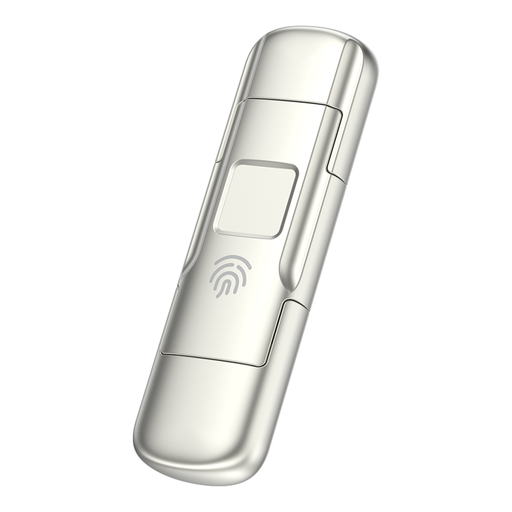 No image available
MOVESPEED YSUYC-256GSN 256 GB, USB-A and USB-C
The 256 GB variant with USB-A and USB-C may be useful if you switch between devices with these connections and want access protection.
The product information lists fingerprint access and AES-256 encryption. It also warns that encrypted data may not be recoverable if both the administrator password and fingerprint access fail.
Joybuy
 No image available
Lexar D40E 128 GB Dual USB 3.2 Gen 1 Type-C, LJDD40E128G-BNSNG
The 128 GB variant is an option if it has enough capacity for your planned photo backup and you want to use different connections.
Check that the encryption software is compatible with your devices and recovery process.
Joybuy
Frequently asked questions
How can I check that my photos have really been backed up?
Keep the original or another separate copy, and try opening files from the backup on a device you plan to use. The Federal Office for Information Security says that being able to restore data is part of an effective backup.
Can I automatically use a USB-A and USB-C flash drive with any smartphone?
No. For the JetFlash 930C, Transcend says mobile devices need to support USB-OTG. Also check whether your own device can read external storage and the file system used.
What do warranty and speed claims mean when buying?
They apply to the stated range or variant and are subject to the manufacturer’s terms. SanDisk quotes a five-year warranty for the 256 GB variant we reviewed; Samsung’s claim for the BAR Plus MUF-256BE3/APC refers to sequential read speed, not the speed at which it writes a backup. Check the exact model number and warranty terms.
Does the GDPR apply to family photos on a flash drive in a shared studio?
The GDPR does not apply to processing carried out purely for personal or family purposes without a professional or commercial connection. Whether this exemption applies depends on how the photos are actually used: simply being in a shared studio doesn’t decide the matter. If personal photos are processed for professional purposes, the lawfulness of that processing must be assessed separately; choosing a particular flash drive doesn’t determine the answer. The relevant legislation is Regulation (EU) 2016/679.


