Choose the capacity based on the total size of your original recordings and project versions, and allow for extra space, as the full stated capacity won’t be available for files. If you regularly transfer folders, check the write speed of the specific model and the ports on your devices. Keep a separate backup of important recordings and test that you can restore it. If your recordings include other people’s voices, also check the permissions you need to record and control access to the files.
Which USB flash drives are right for different users?
Teaching materials with lots of versions
If you want to keep your original recordings and several edited language versions, start by adding up the size of all your project folders. Also allow for the storage space actually available and keep separate backups of important files.
Regularly working across devices
If you often copy recording folders or switch between USB-A and USB-C devices, check the connectors, file system and write speed of the specific flash drive. A high advertised read speed doesn’t tell you how quickly files will be saved.
Working with sensitive voice recordings
If your recordings include voices that identify other people, check that you have permission to record them and consider how to protect the files you store. Encryption can protect files if the drive is lost, but it doesn’t automatically make a recording lawful.
What should you look for when choosing one?
| What matters when buying |
What to check |
Who it matters most to |
| Space for recordings and versions |
Add up the size of your originals and project folders, allow for additional versions and take the storage space actually available into account. |
If I want to keep my originals and several language versions, I need space for the whole project. Around 28% of consumers prioritise storage capacity. |
| Ability to restore files |
Keep a separate copy and try opening selected files from it. The German Federal Office for Information Security (BSI) points out that the lifespan of storage media can’t be predicted precisely, and that backups need to be restorable. |
If my recordings are hard to replace, I want to be able to access a separate, readable copy if the originals are lost. Around 22% of consumers prioritise being able to restore their files. |
| Time taken to copy files |
Check the write speeds for the exact model and capacity variant. Kingston points out that the host port or a hub can limit the transfer speed you achieve. |
If I often transfer large project folders, write speed matters more to me than the advertised read speed alone. Around 22% of consumers pay particular attention to copying time. |
| Using the drive with different devices |
Check for a USB-A or USB-C connector and make sure each device you plan to use supports the file system. Microsoft states that FAT32 has a maximum single file size of 4 GiB; whether another file system will work also depends on the devices you use. |
If I want to use the same project files on devices with different ports, the drive needs to work with each one. Around 17% of consumers prioritise compatibility across devices. |
| Access protection |
For sensitive files, check the encryption, unlocking method and separate backup options. The BSI explains that encryption can protect stored files from unauthorised access if a drive is lost. |
If my recordings include sensitive voices, I want to restrict access to the files I’ve stored. Around 11% of consumers prioritise access protection. |
Common mistakes when choosing and using a USB flash drive
-
Confusing read speed with write speed
A high read speed doesn’t mean you can copy project folders to the drive just as quickly. The host port and hub can also limit transfer speeds.
Check the write speeds or relevant tests for the exact variant on offer, and take your devices’ ports into account.
Repeatedly writing large project folders can mean longer wait times.
-
Relying on the drive you carry around as your only copy
A USB flash drive can be lost or fail. The BSI says the lifespan of storage media can’t be predicted precisely. A backup is only useful if you can restore the files from it.
Keep a separate copy and regularly open a few files from it to check they’re readable.
-
Assuming the connector and capacity guarantee file compatibility
The right USB connector doesn’t guarantee that a device can read the file system or a large individual file. Microsoft states that FAT32 has a limit of 4 GiB per file.
Test a typical large file on each device you plan to use. Back up any existing files before reformatting a drive.
If a device can’t read a file, you may need to copy it again or split it into smaller files.
-
Using encryption as a substitute for a backup or permission to record
Encryption can protect stored files from unauthorised access, but it can’t prevent data loss or establish whether a recording is lawful. According to the manufacturer, the Verbatim Keypad Secure 49429 may need to be reformatted after 20 incorrect code entries.
Check the unlocking process and security updates for the exact model. Make sure you have permission to record and keep a separate backup, regardless of access protection.
A guide to the leading brands
Kingston
The DataTraveler range includes a variety of capacities and connectors. The microDuo 3C is designed for switching between USB-A and USB-C, while IronKey is aimed at users who need built-in encryption.
- Kingston lists capacities of 64 to 256 GB and read speeds of up to 200 MB/s for the microDuo 3C.
- No equivalent write speed is listed here for the microDuo 3C. For the DataTraveler Max, Kingston notes that the host port and hub can limit performance; this isn’t a measured speed for other Kingston models.
SanDisk
The Extreme PRO USB-A and Extreme PRO Dual Drive are different options for larger transfers and for devices with USB-A and USB-C ports, respectively.
- For model SDCZ880-512G-G46, SanDisk lists USB-A, USB 3.2 Gen 1, read speeds of up to 420 MB/s and write speeds of up to 380 MB/s.
- These manufacturer’s maximum figures apply to the specified variant and aren’t measured speeds for other capacities. SanDisk lists two connector types and USB 3.2 Gen 2 for the Extreme PRO Dual Drive; this doesn’t indicate a specific write speed for your own project folders.
Verbatim
The Keypad Secure 49429 is a 128 GB USB-A model with a built-in keypad, designed for users who want to enter a PIN directly on the drive.
- Verbatim lists AES-256 hardware encryption and write speeds of up to 150 MB/s for this model.
- The manufacturer advises that a security update is required and the drive must be reformatted after 20 incorrect code entries. These details apply to model 49429.
Samsung
The BAR Plus MUF-256BE4/APC is a 256 GB USB-A model for carrying files, without a built-in keypad.
- Samsung lists sequential read speeds of up to 400 MB/s and a metal casing for this model.
- The stated read speed isn’t a write speed for recording folders. Samsung also notes that the actual available capacity may be lower than the stated capacity.
Joybuy products for recordings and project versions
The following Joybuy products are USB flash drives for storing and carrying lesson recordings and project versions. They differ in features including capacity and connector type.
 No image available
Kingston DataTraveler Kyson 256 GB
The stated capacity may suit original recordings and several project versions; compare it with the total size of your files.
256 GB; USB-A; USB 3.2 Gen 1; up to 60 MB/s write speed according to the product description.
View at Joybuy
 No image available
Kingston DataTraveler SE9 G3 64 GB
The 64 GB version may suit a modest collection of files. Check that its capacity covers all your planned language versions and project files.
64 GB; USB 3.2 Gen 1; up to 220 MB/s read and 100 MB/s write speeds according to the product description. Specified for USB-A host devices; metal casing with loop.
View at Joybuy
 No image available
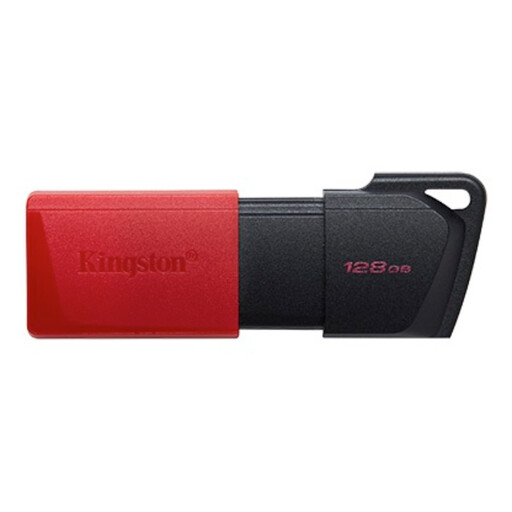
Kingston DataTraveler Exodia M 128 GB
The 128 GB version may suit several project versions, provided their combined size fits in the storage space actually available.
128 GB; USB 3.2 Gen 1; swivel cap and attachment loop.
View at Joybuy
 No image available
SanDisk Ultra 256 GB USB 3.0
Compare the stated capacity with the space you’ll need for several project versions. For sensitive files, check that the software solution described works with your devices and workflow.
256 GB; USB 3.0; up to 100 MB/s read and write speeds according to the product description. USB-A compatibility and password-protected storage using SecureAccess software with 128-bit AES encryption are specified.
View at Joybuy
 No image available
Kexin 2-in-1 set, 2 × 32 GB, USB 2.0
This set may suit switching between devices with USB-A and USB-C ports. Also check that each device supports the drive and its file system.
Two drives, each with 32 GB; USB-A and USB-C; USB 2.0. Each drive has its own stated capacity.
View at Joybuy
Frequently asked questions
How do I work out the capacity I need for two languages and several versions?
Add up the size of your original recordings, language versions and saved project folders, allowing for additional versions too. Then check the storage space actually available, rather than relying on the stated capacity alone. Without knowing the size of your files, it’s not possible to recommend a suitable capacity in GB for everyone.
Why can’t I copy a large recording to a drive that appears to have space?
First check the file size and file system. Microsoft states that FAT32 has a maximum single file size of 4 GiB, while exFAT supports larger files. Back up any existing files before formatting a drive, and check that all the devices you plan to use can read the chosen file system.
How can I check whether my backup will actually work?
Keep another copy separately and open some recording and project files from it. The BSI points out that backing up data also means being able to restore files. The lifespan of storage media can’t be predicted precisely.
Am I allowed to record other people’s voices for lesson recordings?
There’s no single answer that applies in every case. Section 201 of the German Criminal Code concerns the unauthorised recording of another person’s private speech. Processing personal data also requires an appropriate legal basis. According to the Federal Commissioner for Data Protection and Freedom of Information, consent is one possible legal basis, but not the only one. Whether a particular recording is lawful depends on factors including the speakers, the situation, permission and the school context. An encrypted drive doesn’t resolve these questions.
What applies to statutory rights and the manufacturer’s warranty if the drive develops a fault?
According to EU consumer information, if you buy from a trader in the EU, you’re entitled to a statutory guarantee of at least two years from the date you receive the goods. Any additional voluntary manufacturer’s warranty is separate; check the terms for the specific model.


