Choose a capacity that can hold your entire project folder and the backup versions you want to keep. If you regularly copy large files, the write speed of the specific model and your computer’s connection also matter. The German Federal Office for Information Security (BSI) recommends checking that a backup can be read and keeping another copy separately. For confidential files, add suitable access protection, but remember that this does not replace an additional backup.
Which features suit different needs?
Backing up project folders
If you want to back up spreadsheets, extensive supporting files and older versions, choose a capacity based on the whole folder. After copying, open a selection of files to check that the backup can be read; this is recommended by the BSI.
Backing up frequently
If you regularly copy large folders, write speed has more impact on how long you wait than a high read speed. Kingston notes that the host device’s connection can also limit a USB flash drive’s performance.
Taking confidential files with you
If you take sensitive project files with you, consider how to restore them as well as how to protect access if the drive is lost. The BSI describes encryption as a way to protect data on lost or stolen portable storage media.
What should you look for when buying?
First, work out how much space the entire folder will need, including any older versions you want to keep. Then check that the storage capacity, connectors and file system are suitable. If you make frequent copies, compare the write speed of the specific model.
| What you need |
What to check before buying |
Who is this important for? |
| Space for folders and versions |
Compare the size of the complete source folder and the number of versions you want to keep with the usable capacity of the specific model. |
If you want to keep supporting files and older versions as well as spreadsheets, you’ll need room for everything. Around 36% of consumers put this storage requirement first. |
| Write speed |
Check the write speed of the specific model and your computer’s connection. Don’t treat manufacturers’ maximum figures as a guaranteed copying speed. |
If you regularly copy large folders, the time taken to write the files is especially important. Around 29% of consumers prioritise copying time. |
| Access from different devices |
Check whether you need USB-A or USB-C, and consider the file system and the size of your largest individual file. Microsoft sets a 4 GiB limit per file for FAT32. |
If you want to restore a backup on different devices, make sure the connectors and file system work with those devices too. Around 21% of consumers prioritise access across devices. |
| Protecting confidential files |
Consider whether you need access protection, how you’ll unlock the drive and where you’ll keep a separate additional copy. |
If you take confidential project files with you, you’ll want to make unauthorised access more difficult if the drive is lost, without putting your only copy at risk. Around 14% of consumers prioritise confidentiality. |
Which mistakes should you avoid?
-
Allowing for spreadsheets but not the whole project folder
Supporting files and any older versions you want to keep also need storage space. The capacity you can actually use may also be lower than the stated capacity.
Before buying, work out how much space your complete backup will need and allow for the versions you plan to keep.
-
Assuming the read speed or USB standard guarantees backup speed
Backing up means writing data to the drive. A high read speed therefore doesn’t tell you how quickly your folder will be saved; the host connection can also limit performance.
Compare the write speed of the specific model with your computer’s connection, and don’t treat manufacturers’ maximum figures as guaranteed sustained performance.
-
Assuming the right connectors guarantee full file compatibility
A drive may physically fit several devices, but the file system could still prevent you from accessing a large individual file.
Before using the drive for backups, check the connectors on both devices, the file system and the size of your largest file.
-
Treating encryption as a second backup
Access protection and the ability to restore files are two different things. Verbatim says that the Keypad Secure #49429 needs to be reformatted after 20 incorrect code entries. The manufacturer also advises that a security update is available.
Test the unlocking process before archiving files, and keep another appropriately protected copy separately.
Without another copy, you may lose access to your files if you lose the code or the drive fails.
A guide to relevant brands
Kingston
The DataTraveler Max range is aimed at people who regularly copy large files, while the DataTraveler Duo offers two types of connector.
- Kingston quotes read speeds of up to 1,000 MB/s and write speeds of up to 900 MB/s for the DataTraveler Max. These are maximum figures, not a guaranteed speed for a particular backup.
- Kingston says that the Max range needs a USB 3.2 Gen 2 port on the host device for optimum performance.
- The DataTraveler Duo has USB-A and USB-C connectors for devices with different ports.
Verbatim
The Keypad Secure #49429 is a USB-A model with an integrated keypad, designed for buyers who want to consider access protection.
- Verbatim quotes AES 256-bit hardware encryption and write speeds of up to 150 MB/s.
- The manufacturer says the drive needs to be reformatted after 20 incorrect code entries. Verbatim also advises that a security update is available.
Samsung
The BAR Plus MUF-256BE3/APC is a 256 GB USB-A option.
- Samsung quotes sequential read speeds of up to 400 MB/s for this model.
- The read speed doesn’t show how quickly the drive will write a backup. Samsung also notes that the actual usable capacity may be lower.
Transcend
The JetFlash 930C is designed for switching between compatible USB-A and USB-C devices.
- The manufacturer’s datasheet lists 128, 256 and 512 GB models, with maximum read speeds of 420 MB/s and write speeds of 400 MB/s.
- The manufacturer says that both connectors can’t be used at the same time. Mobile devices need USB OTG; the maximum figures don’t show how quickly your own backup will run.
Joybuy products for this purpose
This selection includes flash drives with different capacities and USB-A/USB-C sets. Compare the stated capacity with the size of your complete project folder, and check that the connectors are compatible with your devices.
 No image available
Kingston DataTraveler Kyson 256 GB
The stated capacity may suit your project folder if it can hold everything, including the versions you want to keep.
Capacity: 256 GB.
View at Joybuy
 No image available
Kingston DataTraveler SE9 G3, 64 GB, 220 MB/s
The 64 GB model could be suitable if your complete backup, including the versions you plan to keep, fits within its capacity.
Capacity: 64 GB. The product name lists 220 MB/s and USB 3.2 Gen 1.
View at Joybuy
 No image available
SanDisk Ultra 256 GB USB 3.0
Check whether 256 GB is enough for your complete project folder and all the versions you want to keep.
Capacity: 256 GB. Interface listed in the product name: USB 3.0.
View at Joybuy
 No image available
Kexin 2-in-1, 2-pack, 32 GB each, USB 2.0
This set could suit you if you switch between compatible USB-A and USB-C devices. Check that it works with both devices.
Two flash drives, each with 32 GB. USB-A, USB-C, USB 2.0 and OTG are listed in the product name.
View at Joybuy
 No image available
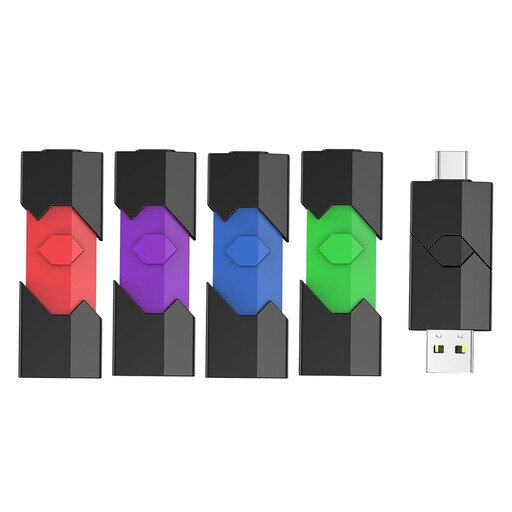
Kexin 2-in-1, 5-pack, 32 GB each, USB 2.0
Several individual flash drives can be used to keep copies separately. Decide in advance where each copy will be stored.
Five flash drives, each with 32 GB. USB-A, USB-C, OTG and USB 2.0 are listed in the product details.
View at Joybuy
Frequently asked questions
How do I set up and check a backup?
Regularly back up your complete spreadsheet and project folders, and open files from the copy from time to time. The BSI recommends checking that the backup can be read; important data shouldn’t be backed up in just one place.
Why can’t I copy a large archive file when there’s still free space?
Check the file system: FAT32 limits individual files to 4 GiB. Microsoft allows larger files with exFAT and NTFS. Before formatting a drive, consider which devices you use and which files are already stored on it.
Do project files need to be stored on an encrypted USB flash drive?
The guidance consulted doesn’t specify a particular encrypted drive for personal spreadsheets. For personal data processed by an organisation, the European Data Protection Board requires appropriate technical and organisational measures. The right safeguards depend on the risks and context.
What should I know about warranties and faults?
Your statutory rights against the seller are separate from any additional manufacturer’s warranty. The Verbraucherzentrale explains the difference; for the specific product, also check the terms of any voluntary warranty.


