Choir archive managers
If you keep several rehearsals and project versions, plan to store complete copies that you can access later. The BSI recommends considering how you’ll restore backed-up data, too.


Choose a USB flash drive only after comparing the size of your complete choir rehearsal folders and planned project versions with the storage space you can actually use. If you copy files frequently, the write speed of the specific model and your computer’s port both matter. The connector and file system are also important if you’ll be switching between devices. The German Federal Office for Information Security (BSI) points out that backups need to be recoverable, too – so your flash drive shouldn’t be your only copy.
If you keep several rehearsals and project versions, plan to store complete copies that you can access later. The BSI recommends considering how you’ll restore backed-up data, too.
If you frequently copy large folders, the write speed of the specific model and the port on the computer you’re using are important points to compare. Check manufacturers’ quoted read and write speeds separately.
If you use or share recordings across different computers, check that the connectors are compatible and that the file system is supported by the devices you plan to use. If recordings contain personal data, you may also need to control who can access them.
First, compare the storage space you need with the size of your complete folder and the backup versions you plan to keep. Then check that the quoted write speed and connector suit the way you copy files.
| What you need | What to check | Who it matters to |
|---|---|---|
| Space for complete project folders | Compare the folder size and planned additional versions with the usable storage space of the specific model. | If I need to keep several complete rehearsal folders and earlier project versions, available storage is my top priority. Around 26% of consumers prioritise space for complete project folders. |
| Time needed to copy files | Compare write speed rather than just read speed, and take the host device’s USB port into account. | If I regularly copy large folders after rehearsals, I want to match the write speed to the computer’s port. Around 21% of consumers prioritise copy times. |
| Recoverable backups | Plan to keep another separate copy and check that backed-up files open on the device you intend to use. | If important recordings need to remain available even if a flash drive is lost or damaged, I need another readable copy. Around 26% of consumers put recoverability first. |
| Use across different devices | Check the ports on all the devices you plan to use, and make sure they support the file system. | If I move recordings between devices with different ports, a compatible connection is essential. Around 16% of consumers prioritise use across different devices. |
| Access to identifiable recordings | Consider who needs access and, if appropriate, use practical encryption with secure key storage. | If recordings identify individuals, I want to limit access in line with how they’ll be used. Around 11% of consumers put access protection first. |
Read and write speeds refer to different tasks. The host device’s port can also limit transfer speeds, and a manufacturer’s maximum figures don’t guarantee how long it will take to copy a choir folder.
Before comparing models, check the write speed of the exact model and the USB port on your computer.
A low write speed can mean longer waits when you make backups regularly.
The storage space actually available may be less than the stated capacity. Formatting and other features can also use up some space.
Compare the folder size and planned backup versions with the free space actually shown for the specific model.
The FAT32 limit of 4 GiB applies to each individual file, not to the total size of a folder. A large recording may therefore require a different file system.
Before formatting the drive, check the size of your largest individual file and whether all the devices you plan to use support your chosen file system.
If a flash drive is lost or damaged, important recordings may become inaccessible. The BSI stresses that you need to be able to restore a backup, too.
Keep another separate copy and test that you can open the backed-up files.
The DataTraveler Max range includes a USB-C option for larger folders, while the Exodia range includes USB-A models.
The Extreme PRO SDCZ880-512G-G46 is a 512 GB USB-A model.
The 512 GB Dual QuickStick #32042 combines USB-A and USB-C for devices with the corresponding ports.
The USB Flash Drive Type-C MUF-512DA/APC is a USB-C model with a stated capacity of 512 GB.
The USB flash drives below are worth considering for backing up large folders. Compare their stated capacities, write speeds and connectors with the way you actually back up your files.
 No image available
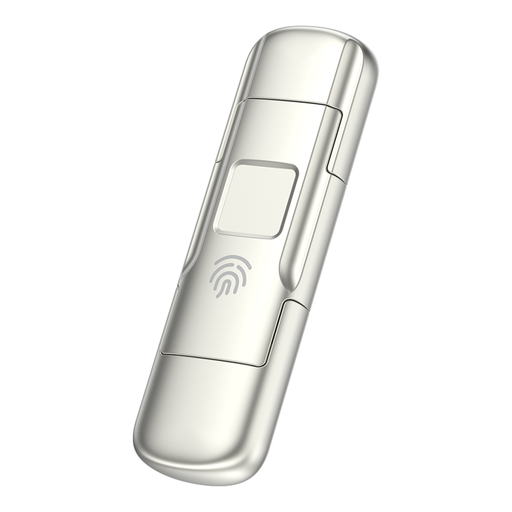
The stated dual USB-A and Type-C interface is useful when switching between devices with these ports.
256 GB stated capacity; USB 3.2 Gen 1; stated write speed of up to 500 MB/s and read speed of 550 MB/s.
Fingerprint access and AES-256 encryption are listed. According to the product description, the encrypted area can’t be recovered if both the administrator password and fingerprint recognition fail.
 No image available
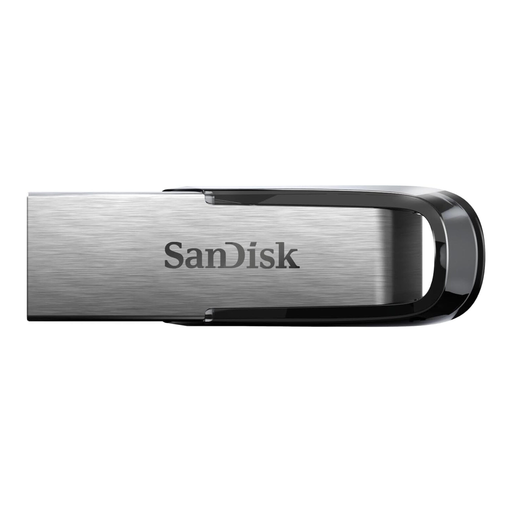
For a PC or laptop with a USB port; take the stated capacity into account when planning for complete folders and additional project versions.
128 GB; stated read speed of up to 150 MB/s; password protection listed.
The stated write speed is 4 MB/s, which can slow down copies of large folders.
First, check the size of each individual file and the file system. FAT32 limits individual files to 4 GiB; Microsoft doesn’t specify an equivalent file-size limit for exFAT. Before formatting, make sure all the devices you plan to use support your chosen file system, and back up any files already on the drive.
No – not if it would be the only remaining copy of important recordings. The BSI points out that storage media can fail and that you need to be able to restore a backup, too. Keep another separate copy and check that you can open the files.
No. Verbatim says the included Nero Backup software is compatible with Windows only. The USB-A and USB-C connectors should be considered separately.