PC listeners with wired headphones
If you want to use your headphones with a desktop PC, check the USB connection, operating system and headphone plug before buying. iFi audio says the uno requires a driver download for use with a PC.


A separate USB headphone DAC isn’t essential if your PC’s existing output works well with your headphones and you don’t need any extra connections. For a compact desk setup, a USB-powered device could be a good fit; models with more outputs or gain settings may need a separate power supply and more space. The key things to check are your headphone plug, your headphones’ requirements, and the specific model’s compatibility with your PC and drivers.
If you want to use your headphones with a desktop PC, check the USB connection, operating system and headphone plug before buying. iFi audio says the uno requires a driver download for use with a PC.
If you want an easy-to-reach volume control but a compact setup, check the power supply and cabling. The iFi uno is powered via USB-C, while FiiO says the K11 requires an external 12 V power supply.
If you want to use headphones with a 6.35 mm or balanced connection, or connect active speakers, choose a model with the right outputs. FiiO lists 6.35 mm and 4.4 mm headphone outputs, as well as an RCA line output, for the K11.
A good fit if: Your existing headphones offer the playback, volume and controls you need.
Trade-off: You avoid adding another device, but won’t get the extra connections or controls of an external DAC.
A good fit if: You listen on your PC, have limited space and your headphone plug is compatible with the device.
Trade-off: The iFi uno manual says a driver download is required for use with a PC.
A good fit if: You want to use, for example, 6.35 mm headphones, active speakers connected to the line output or different gain settings.
Trade-off: The FiiO K11 needs a separate 12 V power supply, so allow space and a socket for it.
A good fit if: You want to connect a microphone or headset as well as listen to music, and switch between headphones and speakers.
Trade-off: Extra inputs and software features may not be necessary if you only listen to music.
| What matters | What to check before buying | Who should prioritise it |
|---|---|---|
| PC and headphone compatibility | Check the USB connection, operating system, driver requirements and whether the specific model has the right headphone output. | If I want to connect my PC directly to wired headphones, I check the operating system, drivers and plugs. Around 37% of consumers put PC and connection compatibility first. |
| Features and cost | First check whether your PC’s existing output is good enough; only consider extra features if you plan to use them. | If I mainly listen to music on my PC, I don’t want to pay for connections or features I don’t need. Around 27% of consumers prioritise cost and avoiding unnecessary features. |
| Amplification and volume | Compare power specifications only for the same output and load, and take your own headphones’ requirements into account. | If my headphones need suitable amplification, I want to be able to adjust the volume with confidence. Around 18% of consumers prioritise amplification and volume control. |
| Space and power supply | Check the dimensions, power supply, cable routing and how easy the controls are to reach on the specific model. | If my desk has limited space, I want to keep extra cables and devices to a minimum. Around 18% of consumers prioritise space and power supply. |
FiiO’s 1400 mW figure for the K11 applies to the balanced output at 32 Ω. It doesn’t automatically describe the power available from another output or with your headphones.
Compare figures only at the same load and for the same output. Also check that the connection matches your headphone plug.
The iFi audio manual lists USB-C for audio and power, but also says a driver download is required for use with a PC.
Before buying, check the manual and requirements for your operating system.
According to the manufacturer, the FiiO K11 needs an external 12 V power supply, while the iFi uno is powered via USB-C. This can make a difference to the cables and desk space you’ll need.
Allow for the power supply, cable routing and space for the device, as well as its dimensions.
A separate power supply may take up an extra socket and valuable desk space.
The K11 is a desktop USB DAC with a headphone amplifier, several digital inputs and headphone outputs.
The uno is a small, USB-powered DAC with a headphone amplifier, designed for use with a computer.
The Sound Blaster X4 is a USB sound card with extra headset, microphone and output features for PC users.
The DX5 II is a desktop option for buyers who want to explore PC settings and sound adjustment in more detail.
This selection includes USB audio options for connecting headphones to a PC, as well as a USB DAC with extra audio features.
 No image available
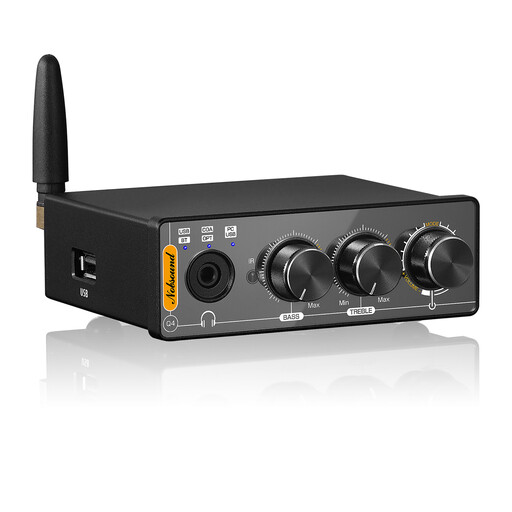
Described as a USB DAC with a headphone amplifier for PC and headphones; it could suit you if you want extra audio features on your desk.
The product name lists Bluetooth, an optical input, 24 bit/192 kHz, Treble and Depth controls, and a remote control.
 No image available
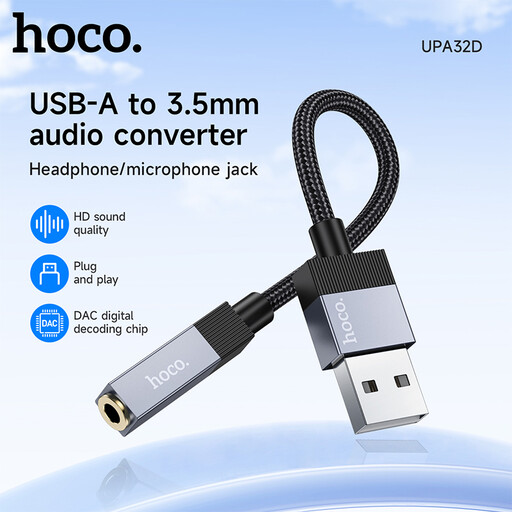
Could be an option if your computer has a USB-A port and your headphones have a 3.5 mm plug.
The product name describes a USB to 3.5 mm audio adapter. Before buying, check that these connections are right for your PC and headphones.
It depends on the model and operating system: FiiO says the K11 works with Windows 10 and later without an additional driver, while the iFi audio manual requires a driver download for use with a PC. Check the manual for your specific PC setup.
Check that the plug and output on the specific device are compatible. Topping specifically warns against adapters for connecting balanced outputs to unbalanced headphone connections on the DX5 II, so don’t use a 4.4 mm output simply because an adapter is available.
Start at a low volume, especially before changing a gain setting; iFi audio specifically recommends this for PowerMatch. The World Health Organization notes that volume, listening time and frequency all contribute to the risk to your hearing.
In the EU, goods are generally covered by a legal guarantee of at least two years; online purchases generally come with a 14-day right to cancel, subject to legal exceptions. The Council of the European Union explains these consumer rights; a voluntary manufacturer’s warranty doesn’t replace the legal guarantee.
For relevant products, the Bundesnetzagentur lists CE marking, manufacturer details, German-language instructions and a declaration of conformity among the points checked during market surveillance. According to the German Environment Agency, a DAC that has reached the end of its life shouldn’t go in household waste; it should be disposed of separately with electrical and electronic waste.