Solo narrators in a reverberant room
If you record documentary scripts on your own, focus on how clearly your voice comes through at the exact spot where you plan to record.


For a single documentary narration recorded in an untreated, noticeably reverberant room, a directional dynamic USB microphone that can be positioned comfortably close to your mouth is a sensible starting point. The key is to listen back to a test recording made at the exact spot where you plan to record. A USB condenser microphone may also work if room reflections and background noise are acceptable there. The connection, mounting and headphone monitoring need to suit your workflow – no microphone can replace checking the room.
If you record documentary scripts on your own, focus on how clearly your voice comes through at the exact spot where you plan to record.
If your scripts include both quiet and emphatic passages, make sure you can control levels, plosives and background noise while recording.
If you want to get started without a separate interface, check that the connection and mounting suit your workspace, and consider whether you may want to use XLR later.
When choosing a microphone for a single documentary narration in an untreated room, focus on the buying consideration that matters most to you.
| Consideration | What to check when buying | Who it matters most to |
|---|---|---|
| Room acoustics | Check the polar pattern and how close you can position yourself to the microphone; listen back to a test recording made at your recording spot. | If you record alone in an untreated room, your voice needs to remain clear despite audible reflections. Around 36% of consumers put room acoustics first. |
| Consistent takes | Check the input level, pop filter and, where applicable, whether automatic processing can be switched off on the specific model. | For long scripts, you’ll want to keep quiet and emphatic passages under control. Around 29% of consumers prioritise consistent spoken-word takes. |
| Monitoring | Check whether the specific model version has direct headphone monitoring and volume or mix controls. | If you want to catch mistakes while recording, immediate monitoring is important. Around 21% of consumers put monitoring during recording first. |
| Connection and setup | Check the USB connection, what’s included and whether the mounting will work at your intended recording spot. | If you want to record straight to your computer or leave the option of using XLR later, the setup needs to suit your plans. Around 14% of consumers prioritise connection and mounting. |
Room reflections can still be audible in a voice recording. Digital processing varies by model, and doesn’t prove that a recording will sound echo-free in your room.
Record and listen back to the same lines at your planned recording spot before settling on a position or processing settings.
Depending on the result, you may need to record additional takes or spend more time improving the room acoustics.
A desk stand won’t necessarily let you position the microphone comfortably close. RØDE recommends checking distance and level when recording quietly with the PodMic USB.
Before buying, check what’s included, how the microphone mounts and how close you can actually position it at your workspace.
If the included mount isn’t suitable, you may need an additional stand or boom arm.
RØDE distinguishes the PodMic USB, which has USB and XLR connections, from the XLR-only PodMic.
Check the full model name, connections and what’s included with the specific product listing.
To record to a computer using an XLR-only version, you may need additional compatible equipment, such as an audio interface.
According to Shure, the dynamic MV7+ combines USB-C and XLR with level control, noise processing and headphone monitoring features.
According to RØDE, the dynamic PodMic USB offers USB-C and XLR connections and is suited to close-mic voice recording.
Audio-Technica offers different options for recording a single speaker, including the dynamic AT2040USB and the condenser models AT2020USB-X and AT2020USB-XP.
According to Samson, the dynamic Q2U offers USB and XLR connections and is aimed at buyers looking for an easy way to get started with accessories included.
According to CHERRY, the UM 6.0 ADVANCED offers a USB setup, desk stand, gain control and switchable cardioid and omnidirectional patterns.
This selection includes dynamic USB/XLR microphones and USB condenser models. Choose based on how close you can position the microphone, the connections you need and the results of a test recording you’ve listened back to.
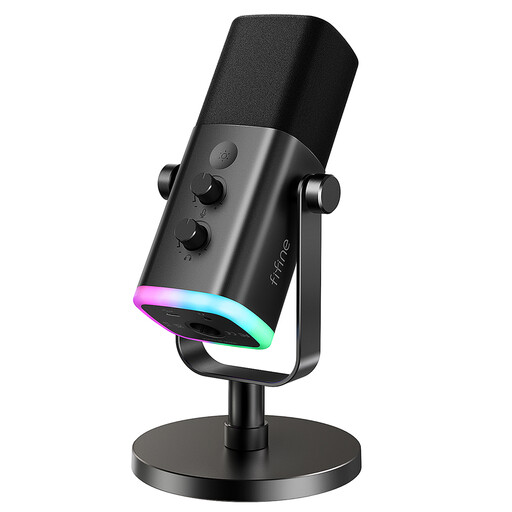 No image available
An option for close-mic voice recording if you want to start with USB and keep the option of using XLR later.
Dynamic USB/XLR microphone. According to the product description, the desk clamp fits desks less than 2 inches thick; an XLR cable is not included.
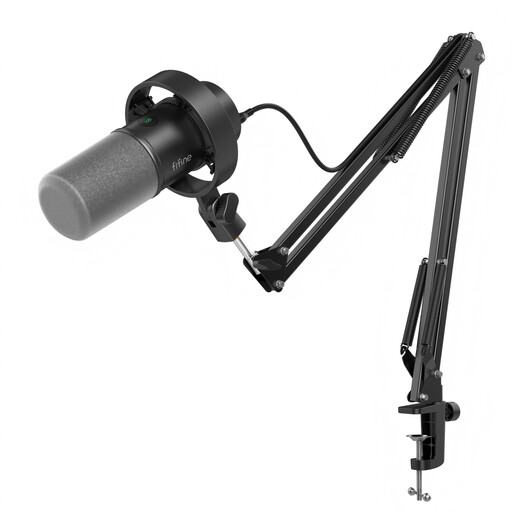 No image available
This kit may suit you if you’re looking for a dynamic USB/XLR microphone with a boom arm for close-mic voice recording.
According to the product description, the desk clamp fits desks less than 2 inches thick. An XLR cable is not included.
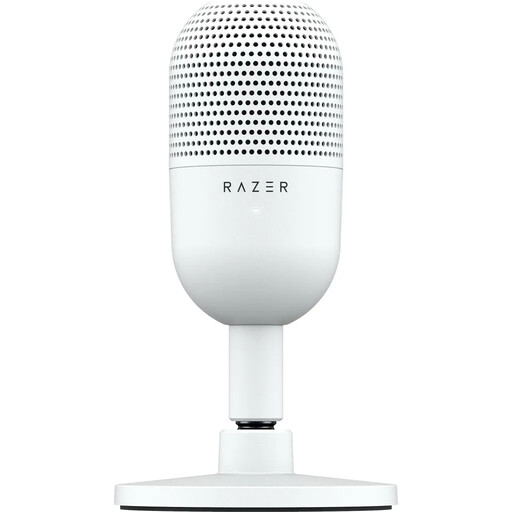 No image available
A compact USB option if you want to angle a condenser microphone towards your speaking position using its adjustable tilt stand.
USB condenser microphone with tap-to-mute. As a condenser microphone, it may pick up room reflections as well as your voice.
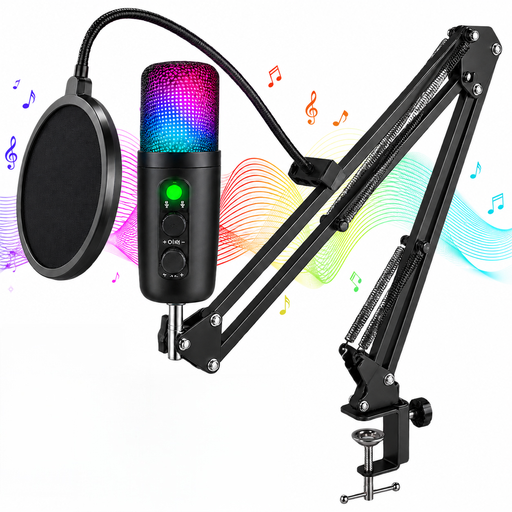 No image available
A USB option for PC recording if a headphone socket and mute function are important to your workflow.
The product name lists RGB lighting, a Type-C adapter and a 7-piece set. As a condenser microphone, it may also pick up room reflections.
Speak from the position you plan to use and listen back to the recording through headphones. For the PodMic USB, RØDE recommends a model-specific distance of around 5–10 cm, with the top of the microphone facing your mouth. Don’t assume the same distance will work for other models without testing it.
You don’t need a separate interface to connect directly via USB to a compatible computer, as intended by the manufacturer. If you later want to use the XLR output on a Q2U or PodMic USB, for example, check what additional equipment you’ll need.
Your statutory rights against the seller if a product is faulty are separate from any voluntary guarantee. According to the Verbraucherzentrale, consumers generally have 14 days from receiving goods ordered online to withdraw from the purchase. Faults are dealt with separately.
For market surveillance, the Bundesnetzagentur lists checks including correct CE marking, product identification, manufacturer details, any required German-language instructions and declarations of conformity. These criteria don’t prove that a particular listing has already been checked.
In Germany, electrical waste must not go in household rubbish. The Umweltbundesamt recommends using local collection points or suitable retailer take-back schemes.