Storytellers in an echoey room
If you’re recording someone seated in a room with noticeable echo, a comfortable speaking distance and positioning the microphone towards their voice are important things to consider.


For a family message recorded while seated, a straightforward USB microphone with a stable stand and suitable positioning is worth considering. In a quiet room, a desktop condenser microphone may be a good fit. If you can hear room ambience, you could consider a dynamic model, provided you can sit comfortably right in front of it. Audio-Technica recommends positioning dynamic microphones directly in front of the speaker, no more than 200 mm away. A headphone output also makes it easier to monitor your recording as you go.
If you’re recording someone seated in a room with noticeable echo, a comfortable speaking distance and positioning the microphone towards their voice are important things to consider.
For a recording made from a fixed seat, a stable desktop stand and easy-to-reach controls can make set-up simpler.
If you want to check the recording level and microphone position as you speak, look for a headphone socket on the microphone.
Start by considering the room and a comfortable speaking distance. Then check the set-up, monitoring options and which extra features you actually need.
| Consideration | What to check before buying | Who this matters most to |
|---|---|---|
| Room sound and distance | Check the polar pattern, positioning and a comfortable speaking distance. Audio-Technica recommends positioning dynamic microphones directly in front of the speaker, no more than 200 mm away. | If the room sounds echoey, I want to record my voice with suitable positioning and at close range. That’s why about 36% of consumers prioritise how room sound can be managed during recording. |
| Simple set-up | Compare the stand, cable length, connection to your recording device and how adjustable the set-up is. | If I’m recording the message from a fixed seat, I want to position the microphone properly without a complicated set-up. About 29% of consumers put ease of set-up first. |
| Monitoring the recording | Check for a headphone socket and volume control, then listen back to a short test recording in full. | When recording a longer story, I want to be able to check the recording level and position early on. About 21% of consumers prioritise monitoring while recording. |
| Features you need | Decide in advance whether you’ll need XLR, multiple speakers or extra software features in future. | If I mainly need the microphone for a single audio message, I don’t want to choose features I’m unlikely to use. About 14% of consumers first look for a suitable set of features. |
Directional pickup is no substitute for a suitable speaking distance or choosing the right spot. Room sound can still affect your recording.
Point the microphone towards the speaker and test the actual seating position with a short recording.
Connections and included accessories vary by model. A cable you already own may not be the same as the one supplied or meet your recording device’s connection requirements.
Before buying, check your recording device, the cable included in the box and the compatibility information for the specific model.
The Profile USB Microphone is a condenser microphone designed for a fixed position with one speaker.
The NT-USB Mini is a compact desktop option with a cardioid pattern and a removable magnetic stand.
The range includes the ATR2100x-USB, a dynamic USB/XLR microphone, and the AT2020USB-X, a desktop condenser alternative.
The MV7+ offers USB-C and XLR, along with digital adjustment options for uses beyond recording a single audio message.
The UM 6.0 ADVANCED combines a three-legged desktop base with a switchable polar pattern.
The selection ranges from dynamic USB models for close-up recording to USB condenser microphones with desktop or flexible positioning for a single voice.
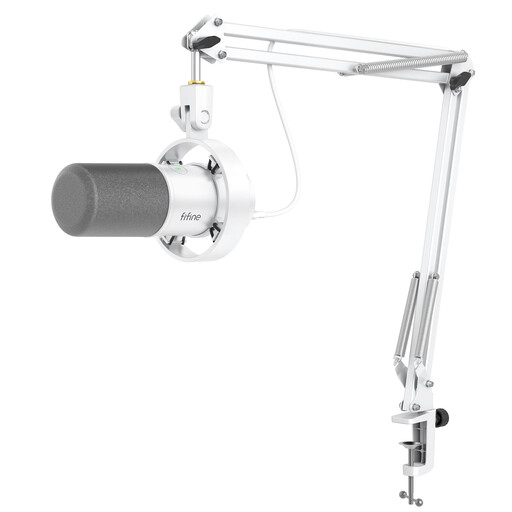 No image available
For a seated speaker, when a boom arm makes positioning easier and speaking at close range feels comfortable.
Dynamic and unidirectional, with USB and XLR connections. A gain control, mute button and headphone socket with volume control are listed. The desk clamp is designed for desks less than 2 inches thick.
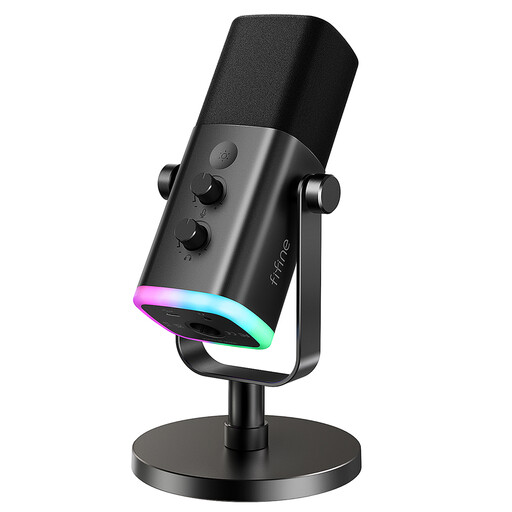 No image available
For a single seated speaker who wants a desktop stand and direct monitoring from a fixed position.
Dynamic microphone with a unidirectional polar pattern, USB connection and XLR connection. A desktop stand and USB-C cable are listed as included. According to the product description, the controls are inactive when using the XLR connection.
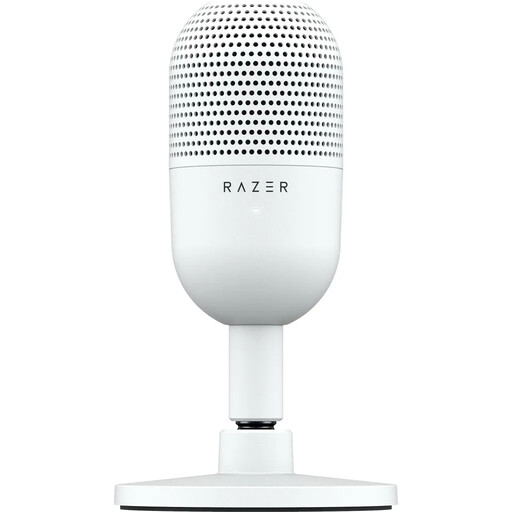 No image available
For a single voice at a desk, if a condenser microphone with adjustable tilt and a mute function suits your needs.
USB-C connection and supercardioid polar pattern. An adjustable tilt stand and a mute button with LED indicator are listed.
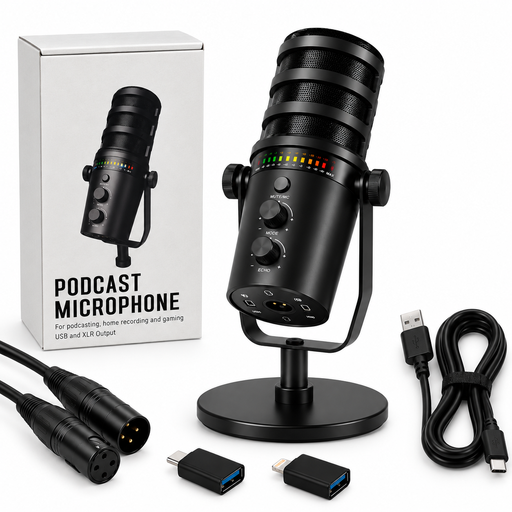 No image available
For a single seated speaker who wants a desktop stand and direct headphone monitoring.
Dynamic microphone with a cardioid pattern, USB-C and XLR connections. A gain control, mute function and headphone monitoring are listed; the described package includes a desktop stand.
 No image available
For a single voice, if you want a selectable cardioid mode and to monitor your recording as you go.
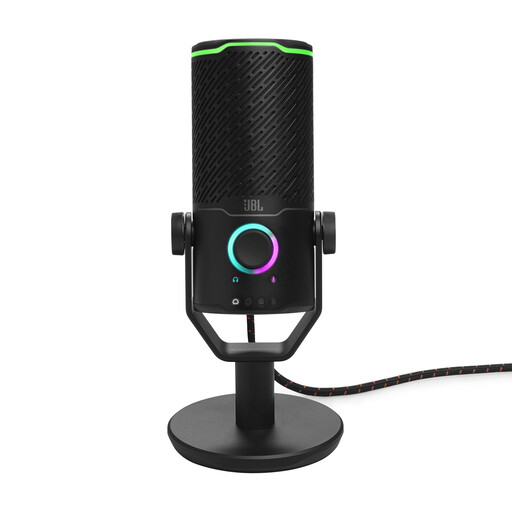
USB condenser microphone with a switchable cardioid mode. Direct monitoring, a mute button and a flexible mounting solution are listed.
Select the microphone as the input in your operating system or recording software, then listen back to a short test recording. RØDE explains how to select the NT-USB Mini as an audio input and output. Check the menus and device compatibility for your own set-up.
For direct USB recording on a compatible computer, you generally don’t need a separate audio interface. Audio-Technica describes USB as a direct recording option. Still, check the connection, the cable included and compatibility for the specific model.
Check whether the package you choose includes a desktop stand and a suitable USB cable, and whether you need a headphone socket. A desktop stand is included with the Sennheiser Profile base version; the Shure MV7+ is available with different stand options.
Section 201(1) of the German Criminal Code (StGB) covers the unauthorised recording on an audio medium of another person’s privately spoken words. It also covers making such a recording available without authorisation. So, discuss the recording and any possible sharing with the speaker beforehand. The provision concerns another person’s words, not simply every recording of your own voice. This information is based on the publication by the Federal Ministry of Justice and the Federal Office of Justice.
For electronic products covered by the relevant rules, the Bundesnetzagentur (Federal Network Agency) lists a correctly applied CE mark, identifiable manufacturer details and German-language instructions among the points checked as part of market surveillance. This does not confirm that any particular listing complies.