For long solo narration, choose a microphone with easily accessible level controls at your fixed recording position and headphone monitoring so you can check the sound as you record. The microphone type alone won’t guarantee a recording free from unwanted noise. For interviews, consider whether one person will speak close to a directional microphone or several people will sit in different positions: an omnidirectional mode picks up sound from all directions, including the room.
Which microphone is right for you?
Solo storytellers recording long takes
If you’re recording historical texts or your own research at a fixed position for an extended period, look for a stable speaking position and easy-to-reach controls so you can keep an eye on your levels as you record.
Interviewers working in different rooms
When you’re interviewing people who witnessed historical events, the distance from the microphone, background noise and number of people speaking at once all matter. Plan your setup around the room and seating arrangement.
What should you look for when buying?
First, decide whether you’ll mainly record on your own or also interview several people. Then check that the connections, controls and monitoring suit your planned setup.
Directional dynamic USB or USB/XLR microphone
A good choice if: one person speaks close to the microphone, at a consistent distance.
Things to consider: Interview guests sitting to the side or further away may sound quieter. It won’t automatically eliminate room echo.
Directional USB condenser microphone
A good choice if: you mainly record on your own at a fixed desk and want to adjust gain, headphone mix and volume on the microphone. Sennheiser lists these controls for the Profile USB.
Things to consider: Its cardioid pickup pattern is designed for a speaker positioned in front of it, not for a group sitting around a table.
USB microphone with switchable pickup patterns
A good choice if: you switch between solo narration and conversations around a table. CHERRY lists cardioid and omnidirectional modes for the UM 6.0 ADVANCED.
Things to consider: Omnidirectional mode picks up sound from all directions, including more of the room. Before a long interview, check that voices remain clear from the seats you plan to use.
| What you need |
What to check |
Who is this important to? |
| Keep long takes under control |
Check for a headphone socket and monitoring, a gain control, mute function, and a suitable mount and connections. |
When recording solo for a long time, I want to monitor my levels and voice without losing focus on the take. Around 36% of consumers put control over long takes first. |
| Record in a noisier room |
Consider the pickup pattern and the distance you need to speak from; make a test recording with your usual background noise. |
If my recording space isn’t particularly quiet, I want to know how clear my voice will sound in the actual room. Around 29% of consumers prioritise voice recording in the presence of room noise. |
| Capture several voices |
Decide on the seating arrangement and how many people will speak at once; check whether you’ll pass the microphone around or use additional microphones. |
When recording a conversation around a table, I want to capture everyone’s voice from their seating position. Around 21% of consumers prioritise capturing several interviewees. |
| Get started easily with USB |
Check the model name, USB connector, included cable, stand or arm, and headphone socket in the product listing. |
For my first setup, I want USB to work with the device I already have and the accessories I need. Around 14% of consumers focus on getting started easily with the right equipment. |
Avoid common misconceptions
-
“Directional” doesn’t mean room noise disappears
Samson lists reduced background and room noise as a feature of the Q2U. This doesn’t guarantee the same results in every room; distance and positioning still matter.
Make a test recording from your intended seat with your usual background noise, and try to keep a consistent distance from the microphone.
-
Don’t assume a solo setup will work for a group around a table
A cardioid microphone favours sound from one direction. An omnidirectional mode, on the other hand, picks up sound from the rest of the room, which can bring more room ambience into the recording.
Test the seating arrangement and voices in the mode you plan to use before starting a longer interview.
-
Don’t assume similar model names and bundles are the same
RØDE sells the PodMic and PodMic USB as separate products. The USB-C and XLR specifications apply to the PodMic USB.
Check the full model name, connections and what’s included in the specific product listing.
A guide to relevant brands
Sennheiser
The Profile USB is designed for solo narration at a fixed USB workstation, with controls for gain, mix and volume.
- Sennheiser lists a cardioid pickup pattern and gain, mix and volume controls for the Profile USB.
- Its directional pickup is designed for a speaker positioned in front of the microphone, so it isn’t automatically suitable for several people sitting in different positions.
Samson
The Q2U is a dynamic USB/XLR microphone for one person speaking directly into it.
- Samson lists reduced background and room noise as a feature of the Q2U.
- This is the manufacturer’s claim, not an independent guarantee for every room; the microphone’s distance and position need to suit your recording space.
RØDE
The PodMic USB is designed for close-up voice recording and combines USB with XLR.
- RØDE lists headphone monitoring and a built-in pop filter for the PodMic USB.
- The PodMic without “USB” is a different model. Check the model name and connections in the specific product listing.
Audio-Technica
The ATR2100x-USB is a compact dynamic USB/XLR microphone for podcasts with speakers positioned in front of it.
- This model is listed with USB and XLR outputs.
- A single directional capsule doesn’t mean it will pick up a group sitting in different positions evenly.
CHERRY
According to the manufacturer, the UM 6.0 ADVANCED can switch between front-facing solo recording and capturing several voices around a table.
- CHERRY lists cardioid and omnidirectional modes, a gain control, a headphone socket and an included USB cable.
- According to the manufacturer, omnidirectional mode picks up sound from all directions, including room ambience.
Shure
The MV7+ is a USB-C/XLR option if you want to adjust settings using MOTIV Mix and have the option of another connection later on.
- The connections and app settings mentioned here apply to the MV7+.
- The older MV7 is a different model. Don’t assume its features also apply to the MV7+.
USB microphones and interview options
This selection includes USB microphones for podcast and voice recording, plus a portable USB-C wireless microphone for interviews. For a group around a table, make sure the seating arrangement and recording area suit the specific model.
 No image available
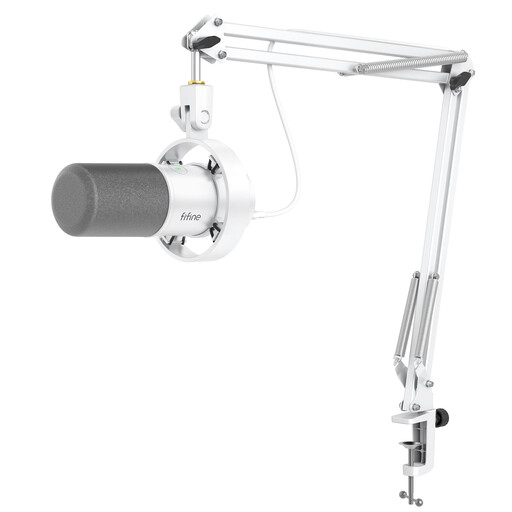
FIFINE K688CTW with boom arm
For focused voice recording at a USB workstation; the description specifies a dynamic, unidirectional pickup pattern.
USB-C and XLR, gain control, mute and headphone monitoring are listed. An XLR cable is not included, according to the product contents.
View at Joybuy
 No image available
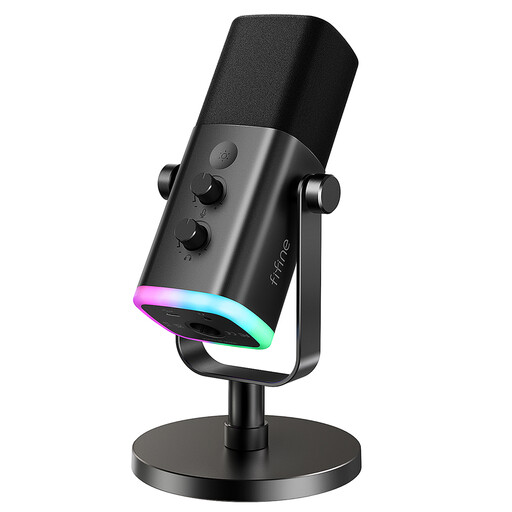
FIFINE AM8 USB/XLR
For recording a single voice in front of the microphone; the product description specifies a unidirectional pickup pattern and a close speaking distance.
According to the description, gain control, mute and headphone monitoring are available in USB mode. An XLR cable is not included.
View at Joybuy
 No image available
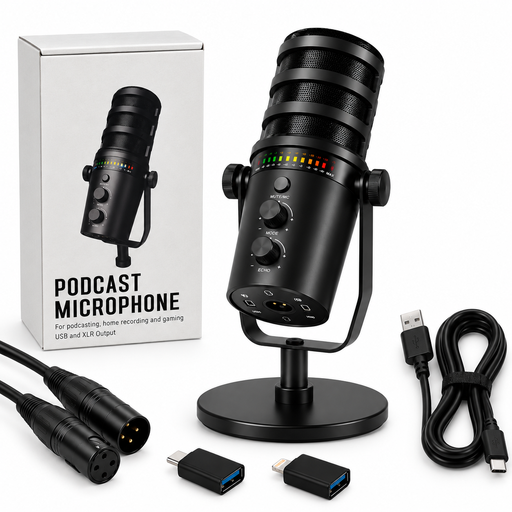
Dynamic USB/XLR microphone set
For podcast and voice recording at a desk; the set is described as including a desk stand.
The product description lists a cardioid pickup pattern, USB-C and XLR, plus gain control, mute and headphone monitoring.
View at Joybuy
 No image available
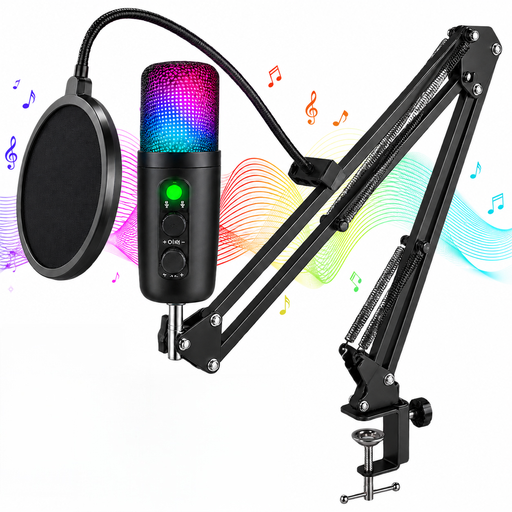
7-piece USB condenser microphone set
For PC recording; the description specifies a USB condenser microphone with a Type-C adapter.
Headphone monitoring and a mute button are listed. According to the description, the microphone arm and accessories are included in the set.
View at Joybuy
 No image available
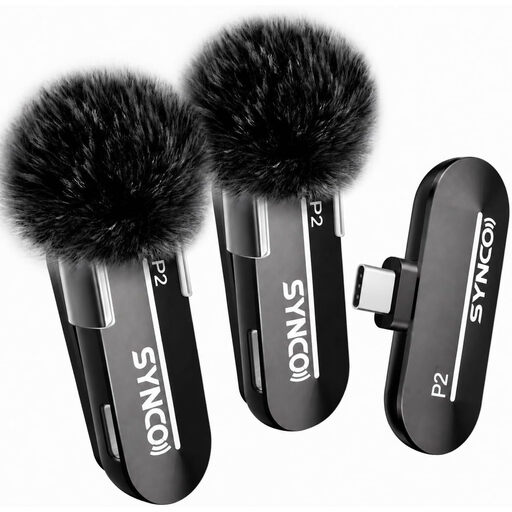
SYNCO P2XT USB-C wireless microphone
Described as a portable lavalier system for indoor and outdoor recording, podcasts and interviews.
Battery life on a full charge is listed as up to six hours. For Android, the description specifies USB-C and OTG as requirements.
View at Joybuy
Frequently asked questions
How do I prepare for a long take?
Position the microphone for the way you’ll actually speak, then check your levels and headphone monitoring with a short test recording. Afterwards, make sure the file has been saved. The microphone’s features can make it easier to keep an eye on things, but they can’t guarantee a flawless long take.
Is one directional microphone enough for a group around a table?
Not without testing it with your planned seating arrangement. A directional model is designed to pick up sound mainly from one direction. CHERRY also describes an omnidirectional mode on the UM 6.0 ADVANCED, which picks up sound from all directions, including room ambience.
Do I need an audio interface straight away for USB/XLR?
You don’t need a separate XLR recording setup to use the USB connection on the hybrid models mentioned here. If you’d rather use the analogue XLR output to record on your computer, you’ll need suitable recording equipment. Check the connections and accessories included with the specific product.
Can I record a private interview with someone who witnessed an event without telling them?
No. The German Police Crime Prevention service explains that, under § 201 Abs. 1 StGB, recording another person’s words spoken in private without their permission is a criminal offence. Get their consent before you start recording. Further rights and data protection issues may also apply if you publish the recording later.
Who should I contact if the product develops a fault after purchase?
For consumer purchases in the EU, your statutory rights regarding faulty goods are against the seller, not the manufacturer. The European Union’s consumer information states that these rights apply for at least two years from the date you receive the goods. An additional manufacturer’s guarantee does not replace those rights.
How can I tell if an electrical product is intended for the German market?
The German Federal Network Agency lists correct CE marking, manufacturer details and instructions in German among the points it checks when monitoring the market. The CE mark is not a guarantee of sound or quality; check the details for the specific product.


