What should you consider when choosing?
When recording narration in an untreated room, it’s worth identifying your main challenge first: room reverberation, changing volume, multiple voices or a straightforward USB set-up.
| Factor |
What to check when buying |
Who should pay particular attention? |
| Clarity in a reverberant room |
Check for a directional polar pattern, a stable position close to the speaker and a pop filter; test it in the room where you’ll be recording, at your planned speaking distance. |
If my main aim is to record a single voice clearly, I’ll look for a close position and precise direction. Around 42% of consumers put controlling room reverberation first. |
| Quiet and loud passages |
Check for a headphone output and level controls; make a test recording of both the quietest and loudest passages you plan to narrate. |
When my narration varies in volume, I want to hear whether quiet sections remain clear and emphatic passages don’t suddenly sound too loud. Around 25% of consumers prioritise control over these changes in level. |
| Multiple voices |
Decide in advance whether you want one shared microphone or separate microphones; if using several devices, check the available ports and software support. |
If several people are speaking at once, the set-up needs to capture their voices appropriately. Around 17% of consumers prioritise recording multiple voices. |
| Simple USB set-up |
Check the USB connection, compatibility, included cables and what comes with the exact model. |
For a straightforward solo recording, I want to be able to connect the microphone and set it up where I need it without any fuss. Around 16% of consumers prioritise an easy USB set-up. |
USB microphones at Joybuy
This selection includes USB microphones for focused solo narration, as well as a model with a choice of polar patterns for solo or group recording.
 No image available
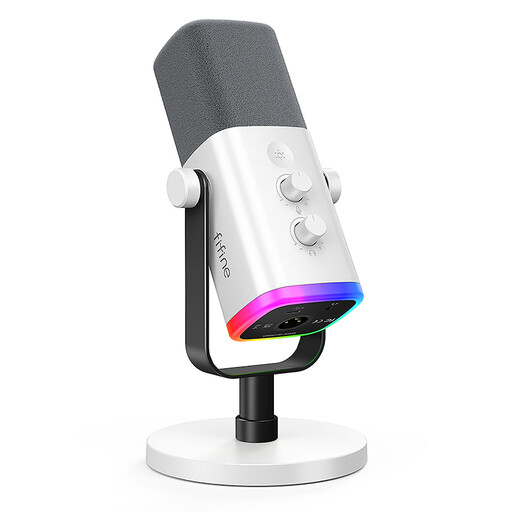
FIFINE AM8 White XLR/USB
For a focused solo voice, with direct controls on the microphone.
Dynamic microphone with USB and XLR connections and a cardioid pattern. The product description recommends a speaking distance of 2–6 inches and lists a headphone socket and gain control.
A separate XLR cable is needed for the XLR connection; according to the product description, an XLR cable and microphone arm are not included.
View at Joybuy
 No image available
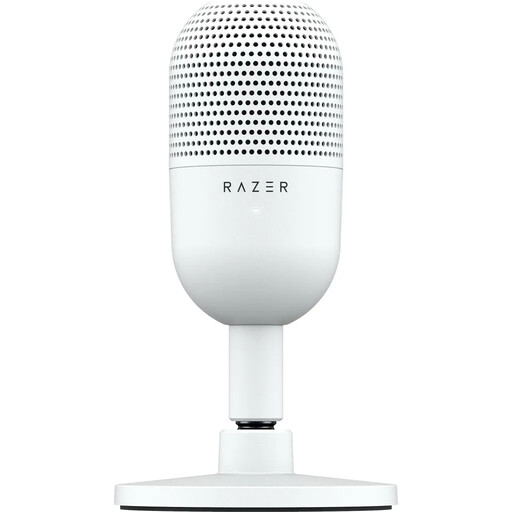
Razer Seiren V3 Mini White
For a focused solo voice at your desk.
USB condenser microphone with a supercardioid pattern and USB-C. The product description lists an adjustable tilt stand, tap-to-mute and built-in shock absorption.
View at Joybuy
 No image available
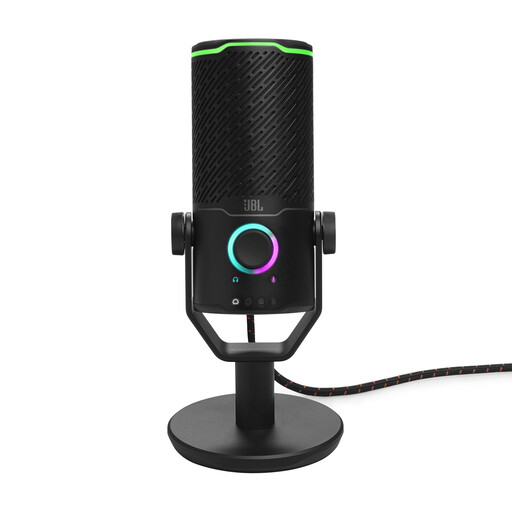
JBL Quantum Stream Studio USB-C
For solo narration or group recording when you want to choose a polar pattern to suit the speakers’ arrangement.
USB condenser microphone with a choice of cardioid and omnidirectional patterns. The product description lists direct monitoring and a mute function.
View at Joybuy
Frequently asked questions
How should I position a microphone in a reverberant room?
Point a cardioid microphone towards the narrator and test a stable position close to them. For voiceover with the NT-USB Mini, RØDE recommends a distance of around 10–15 cm. This manufacturer recommendation applies to this model; it isn’t a general limit for all microphones.
Why can I hear an echo when monitoring?
If you can hear both the direct microphone signal and the delayed signal from your recording software, RØDE recommends muting software playback of your own voice track while recording, then turning it back on afterwards. This can address echo in your monitoring, but it won’t remove room reverberation that’s already in the recording.
Do I need several USB ports to record multiple narrators?
Only if you’re using several USB microphones at the same time. RØDE describes a set-up with enough ports and RØDE Connect for supported RØDE microphones. For other models, check compatibility with the software you plan to use.
Who should I contact if a product develops a fault after purchase?
If a product is faulty, the seller is generally responsible for dealing with your statutory rights. In Germany, the Verbraucherzentrale states that this period is generally two years. A voluntary guarantee is separate and subject to its own terms.
Can I record other people’s voices without asking?
Not necessarily: § 201 StGB covers the unauthorised recording of another person’s private speech. If other people will be speaking during your recording session, get their consent before you start. This provision is not a blanket restriction on recording your own voice alone.


