Readers in a reverberant room
If you’re recording on your own and can stay close to a fixed microphone position, you can focus on keeping your voice clear and prominent against the room sound.


For a solo poetry reading in an untreated room, a directional dynamic USB microphone is a sensible starting point if you can read close to it and keep a fairly steady position. Audio-Technica highlights microphone placement as an important factor: a directional microphone can make the room less prominent compared with a close voice, but it won’t automatically eliminate reverb. If you need to stand further away, try a directional condenser model and make a test recording. For changes in volume, headphone monitoring and adjustable level controls are especially useful.
If you’re recording on your own and can stay close to a fixed microphone position, you can focus on keeping your voice clear and prominent against the room sound.
If you switch between whispers, a calm reading and more emphatic lines, a test recording and checks on levels and plosives can help you choose.
If you don’t want to stay directly in front of the capsule while reading, check whether a greater distance still gives you a clear voice in your room.
First, decide how close and still you can stay to the microphone while reading aloud. Then you can assess monitoring options and what’s included more effectively.
| What to consider | What to look for | Who is it important to? |
|---|---|---|
| Voice and room sound | Polar pattern and intended speaking side; whether you can comfortably stay close to the microphone in a steady position. | If I’m reading on my own and want to capture as little room sound as possible, staying close to the microphone in a fixed position matters. Around 36% of consumers prioritise a low level of room sound. |
| Expression and freedom to move | Whether you can keep to your usual reading position; test quiet and emphatic passages from a realistic distance. | If I need to keep some distance from the microphone while reading, I still want my voice to sound expressive and clear. Around 29% of consumers prioritise this. |
| Levels and monitoring | Headphone socket and level control; test the gain setting or automatic processing with a recording. | If I switch between quiet and loud verses, I want to be able to monitor the signal during a test recording. Around 21% of consumers particularly value level control and monitoring. |
| Set-up and accessories | Suitable connection for your recording device; check whether a stand, mount, cable and pop filter are included. | If I’m putting together my recording set-up, I want to know which parts are included and what else I’ll need. Around 14% of consumers prioritise this. |
Room acoustics and microphone placement affect recordings, even with a dynamic microphone. A very close position can also change the tone of your voice.
Compare short recordings from your actual reading spot. Try adjusting the distance slightly while reading the same text.
A greater distance can make reading easier, but it also makes room sound more noticeable. A directional capsule won’t completely suppress reflections.
Listen back to your voice and the room from your usual reading position before choosing a microphone type.
What’s included and the available connections vary by model and package.
Check the version on offer and compare the cable, mount, pop filter and headphones with what you already have.
Depending on your chosen set-up, you may need to buy a suitable mount, cable, pop filter or headphones separately.
The MV7+ is a dynamic USB-C/XLR microphone for close-up voice recording, with direct monitoring and adjustable digital processing.
The PodMic USB combines USB-C with an XLR option for close-up voice recording.
The dynamic ATR2100x-USB and condenser-based ATR2500x-USB offer different approaches to microphone placement for voice recording.
The dynamic Q2U is a USB/XLR model with accessories to help you get started with close-up, solo voice recordings.
The dynamic Yeti GX is a USB model with a supercardioid polar pattern, originally designed for gaming and streaming.
The Joybuy products below include dynamic USB/XLR microphones and USB condenser models. Compare their polar patterns, the distance you need to speak from, monitoring options and what’s included with each one.
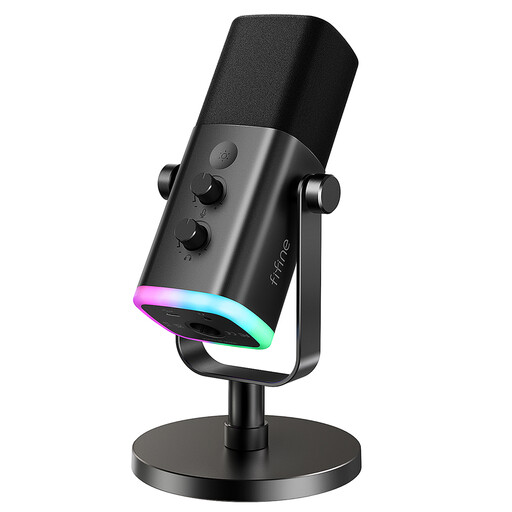 No image available
For a close-up, stationary solo reading; the stated speaking distance is 2–6 inches.
Unidirectional dynamic capsule, headphone socket with volume control and gain control.
A windscreen is listed; check that the close-up position suits the way you read.
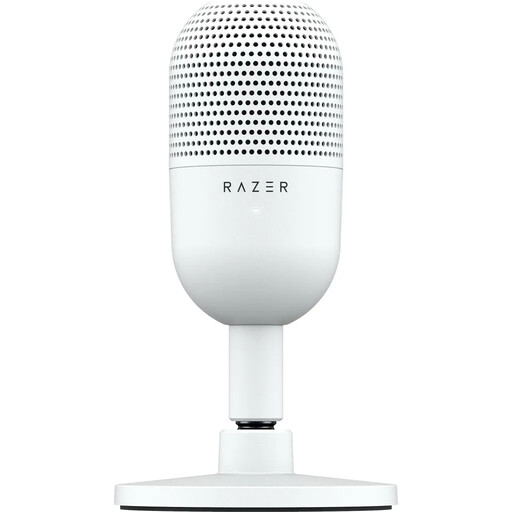 No image available
For a solo voice recording via USB; the supercardioid polar pattern is designed for focused voice capture.
USB condenser microphone with tap-to-mute, USB-C cable and adjustable stand.
Easy connection to a computer doesn’t replace testing it in your actual recording space.
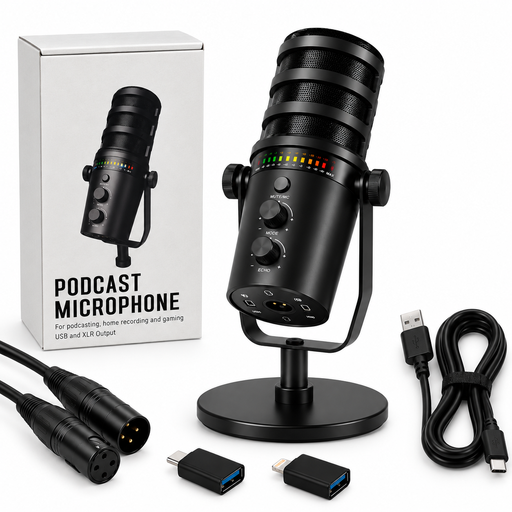 No image available
For a close-up solo reading, with the option to use USB or XLR.
Cardioid polar pattern, gain control and headphone monitoring are listed.
The set described includes a desktop stand, USB cable and pop filter. You’ll need suitable additional equipment to use the XLR connection.
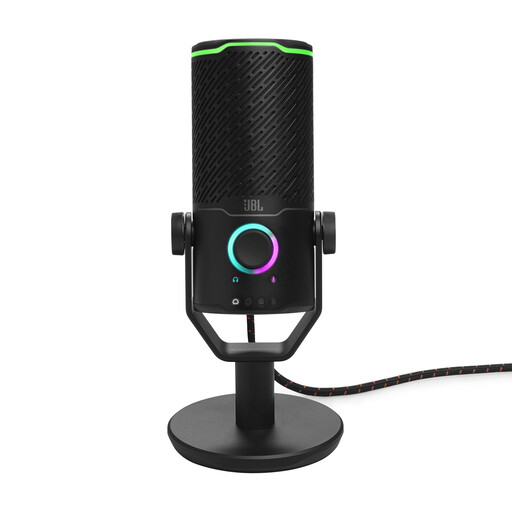 No image available
For a solo voice recording via USB when you select the cardioid pattern.
Condenser microphone with direct monitoring and a dynamic range compressor.
Other polar patterns are also available; check which one is selected before recording.
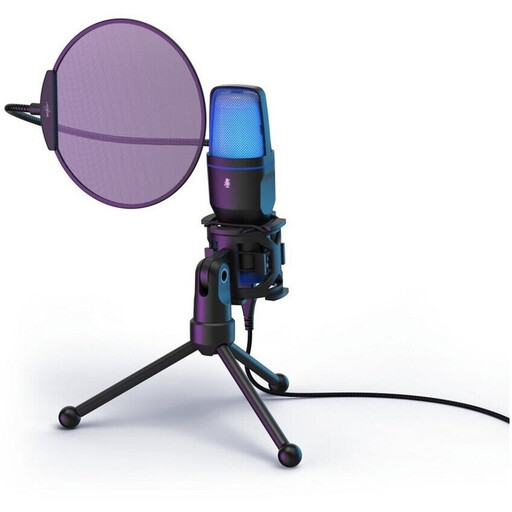 No image available
USB condenser microphone for voice recording with an omnidirectional polar pattern.
A pop filter, mute button, USB cable and desktop stand are listed.
Omnidirectional means it picks up sound from all around, rather than from one preferred speaking direction. Bear this in mind when recording in an untreated room.
Speak into the side intended for your model, read one quiet passage and one loud passage, then listen back to the recording. For the dynamic microphones covered in its guide, Audio-Technica recommends positioning yourself directly in front of the capsule and within 200 mm. This isn’t a general distance recommendation for every model. Adjust your position and distance if your voice, plosives or room sound don’t come across as you’d like.
You don’t need a separate audio interface to record directly via USB on a compatible computer. If you want to use the XLR output on a hybrid model instead, you’ll need suitable additional equipment. Check cable and device compatibility too.
Not automatically just because you’ve recorded the text yourself. Under German copyright law, making the recording may involve reproducing the work; making it available online to the public is a separate right. For the specific poem and intended use, check whether it is protected, whether you have permission or whether a legal exception applies.
For a consumer purchase from a retailer in the EU, you have a statutory right to a remedy from the seller for at least two years from receiving the goods. Any additional manufacturer’s guarantee does not replace this right.