Reading solo at a busy desk
If people are working or talking nearby, positioning the microphone close to you and pointing it in your direction can help keep your solo voice centre stage. Make sure you leave space in front of your poem.


If other people are working nearby and you can keep the microphone close while reading aloud, a directional dynamic USB microphone is a sensible starting point. In a quiet room, a directional USB condenser microphone may give you more freedom to move as you read, but it can also pick up more of the room. The best way to decide is to test it in your actual position, reading both softly and with emphasis. You should also check headphone monitoring, the right cables and a suitable stand.
If people are working or talking nearby, positioning the microphone close to you and pointing it in your direction can help keep your solo voice centre stage. Make sure you leave space in front of your poem.
If you whisper and give some lines much more emphasis, record and listen back to both volumes. This helps you check that the microphone position and level controls suit the way you read.
If your book, keyboard and other people all need to fit on the same desk, you’ll need to plan the stand or arm, cable and microphone direction together.
A good fit if: you read solo, can stay close to the microphone and want to keep conversations from the side at a shared desk from distracting you.
The trade-off: You’ll need space in front of your poem to position the microphone close by; stands and included accessories vary by model.
A good fit if: the room will be quiet while you record, or you’d rather not stay very close to the microphone capsule as you read.
The trade-off: Keeping further away may make reading easier, but it can also make more room noise audible.
A good fit if: you’re planning to record with several people as well as making solo readings.
The trade-off: The omnidirectional mode picks up sound from every direction. Being able to switch patterns doesn’t replace careful positioning or the consent of everyone involved.
| Priority | What to check before buying | Who is this particularly important to? |
|---|---|---|
| Voice versus background noise | Check the polar pattern, where to speak into the microphone and whether the mount will work from your actual seat. | If I want to record my solo voice at a shared desk without bringing conversations from the side to the fore, positioning is key. Around 33% of consumers put the noise environment first. |
| Quiet and emphatic verses | Check for a headphone socket and level controls; record and listen back to both speaking volumes. | When I switch between quiet lines and those delivered with more force, I want to check that both come across clearly in the recording. Around 27% of consumers prioritise these vocal nuances. |
| Space for the microphone and text | Check the stand or arm, mounting and cable routing against your actual desk setup. | If my book and keyboard need the same space, the microphone must be positioned so it doesn’t block the text. Around 20% of consumers pay particular attention to the space available. |
| Controlling recording and connections | Check the USB plug and cable; look for headphone monitoring and a mute function, and check any software requirements. | If I want to record at a shared desk without rearranging everything and control interruptions, easily accessible controls matter. Around 20% of consumers put straightforward recording control first. |
The right polar pattern and close positioning can reduce unwanted sound, but they’re no substitute for choosing a suitable time to record or listening to a test recording.
Try reading quiet and emphatic verses at your shared desk while typical background noise is present.
What’s included varies between models and sets. For example, RØDE offers the PodMic USB and a PodMic USB Kit with different stands included; the Shure MV7+ is also available with different stand options.
Check the included accessories listed for the exact version against the space available in front of your reading material.
Depending on the version, buying a separate stand, arm or suitable cable may involve extra effort.
For the CHERRY UM 6.0 ADVANCED, the manufacturer describes the omnidirectional mode as picking up sound from every direction. At a shared desk, this may make it easier for other people’s voices to get into your recording.
For a solo voice, start by trying the directional mode and checking the microphone’s position. Use group mode only for recordings planned with several people.
The rights to the poem you read are separate from your choice of microphone. You should also consider other people’s words if they’re recorded without being spoken in public.
Before publishing, check the rights to the text and don’t record other people’s conversations without permission.
The ATR2100x-USB is an option for close-up solo readings, with a dynamic cardioid pattern and USB and XLR connections.
The PodMic USB is designed for close-up dynamic speech recording; the NT-USB Mini is a compact directional condenser alternative.
The MV7+ combines USB-C and XLR with digital features for voice recording.
The dynamic Q2U is a USB/XLR option if you’d like a bundle of accessories to get started.
The UM 6.0 ADVANCED offers a directional mode and a switchable omnidirectional mode for planned group recordings.
This selection includes dynamic USB and USB/XLR microphones, as well as USB condenser microphones for recording a single voice at a desk.
 No image available
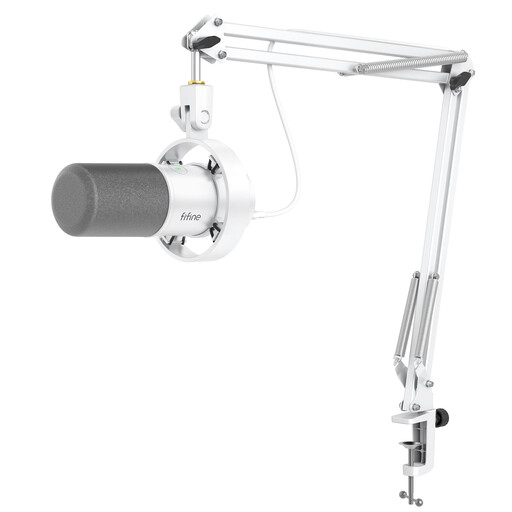
For recording a single voice close to the microphone at a shared desk, the USB/XLR connection, unidirectional recording and included boom arm are worth considering.
USB and XLR connections; gain control, mute button and headphone monitoring. According to the description, the C-clamp is designed for desks less than 2 inches thick; an XLR cable isn’t included.
 No image available
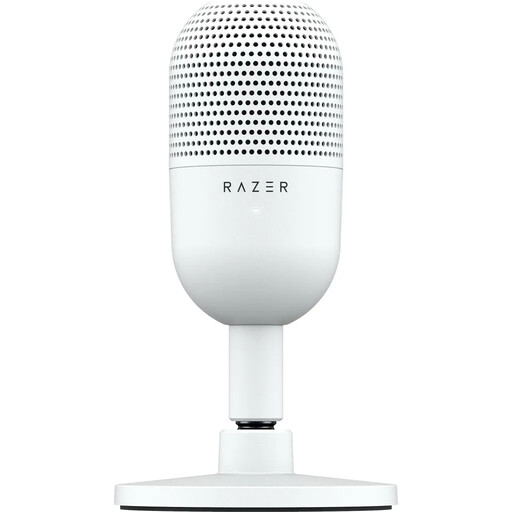
Its compact design and adjustable desktop stand make it a good option for a crowded desk if you’re looking for a directional USB condenser microphone.
A supercardioid polar pattern, USB-C cable and tap-to-mute function are listed.
 No image available
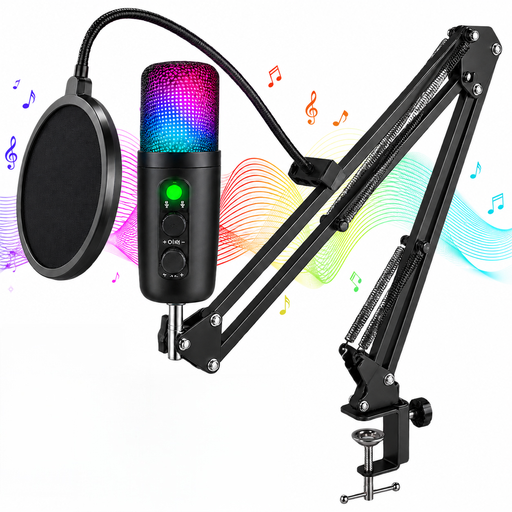
For recording voice via USB on a computer, the listed controls include a headphone socket with monitoring and a mute button.
USB connection, Type-C adapter, RGB lighting and 7-piece set; the description also lists a headphone socket with real-time monitoring.
 No image available
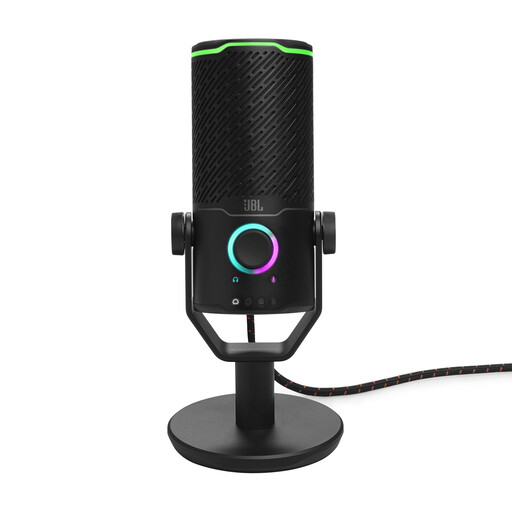
According to the description, you can select cardioid mode for recording a single voice at your desk; monitoring and dynamic compression are also listed.
USB-C condenser microphone with four selectable recording patterns, mute control and voice monitoring.
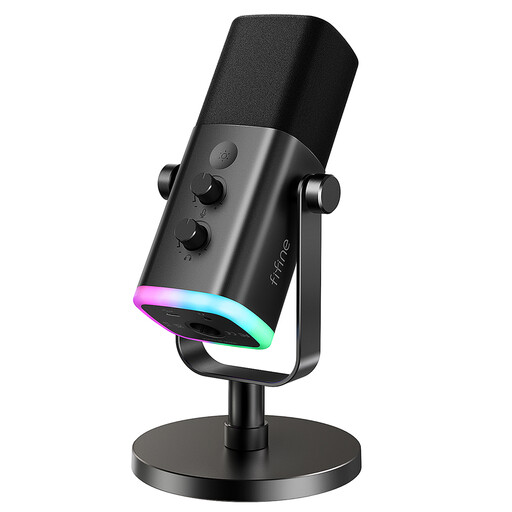 No image available
For recording a single voice close to the microphone, the described dynamic model offers USB/XLR connectivity, unidirectional recording and headphone monitoring.
Gain control, mute function and desktop stand are listed. The stand takes up desk space; a microphone arm isn’t included.
No. A correctly positioned cardioid microphone mainly reduces sound coming from the sides and behind it. Test it from your actual recording position to see whether another voice is still audible.
Point the microphone’s speaking side towards your seat, record some quiet and emphatic lines, then listen back to the saved recording. If the model offers direct headphone monitoring, you can also check your voice as you read.
You don’t need a separate audio interface straight away if you’re recording via the appropriate USB connection on a compatible computer. To use the XLR connection later, you’ll need a suitable analogue connection; check the cables and included accessories for the exact version too.
Not without permission: Section 201 of the German Criminal Code (StGB) protects other people’s words spoken in private from being recorded. If their conversations are within range, ask the people involved before recording or move somewhere else; a directional microphone alone can’t ensure their words won’t be picked up.
That depends on the rights to the specific text and how you plan to use it. The German Patent and Trade Mark Office lists poems as works that can, in principle, be protected by copyright, and making a work available to the public online as a type of exploitation right. In Germany, copyright generally expires 70 years after the author’s death; translations and adaptations have their own rights, which should be checked separately.
For your statutory consumer rights, contact the seller; these rights are separate from a voluntary manufacturer’s guarantee. If there’s a fault, the first step may be a repair or replacement.