Practising with audible ventilation
You can speak close to the microphone, but you may need to contend with noise or reflections in the booth. Test its position while recording under your usual operating conditions.


Choose a microphone to suit the sound of your booth. If you can hear ventilation or reflections, keeping a consistent, close speaking position matters more than any promise of noise cancellation. A condenser microphone may also work in a quiet booth. Record the same practice sentence and listen carefully to the consonants and pauses before weighing up the pickup pattern, space required, USB connection and headphone features of the specific model. Shure points out that a microphone cannot separate reflections from direct speech.
You can speak close to the microphone, but you may need to contend with noise or reflections in the booth. Test its position while recording under your usual operating conditions.
You want to compare consonants, breaths and pauses between takes. Make sure the recording remains clear and that processing doesn’t introduce distracting artefacts.
You need a mounting option and connection that work with your seat, computer and booth space, without restricting your preferred speaking position.
A good fit if: You can hear ventilation or other booth noise and can keep a short, consistent distance from the microphone.
Consider: You’ll need to position the front of the microphone practically in a tight booth. A directional pickup pattern won’t eliminate room echo.
A good fit if: Your booth sounds quiet enough in a test recording and you can assess your voice, distance and recording level comfortably.
Consider: The pickup pattern doesn’t replace checking for ventilation noise, reflections and microphone placement. The stand and cable vary by model.
A good fit if: Changing recording levels or consistent background noise gets in the way of your practice, and you can compare processed and unprocessed recordings.
Consider: Noise reduction can affect the sound you want to hear, or do little to help with certain types of background noise. Compare recordings directly to check your pronunciation.
As well as room sound, clear pronunciation practice depends on being able to monitor your recording and having a setup that lets you speak from your preferred position.
| Priority | What to check before buying | Who is this important to? |
|---|---|---|
| Assessing speech sounds | Record the same practice sentence from your intended distance. Compare consonants, quiet sounds and pauses with and without any available processing. | If I want to compare individual sounds across several recordings, processing shouldn’t obscure any detail. Around 31% of consumers would prioritise being able to assess individual sounds. |
| Reducing booth noise | Test with the ventilation running, from the position where you’ll record. Check the front of the microphone, distance, mounting and, if needed, a pop filter. | If I can hear ventilation or reflections in my booth, I want to know how the recording sounds in the actual space. Around 31% of consumers would make booth noise their top priority. |
| Listening back to recordings | Check for a headphone socket and the controls you need. Then play back the saved recording in the app you use. | If I want to check my position and recording level while practising, direct monitoring helps. Around 23% of consumers would prioritise being able to listen back straight away. |
| Setup and connection | Check the footprint, mounting, cable routing and USB compatibility with the device you plan to record on. | If space is limited, the microphone needs to fit and connect without affecting my speaking position. Around 15% of consumers would prioritise ease of placement and connection. |
A directional pickup pattern won’t stop reflections from overlapping with speech. Shure points out that a microphone can’t improve a room’s acoustics after the fact.
Before choosing a model, test the booth, ventilation and planned microphone position with a short voice recording.
Noise reduction may not be effective with certain types of background noise, or it may affect the parts of the sound you want to hear.
Record the same sentence with and without any available processing, paying particular attention to consonants and quiet sounds.
Details for a tested model don’t automatically apply to a similarly named successor or another variant.
Compare the full model name, connection, what’s included and the specific version.
A desk stand or cable could make it harder to get the position you want in a small booth. Depending on what you already have, you may also need a compatible cable, mount or headphones.
Check the included parts and connections against your available space and recording device.
The original MV6 is a dynamic USB microphone designed for recording a single voice at close range, with USB-C and a headphone output.
The compact NT-USB Mini is a condenser microphone with a removable desk stand and switchable direct monitoring. The dynamic PodMic USB is another option for close-up recording.
The Profile USB is a cardioid condenser microphone with a desk stand and USB-C connection.
The UM 6.0 ADVANCED offers USB-C, a desk stand and switchable pickup patterns. For recording a single voice, the cardioid mode is the most relevant.
The dynamic AT2040USB is an option for directional recording, with USB-C.
The Joybuy products below include USB and USB-C microphones for voice recording. For each model, check that its design, connection and mounting options suit your booth and recording device.
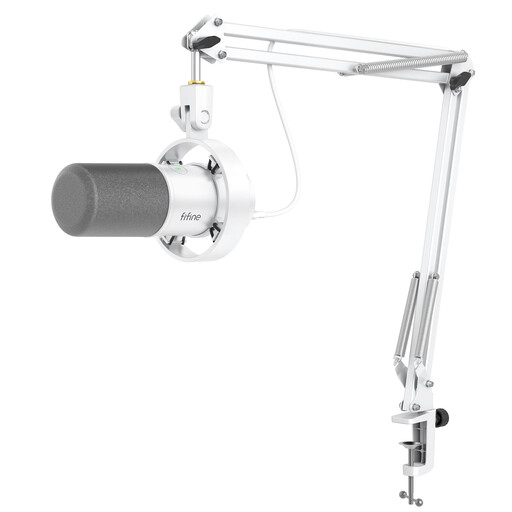 No image available
This dynamic cardioid microphone with boom arm is described as suitable for positioning to record a single voice.
USB and XLR connections, gain control, mute and headphone socket. Make sure there’s enough room in your booth to position the arm as needed.
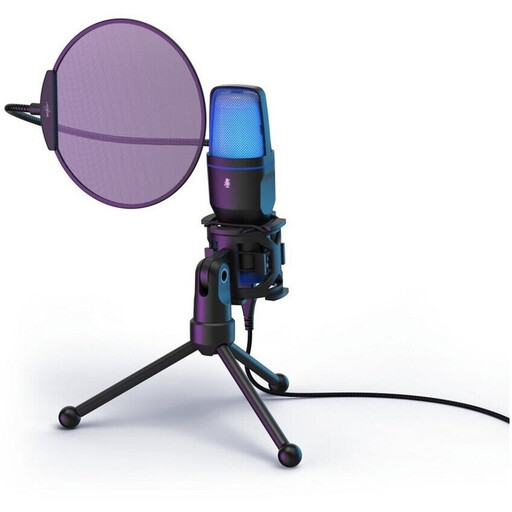 No image available
Described as a USB condenser microphone for voice recording. Check that its pickup pattern suits recording a single voice in your booth.
An omnidirectional pickup pattern and pop filter are listed. Check that the mounting option suits the space available before buying.
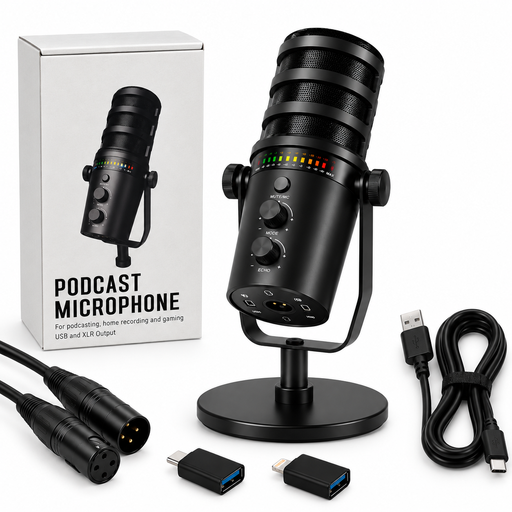 No image available
The cardioid pickup pattern is designed to focus on a single voice. Check that the desk stand lets you speak from the position you need.
USB and XLR connections, gain control, mute, headphone socket and real-time monitoring. The set also lists echo and RGB.
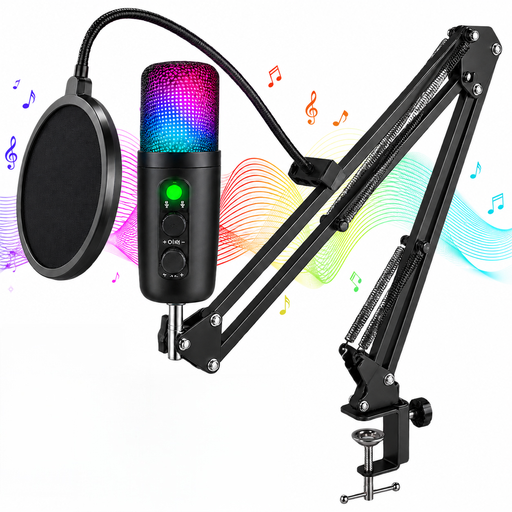 No image available
Described as suitable for voice recording. According to the product details, the headphone socket allows real-time monitoring while you practise.
The set includes a USB cable, a Type-C adapter and a mute button. Check that the connection works with the recording device you use.
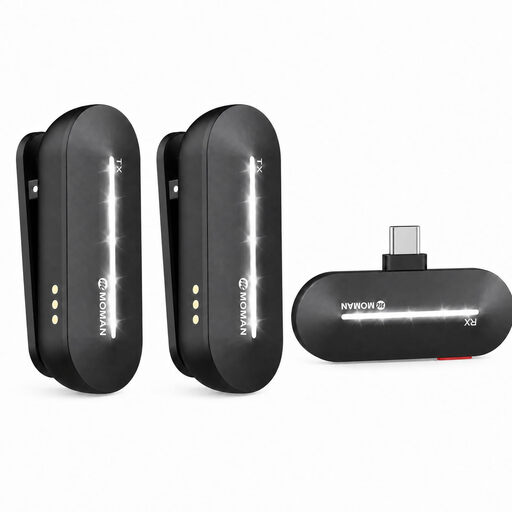 No image available
This lavalier system is described as suitable for voice recording with a USB-C receiver. Before buying, check that your recording device supports the receiver and that the mounting option suits your practice.
Two transmitters, omnidirectional recording, a monitoring socket on the receiver and a range of 150 m, as stated in the product title.
Point the front of the microphone towards your mouth and keep its position consistent between comparable practice sessions. Test the recording in the booth where you’ll actually use it: a microphone can’t separate reflections from direct speech or improve the room’s acoustics. The distance of around 5–10 cm recommended by RØDE applies specifically to the PodMic USB, not to other models in general.
First, record a short practice sentence with your usual ventilation and microphone position. The Audacity manual describes noise reduction as suitable for consistent background noise, but not for individual clicks or pops. As you adjust the settings, listen for any effect on the sounds you want to keep.
Not necessarily. RØDE says the NT-USB Mini works without additional drivers and has a removable desk stand. Whether you need an arm or a different cable depends on your speaking position and recording device. Check the connection requirements for the specific model variant.
Get permission before recording someone else. In Germany, section 201 of the German Criminal Code (StGB) makes it a criminal offence to record another person’s non-publicly spoken words without authorisation. Recording your own pronunciation is different.
For eligible online purchases from a business, you generally have a 14-day right to cancel, starting when you receive the goods. Exceptions may apply, and any return costs must have been communicated in advance. Goods in the EU are covered by a statutory guarantee period of at least two years. This guarantee is your right against the seller and is separate from any voluntary manufacturer’s warranty.