Teams with a soft-spoken narrator
If you want to record a single voice clearly, positioning the microphone carefully and keeping the recording level under control will help during your test recording.


For a soft-spoken narrator in a quiet spot, a USB condenser microphone with adjustable gain and headphone monitoring is a sensible choice. If the room is noisy and the narrator can speak close to the microphone, a dynamic USB model designed for close-miking may also be suitable. Simply turning up the gain won’t remove echo or background noise – choosing the right recording spot and making a test recording are key.
If you want to record a single voice clearly, positioning the microphone carefully and keeping the recording level under control will help during your test recording.
If echo or background noise is an issue, speaking close to a suitably designed dynamic microphone may be a good option.
If you want to record without a separate audio interface and check a test recording straight away through headphones, look for a USB connection and monitoring.
For a fundraising appeal, clear, quiet passages, a controlled recording level and a microphone position that suits the voice and room are what matter most.
| Buying consideration | What to check | Who it matters most to |
|---|---|---|
| Clarity of a soft-spoken voice | Check how you can adjust the input level and microphone position, and whether there’s a level or clipping indicator. | If I want to record quiet and emphatic passages clearly without clipping, keeping the voice under control is my main concern. That’s why around 36 % of consumers put clarity for a soft-spoken voice first. |
| Background noise and room echo | Check whether close-miking is practical for the narrator and whether you can choose a quieter spot. | If my room is echoey or background noise is audible, I look for a position that captures the voice well, without assuming it will solve the room’s acoustic problems. Around 29 % of consumers put dealing with a noisy environment first. |
| Level control and ease of use | Check how the input level is adjusted and whether you can listen back to your test recording through headphones. | If I want to do a quick test and monitor the sound directly before the final recording, clear level controls are important. Around 21 % of consumers consider ease of use and monitoring during recording their top priority. |
| Connection and accessories | Check compatibility with your recording device, as well as which cables, stands, microphone arms and pop filters are included in the specific listing. | If I want to set up the fundraising appeal without delay, the microphone, device and accessories I need should all work together. Around 14 % of consumers put a suitable, straightforward set-up first. |
More amplification can also make room noise more audible, while a level that’s too high can cause distortion.
First, improve the room and microphone position as much as you can. Then test quiet and emphatic passages and adjust the level.
Background noise or clipping may mean you have to record again.
Controls vary: the Sennheiser Profile USB has a gain control on the microphone, while the two controls on the RØDE NT-USB+ adjust the headphone mix and volume.
Compare the connection, gain controls, monitoring and what’s included with the specific version before you decide.
Depending on your set-up, you may also need a suitable cable, pop filter or stand.
Processing features won’t automatically remove unwanted noise from a recording. Shure notes that a microphone can’t improve room acoustics or reliably separate direct speech from reflected sound.
Test the intended voice and microphone position in the actual room before recording your fundraising appeal.
The Profile USB is a USB-C condenser microphone for speech, with a desktop stand and on-microphone controls.
The NT-USB+ combines a USB condenser capsule with a desktop stand and removable pop filter.
The dynamic MV7+ is a USB-C and XLR option for close-miking, provided you can set up a suitable speaking position.
The AT2020USB-X is a USB-C condenser microphone with a cardioid polar pattern and desktop stand.
The SoloCast 2 is a compact USB condenser microphone with an integrated pop filter and internal shock mounting.
This selection includes USB microphones for recording a single voice, including dynamic models for close-miking and condenser models with different positioning and monitoring options.
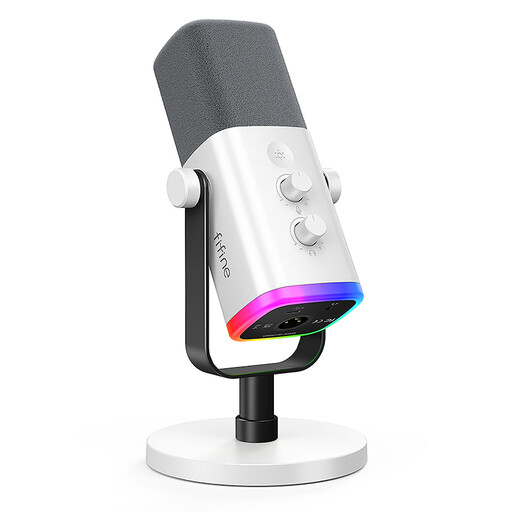 No image available
This dynamic USB/XLR microphone is an option if you want to record a soft-spoken solo voice via USB and adjust the level.
Features listed include a gain control, a headphone socket with adjustable monitoring volume, a mute button and a tilting desktop stand. A speaking distance of 2–6 inches is recommended for recording.
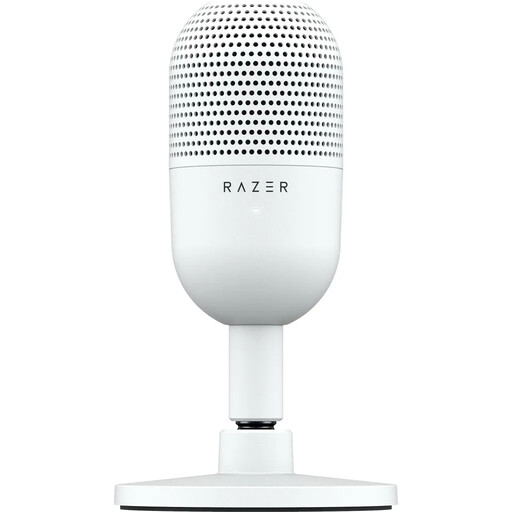 No image available
This compact USB condenser microphone may suit you if you want to record a single voice at a desk and adjust the microphone’s angle.
The product description lists a supercardioid polar pattern, a tilting stand, tap-to-mute and plug-and-play operation.
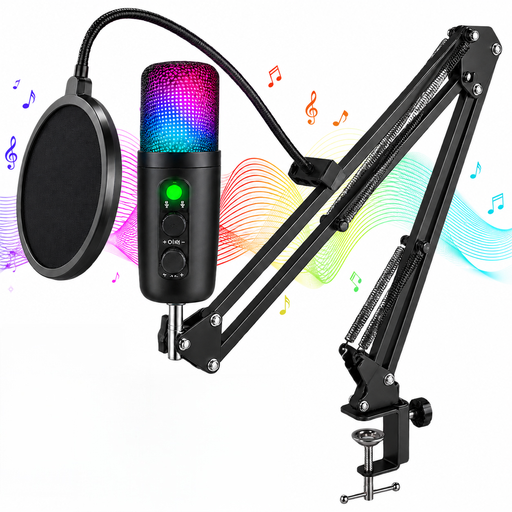 No image available
An option for voice recordings if you want to use a mute button and headphone socket for monitoring.
Features listed include a Type-C adapter and real-time monitoring through the headphone socket.
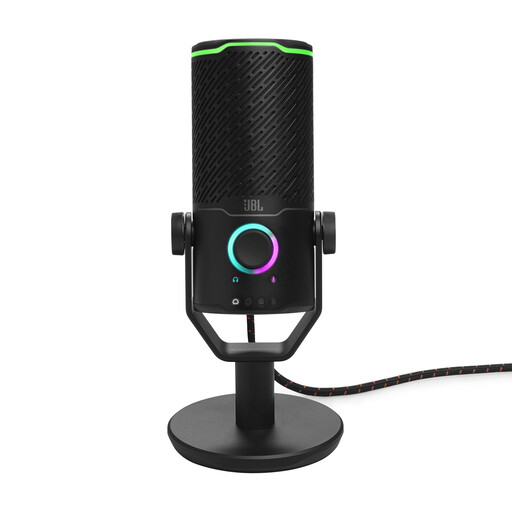 No image available
This USB-C condenser microphone is an option if you want to monitor your sound during a test recording and choose a polar pattern.
The description lists four polar patterns, including cardioid, direct voice monitoring, an RGB level indicator and a mute function.
Record a short test with quiet and emphatic sentences, listen back and check the recording level. Audacity recommends aiming for peaks of around −6 dB on the recording meter, so the red clipping indicator isn’t reached. This is a recommendation for that software, not a requirement for every recording programme.
A pop filter can reduce audible bursts of air on P sounds. The manufacturer says one is included with the RØDE NT-USB+; for other microphones, check what comes with the specific version.
In Germany, the statutory guarantee (Gewährleistung) is separate from a voluntary warranty (Garantie). The Verbraucherzentrale notes that the statutory guarantee is generally the seller’s responsibility. If a product is faulty, you can initially ask the seller to remedy the problem; whether you have further rights depends on the specific purchase and fault.
Under § 201 StGB, recording another person’s non-public spoken words without authorisation is a criminal offence. So, before recording, make clear what will be recorded and how the voice will be used. If personal data is processed, an applicable legal basis is also required; consent is one possible legal basis, but not the only one.