What should you consider when buying?
Dynamic USB microphone
A good fit if: Your test recording picks up distracting background noise, and the storyteller can speak comfortably and consistently from close range. Audio-Technica describes this type as an option for close-up speaking.
Things to consider: Sitting close to the microphone may get in the way during the conversation or bring it into shot. An additional XLR connection alone says nothing about recording quality and doesn’t mean that extra accessories are included.
Directional USB condenser microphone
A good fit if: You’re recording in a relatively quiet room and the person would prefer to speak from a little further away. Audio-Technica says this type offers more flexibility over distance; Sennheiser and Audio-Technica both list specific desk models with a cardioid pattern.
Things to consider: Listen to the room acoustics and other sounds from the recording position. A cardioid microphone won’t automatically pick up an interviewer sitting opposite with the same clarity.
Recording two voices
A good fit if: You also want the interviewer’s questions to be clear in the recording. Plan both seating positions and the recording set-up before you buy.
Things to consider: A single directional microphone is designed to favour one direction of sound. Audio-Technica mentions sharing a microphone as one possible interview set-up, but also points out the challenges of using two USB microphones at the same time.
The comparison of microphone types is based on guidance from Audio-Technica, Sennheiser and RØDE, rather than a test of these microphones in this exact interview scenario. For recording the storyteller, speaking distance and room acoustics matter. If you also want to capture the questions, the whole set-up needs to take both voices into account.
| Priority |
What to check when buying |
Who is this important to? |
| Clear speech at a comfortable distance |
Polar pattern, speaking direction and adjustable positioning; listen to a test recording made in a natural sitting position. |
If the storyteller needs to sit comfortably and speak naturally, I’d try out the distance and positioning in their seat. Around 36% of consumers prioritise clear speech from a comfortable sitting distance. |
| Room noise and microphone position |
Test whether a close, consistent position is comfortable when speaking normally; don’t assume that directional pickup guarantees freedom from background noise. |
If I can’t eliminate the background noise, I want to know whether the storyteller can stay relaxed while sitting close to the microphone. Around 29% of consumers prioritise limiting noticeable background noise. |
| Set-up and level monitoring |
Check the USB connection, cable and stand, along with the input-level display and headphone output on the specific model. |
For a longer story, I want a set-up that’s easy to use and lets me check a test recording. Around 21% of consumers prioritise a straightforward set-up and level monitoring. |
| Questions from a second person |
Before you buy, decide whether you need the questions to be included in the recording; if so, test the seating arrangement and recording set-up for both voices. |
If I want my questions to remain clear, I need to plan how to record both seats. Around 14% of consumers prioritise capturing a second voice when buying. |
Joybuy products for voice recording
The products below include dynamic USB microphones and directional USB condenser microphones for a fixed voice-recording set-up.
 No image available
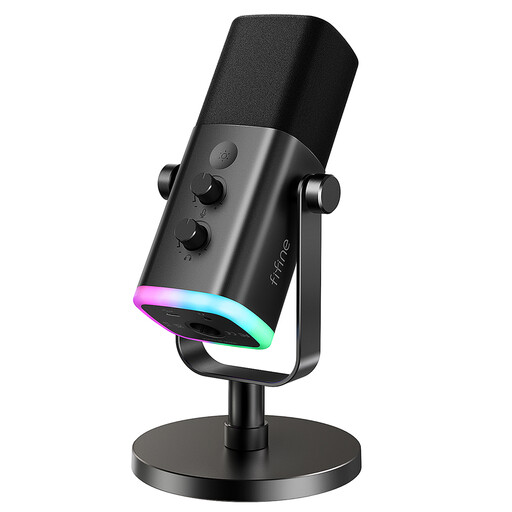
FIFINE AM8 USB/XLR dynamic microphone
For a seated storyteller who can speak comfortably from close range to the dynamic microphone.
USB and XLR; gain control, mute and headphone monitoring. A desk stand is listed; the XLR cable and microphone arm aren’t included.
View at Joybuy
 No image available
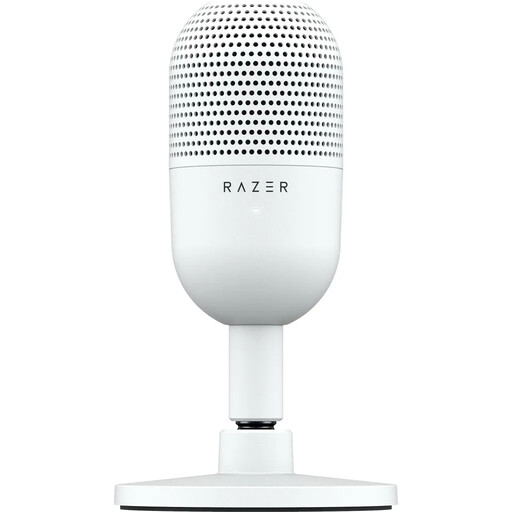
Razer Seiren V3 Mini White
For one person sitting at a desk who wants to use a directional USB condenser microphone.
Supercardioid polar pattern, tilting desk stand and tap-to-mute with LED indicator.
View at Joybuy
 No image available
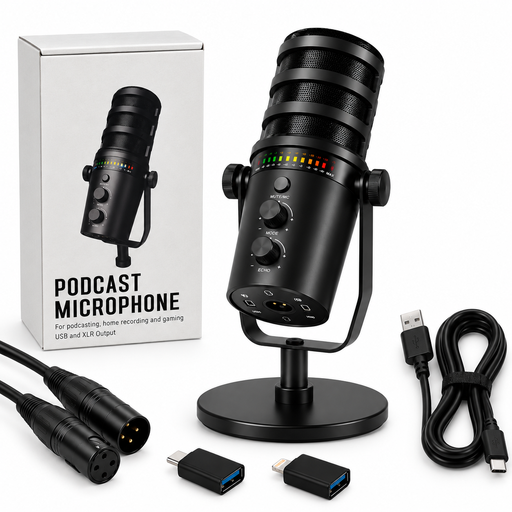
Dynamic USB/XLR microphone set
For close-up speaking at a fixed recording position, provided the storyteller is comfortable sitting close to the microphone.
USB/XLR, desk stand, gain control, mute and headphone monitoring with volume control. An echo function is listed.
View at Joybuy
 No image available
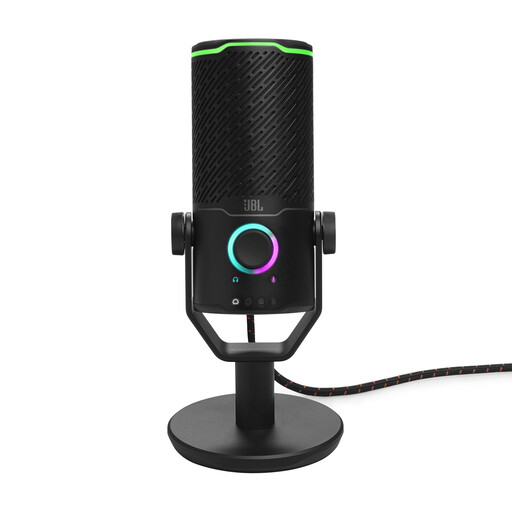
JBL Quantum Stream Studio
For a desk set-up where you want to choose different recording directions to suit the conversation.
USB-C condenser microphone with four recording patterns, including cardioid and bidirectional, an LED level display and direct monitoring.
View at Joybuy
Frequently asked questions
How should I position the microphone for someone who’s sitting down?
Point the speaking side towards the usual seating position and make a short test recording while sitting naturally. Sennheiser’s Profile guide describes positioning and distance as crucial to the strength of the input signal; it doesn’t specify a distance in centimetres that applies to every microphone.
Do I need an audio interface for USB recording?
You don’t need a separate audio interface to record directly over USB on a compatible computer. Still, check the connection, operating system, recording software and the cable included in the particular set; XLR is a different connection method.
What should I check before and during a longer story?
Select the USB microphone as your input, check a saved test recording and monitor the input level. The Sennheiser Profile has a documented gain indicator and headphone monitoring; headphone volume and input gain serve different purposes.
What should I do if the microphone I bought is faulty?
Your statutory rights against the seller are separate from any voluntary manufacturer’s or retailer’s guarantee. The Verbraucherzentrale lists repair or replacement as forms of remedy; check the guarantee terms separately.
Can I record and share memories of someone’s training without asking them first?
Under Section 201 of the German Criminal Code (StGB), recording another person’s non-public spoken words without permission, or using or sharing such a recording, is an offence. So, before the conversation, check that you’re authorised to record it, and consider separately whether you can share it. Where data protection law applies to the processing of personal data, you also need a lawful basis. Consent is one possible lawful basis, but it isn’t the only one.


