If one person does most of the talking and you can keep the microphone close and in a consistent position, a directional dynamic USB microphone is a sensible starting point. The key is to make a test recording with the fan running. If several people are speaking from different positions, make sure the seating arrangement works with the microphone’s pickup direction. A wider pickup pattern may also capture more room noise. A headphone socket makes it easier to check quiet words and changes between languages as you record, but it doesn’t replace listening back afterwards.
Who is this selection for?
Recording solo while the fan is running
If you’re mainly recording one voice, you can position a directional microphone close in front of you and keep it in much the same place throughout. RØDE recommends a speaking distance of around 5–10 cm for the PodMic USB; this guidance applies to that model specifically.
Checking quiet words and changes between languages
If you switch between languages while reading aloud, it helps to monitor the recording through headphones and check quieter passages. RØDE and Audio-Technica list headphone sockets on the respective models.
Recording several voices
If several people are speaking from different positions, test the seating arrangement and microphone direction together. HyperX lists several polar patterns for the QuadCast S; a wider pickup mode may also capture more room noise.
What should you look for when buying?
| Priority |
What to check when buying |
Who is it important to? |
| Clear solo voice despite fan noise |
Dynamic design and polar pattern; a suitable position you can repeat consistently. |
If I’m recording solo with the fan still running, I want quiet words to be clear. Around 36% of consumers put this first. |
| Checking quiet words and changes between languages |
Headphone socket and easy-to-reach volume control. |
When switching between languages, I want to listen back to quieter sections straight away before recording the rest of the story. Around 29% of consumers prioritise this monitoring. |
| A straightforward, suitable set-up |
USB connection and cable; included mount and any other accessories you need. |
If I want to get started in my chosen spot without any set-up surprises, the contents of the box matter to me. Around 21% of consumers put this first. |
| Several voices from different positions |
The polar patterns on the specific model; a test recording with everyone speaking and the fan running. |
If several people are telling a story together, I want to capture their voices from the planned seating positions without overlooking the fan noise. Around 14% of consumers prioritise recording several voices. |
Common buying mistakes
-
Assuming directional recording will eliminate all fan noise
A polar pattern can reduce sound coming from certain directions, but steady fan noise may still be picked up in the recording.
Record in your planned position with the fan running, then listen back to quiet passages in both languages.
Finding a suitable position may mean extra set-up work or post-production.
-
Recording several voices with a setting designed for one person
People outside the front of the microphone may sound quieter; a wider mode may also pick up more background noise.
Test all the planned seating positions together before choosing a recording mode.
Depending on the result, you may need to rearrange the set-up or record again.
-
Assuming similarly named models have the same features
Details for the QuadCast S do not necessarily apply to the differently named QuadCast or the QuadCast 2.
Check the full model name, connections and what’s included with the specific version.
Microphone brands to consider
RØDE
The PodMic USB is a dynamic USB-C/XLR option for close-miked solo voice recording, with headphone monitoring.
- The manual specifies a cardioid polar pattern and pop filter, and recommends a speaking distance of around 5–10 cm for this model.
- Its directional pickup does not guarantee a recording free from fan noise; the mount and set-up position should suit where you’ll be speaking.
Audio-Technica
The ATR2100x-USB is a dynamic USB-C/XLR microphone for voice recording, with a direct headphone connection.
- Audio-Technica describes the cardioid pattern as focusing on sound in front of the microphone and reducing sound picked up from the sides and rear; a stand and cable are listed as included.
- Check that the stand and cable suit your recording space and the device you’re using.
Samson
The Q2U is a dynamic USB/XLR microphone supplied with a desktop stand and windscreen, with direct monitoring.
- The manufacturer describes it as picking up sound from the front and lists accessories included in the box.
- The manufacturer’s claim that it suits untreated rooms is not an independent test with a fan running.
Shure
The MV7+ is a dynamic USB-C/XLR microphone with a headphone socket and app-adjustable signal processing.
- Shure lists Auto-Level and a real-time denoiser for the MV7+.
- Before buying, check app compatibility and which mount you’ll need. Test the signal processing with your own voice and the fan noise.
HyperX
The QuadCast S is a USB condenser microphone with selectable polar patterns, which may be useful if you need to record speakers in different positions.
- HyperX lists cardioid, omnidirectional, bidirectional and stereo patterns for the QuadCast S.
- Check the polar patterns on the exact model version; details for the QuadCast S do not automatically apply to the QuadCast or QuadCast 2.
Joybuy products for voice recording
This selection includes USB microphones for voice recording, with options for close positioning, monitoring or recording several voices.
 No image available
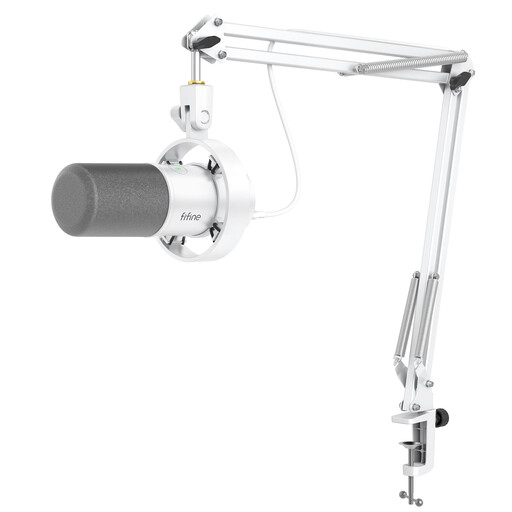
FIFINE K688CTW USB/XLR dynamic microphone with boom arm
The included boom arm lets you position the microphone for close-miked solo voice recording.
USB/XLR, unidirectional pickup, a headphone socket, mute function and gain control are listed. An XLR cable is not included; according to the product description, the buttons on the microphone only work in USB mode.
View at Joybuy
 No image available
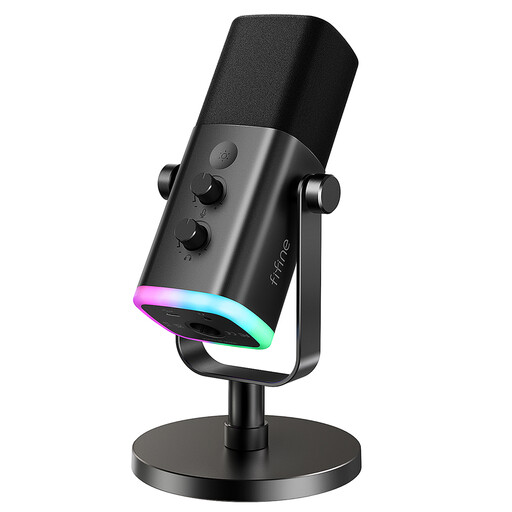
FIFINE AM8 USB/XLR dynamic microphone
The cardioid pattern is relevant for recording one voice from the front; the desktop stand offers a simple way to position the microphone.
USB/XLR, a headphone socket with monitoring volume control and a mute function are listed. A boom arm and XLR cable are not included.
View at Joybuy
 No image available
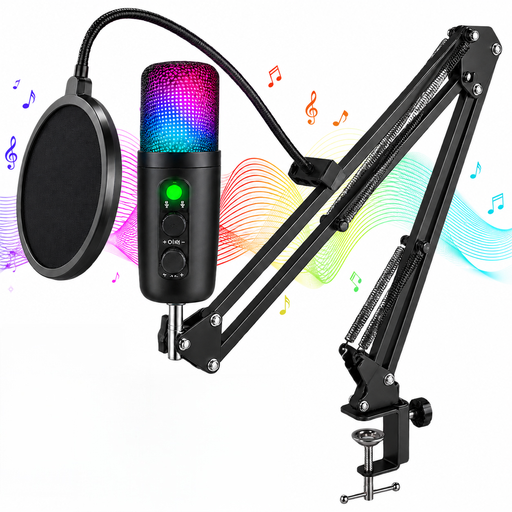
USB condenser microphone with Type-C adapter, 7-piece set
The headphone socket can be used to listen back to quieter passages while recording.
The title lists a USB condenser microphone, a Type-C adapter and a 7-piece set; the description also lists a headphone socket and mute button.
View at Joybuy
 No image available
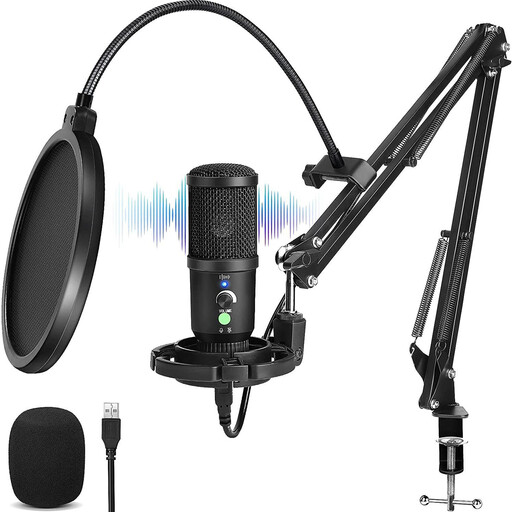
USB condenser microphone with cardioid pattern
The listed cardioid pattern is relevant for recording one voice from the front. For noisier environments, RØDE Support mentions a dynamic microphone as a possible option; this model is a condenser microphone.
The description lists a scissor arm, USB cable, mute function, gain control and headphone monitoring.
View at Joybuy
 No image available
uRage Stream 410 HD USB microphone
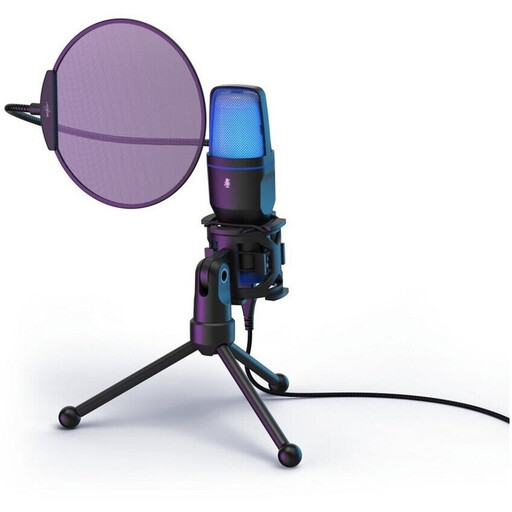
The omnidirectional polar pattern picks up sound from all directions. This may be useful when recording several voices from different positions, but it may also pick up the running fan.
The description lists a tripod stand, flexible pop filter and touch mute function.
View at Joybuy
Frequently asked questions
Can noise reduction completely remove the sound of a running fan?
You can’t rely on it to do so. Audacity explains how to reduce steady background noise such as fan noise using a section that contains only the noise. If the noise is loud or the speech is quiet, the result may be unsatisfactory. First, check the microphone position and listen back to the recording.
How do I set up a microphone for close-up speaking?
Point the front of the microphone towards the person speaking and make a test recording in your planned position with the fan running. RØDE’s manual recommends a distance of around 5–10 cm for the PodMic USB. Check the levels and listen carefully to quieter passages.
What additional costs and rights should I consider when buying online?
Check whether the mount and suitable cables are included, and whether you’ll need any other accessories. The Federation of German Consumer Organisations distinguishes between the statutory warranty and a voluntary guarantee. According to its information dated 13 August 2026, online purchases of goods generally come with a 14-day right of withdrawal; exceptions and the start of the withdrawal period should also be taken into account.
Can I publish a story that I’ve read aloud or translated?
If the text or translation belongs to someone else and is protected by copyright, check that you have the necessary rights before publishing it. The German Patent and Trade Mark Office notes that translations can also be protected works; making them available to the public is one of the rights of exploitation. Check the rights to any music and other third-party material you use, too.
Which product details matter when buying in Germany?
For its market surveillance, the Federal Network Agency lists requirements including correct CE marking, product and manufacturer details, the necessary instructions and warnings, and a declaration of conformity. A CE marking alone says nothing about voice quality or how well a product performs with fan noise.


